
Why Remaining Useful Life may become the most important number in infrastructure management?
In conversation with Dr. Sharvil Alex Faroz
Technology Perspective
Divya Koppikar, Product and UI/UX Designer, Nirixense Technologies
Om Narayan Singh, Applications Engineer, Nirixense Technologies
(July 2026)
Dr. Sharvil Alex Faroz is the Founder of Infrastructure Risk Management (IRM) and a structural engineering expert with a Ph.D. from Indian Institute of Technology Bombay, focused on helping infrastructure owners make better lifecycle decisions.
He is recognized for his work in remaining life assessment, structural health monitoring (SHM), and asset aging management, advancing practical, risk-based approaches to infrastructure resilience and longevity.
India is in the midst of one of the largest infrastructure expansion programmes in its history. Highways are stretching across states, metro systems are expanding into new cities, freight corridors are taking shape, and airports, ports, industrial facilities, and urban infrastructure continue to grow at an unprecedented pace. Government initiatives led by organizations such as the Ministry of Road Transport & Highways – India , National Highways Authority of India and other public agencies have shifted the national conversation toward building at scale.
Alongside these public investments, private infrastructure leaders including Larsen & Toubro, AFCONS Infrastructure Limited, Adani Ports and SEZ , JSW Infrastructure, etc. are delivering some of India’s largest highways, bridges, metro systems, airports, ports, and industrial projects. Together, public agencies, EPC contractors, consultants, and asset owners are shaping infrastructure at a scale India has never witnessed before.
Yet while we celebrate what is being built, a quieter challenge is beginning to emerge.
How do we manage what we’ve already built?
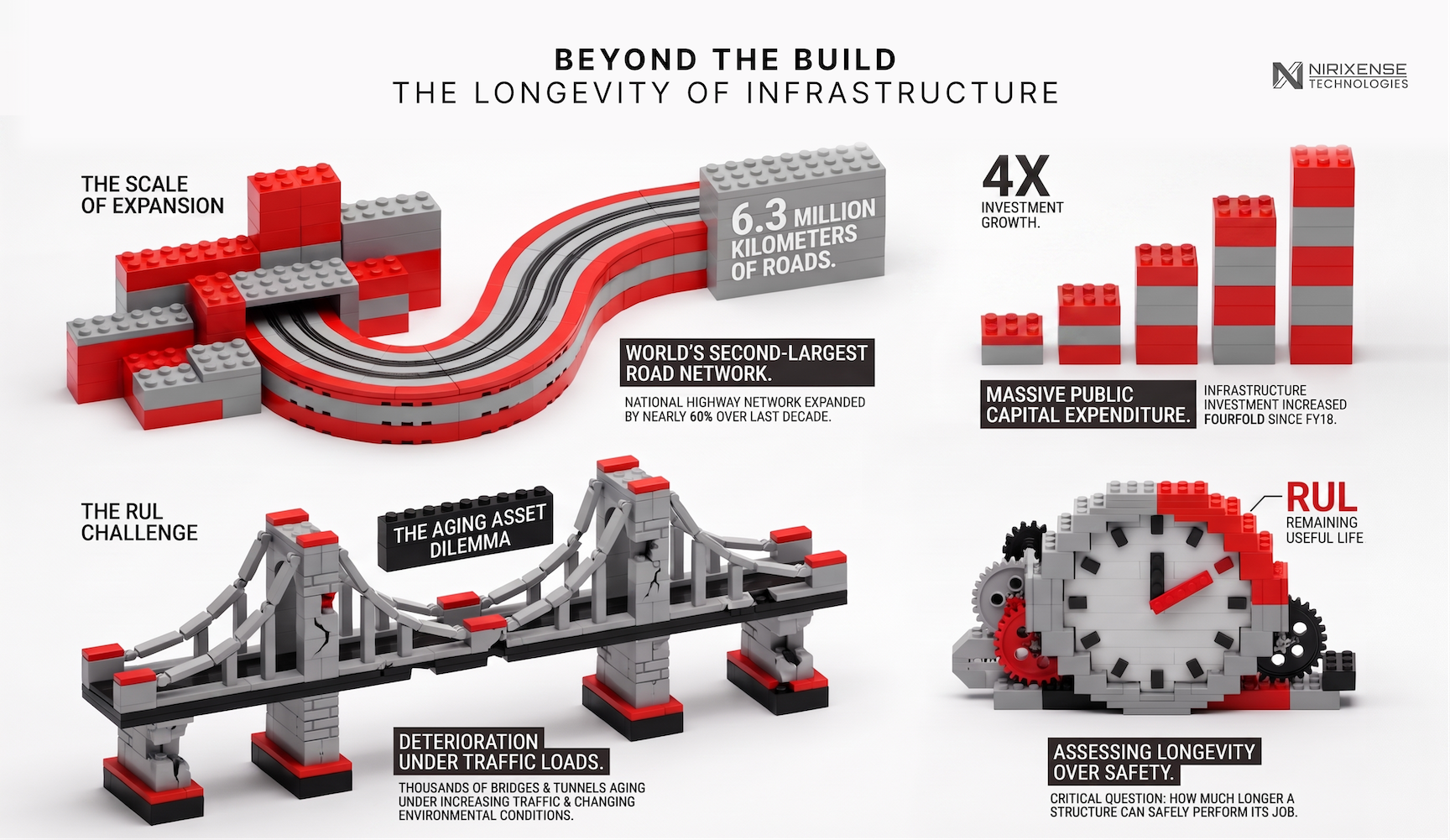
India today has more than 6.3 million kilometres of roads, making it the world’s second-largest road network. The National Highway network alone has expanded by nearly 60% over the past decade, while thousands of bridges, flyovers, tunnels, industrial structures and public buildings continue to age under increasing traffic loads and changing environmental conditions. At the same time, infrastructure investment has grown dramatically, with public capital expenditure on infrastructure increasing more than fourfold since 2018. Building new assets is no longer India’s only challenge. Ensuring those assets continue to perform safely and economically over the coming decades may prove equally important.
Every infrastructure owner eventually reaches the same decision point.
A bridge has completed thirty years of service. A viaduct begins showing signs of deterioration. An industrial facility requires rehabilitation. A concrete structure designed decades ago is still operational, but its future performance is uncertain.
The question is rarely, “Is the structure safe today?”
The real question is, “How much longer can it safely continue doing its job?”
That question formed the basis of our conversation with Dr. Sharvil Alex Faroz, Founder of Infrastructure Risk Management (IRM) and a structural engineering expert from Indian Institute of Technology Bombay. Our discussion wasn’t centred around sensors or monitoring technologies. Instead, it explored a far more fundamental idea, Remaining Useful Life (RUL) and why it may become one of the most important engineering metrics of the coming decade.
Every infrastructure decision is really a decision about time
Structural engineers have become remarkably good at understanding how structures behave.
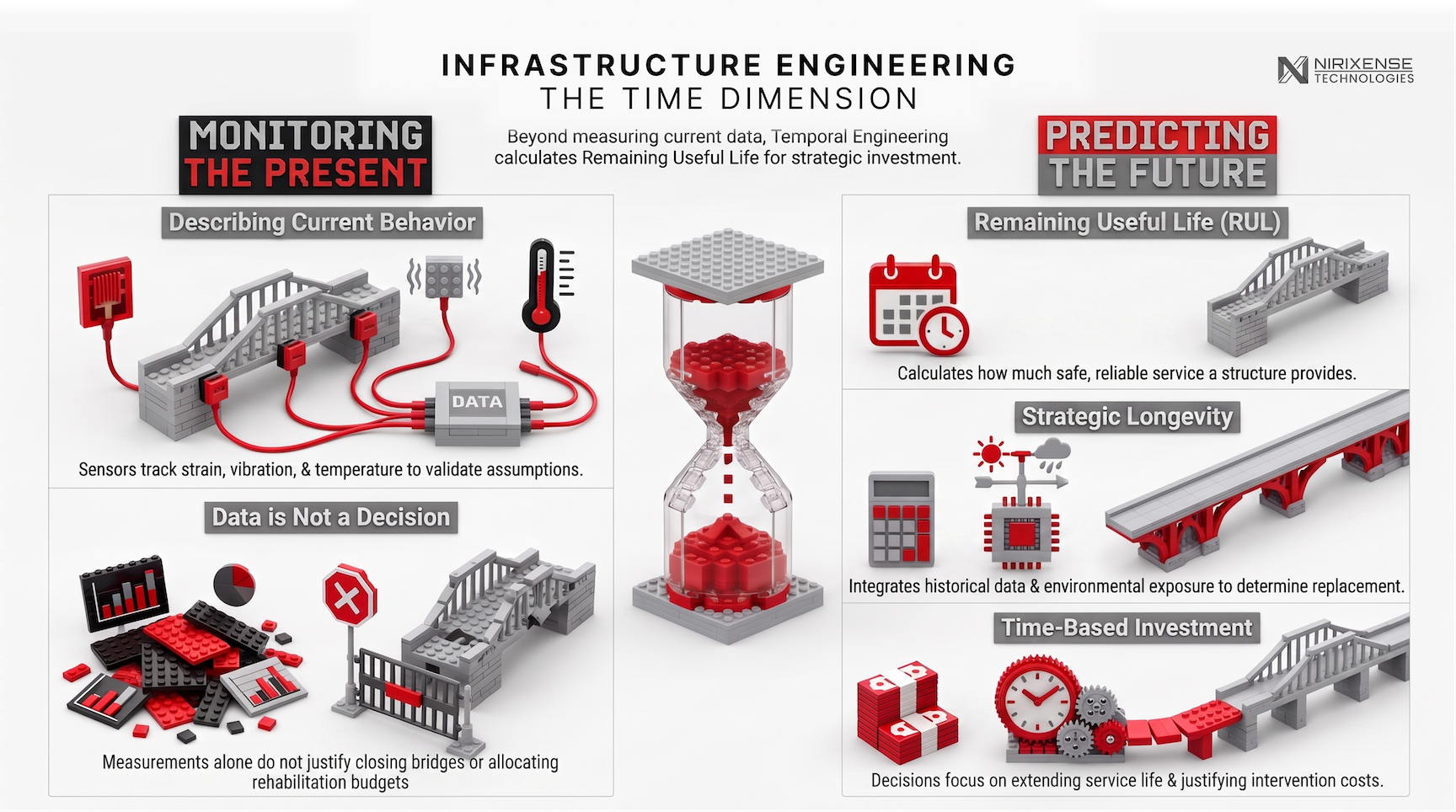
Modern Structural Health Monitoring (SHM) systems continuously measure strain, displacement, vibration, acceleration, tilt, temperature and numerous other parameters. They validate design assumptions, identify anomalies and help engineers understand structural behaviour under real operating conditions.
But measurements alone rarely determine investment decisions.
Asset owners don’t allocate rehabilitation budgets because strain increased by a few microstrains. EPC contractors aren’t awarded projects because a vibration trend changed. Infrastructure managers don’t close bridges simply because a sensor crossed a threshold.
They make decisions that carry enormous financial and public safety implications.
- Should this bridge be strengthened?
- Can rehabilitation wait another five years?
- Has this intervention extended the structure’s life enough to justify its cost?
- Is replacement inevitable or can another decade of safe service still be achieved?
Every one of these decisions ultimately revolves around a single variable: Time.
Remaining Useful Life: From engineering metric to business decision
During our discussion, Dr. Faroz captured this shift in a single sentence:
“We can help them to find out what is the remaining useful life of their structure and how they can extend the life of their structure.”
Traditionally, inspections and SHM have focused on describing the present. Engineers identify deterioration, measure performance, and compare observations against design expectations. These assessments remain essential, but they answer only part of the question.
Remaining Useful Life extends that conversation into the future.
Rather than asking “What condition is the structure in today?”,
RUL asks “Given everything we know today, how much safe, reliable service can this structure still provide?”
Answering that question requires much more than sensor data. It combines monitoring results with deterioration mechanisms, historical inspection records, operational loading, material behaviour, environmental exposure and structural analysis to estimate how an asset is likely to perform over time.
The objective is no longer simply to understand structural behaviour, but to understand structural longevity.
Why This Matters to Asset Owners
For organizations managing large infrastructure portfolios, Remaining Useful Life is more than an engineering exercise, it is a financial one.
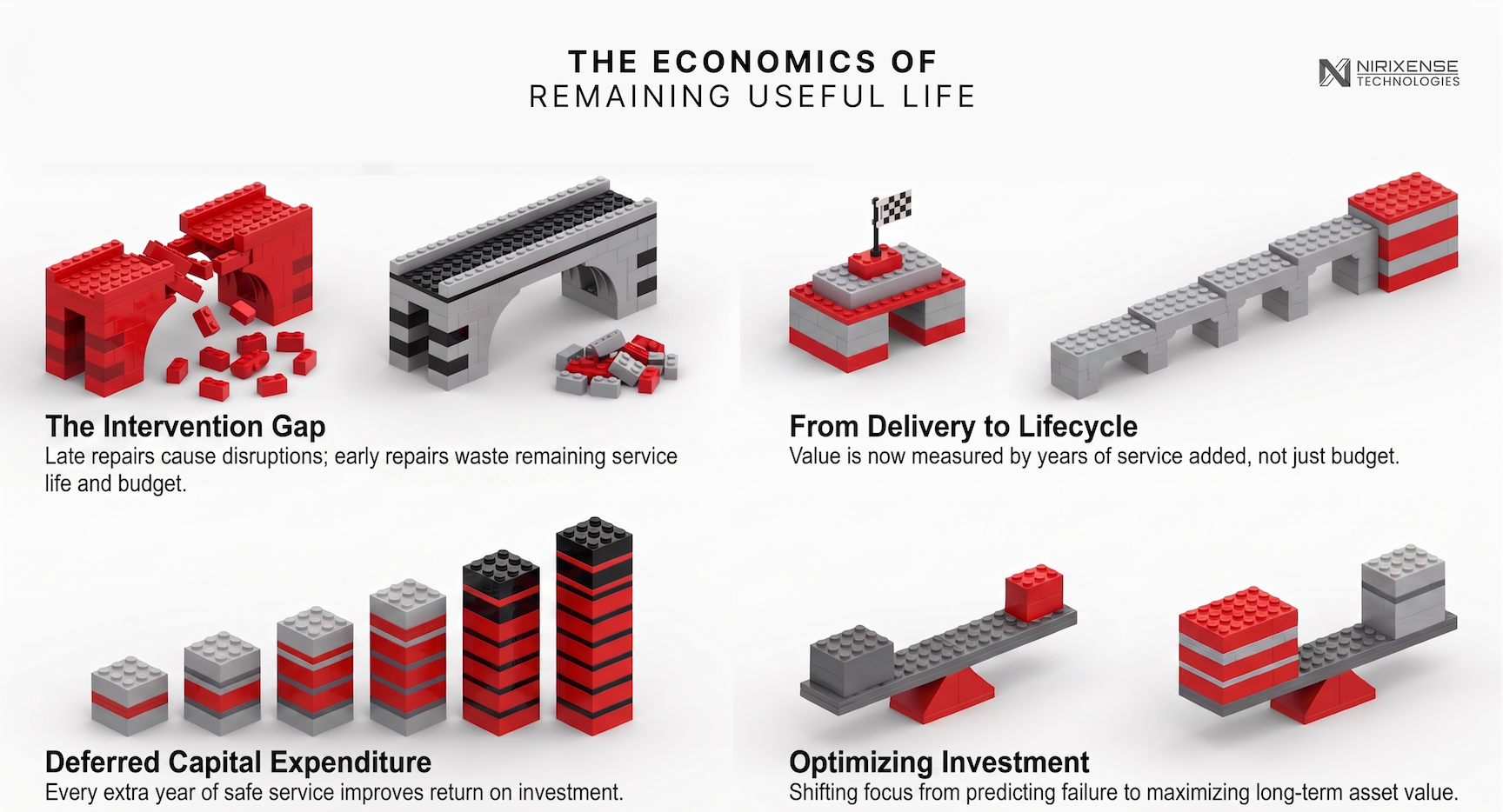
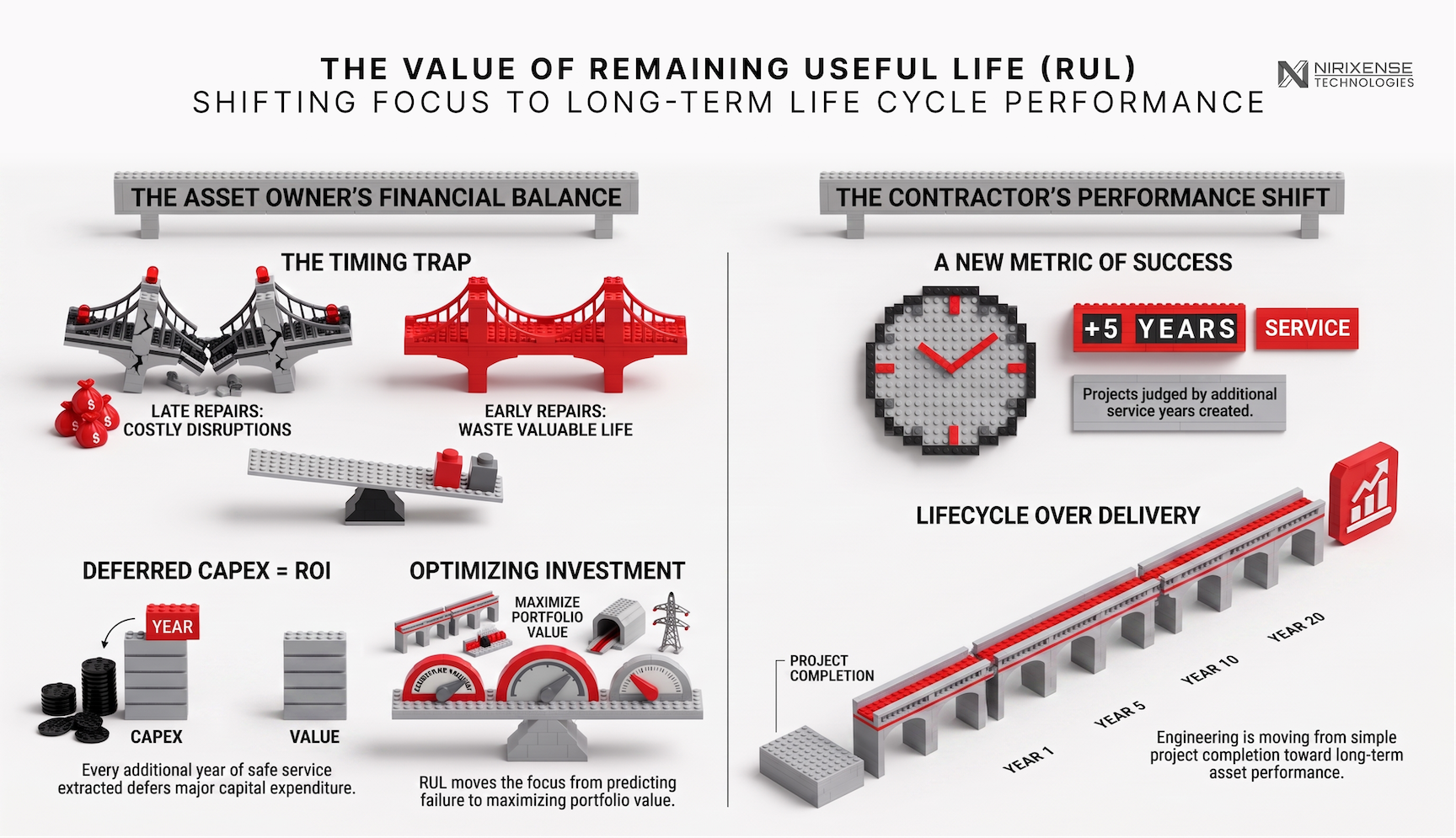
Repairing too late often results in accelerated deterioration, costly emergency interventions and operational disruption.
Repairing too early can be equally expensive, consuming maintenance budgets while valuable service life still remains.
The challenge has never been identifying deterioration. Instead, it is about deciding when intervention creates the greatest value.
Every additional year of safe service extracted from an existing bridge, metro viaduct, industrial facility or public building represents deferred capital expenditure, improved return on investment and more efficient allocation of limited maintenance resources.
As infrastructure portfolios continue to grow, Remaining Useful Life becomes less about predicting failure and more about optimizing investment.
Why it matters to EPC contractors and consultants
The expectations placed on engineering consultants and EPC contractors are changing.
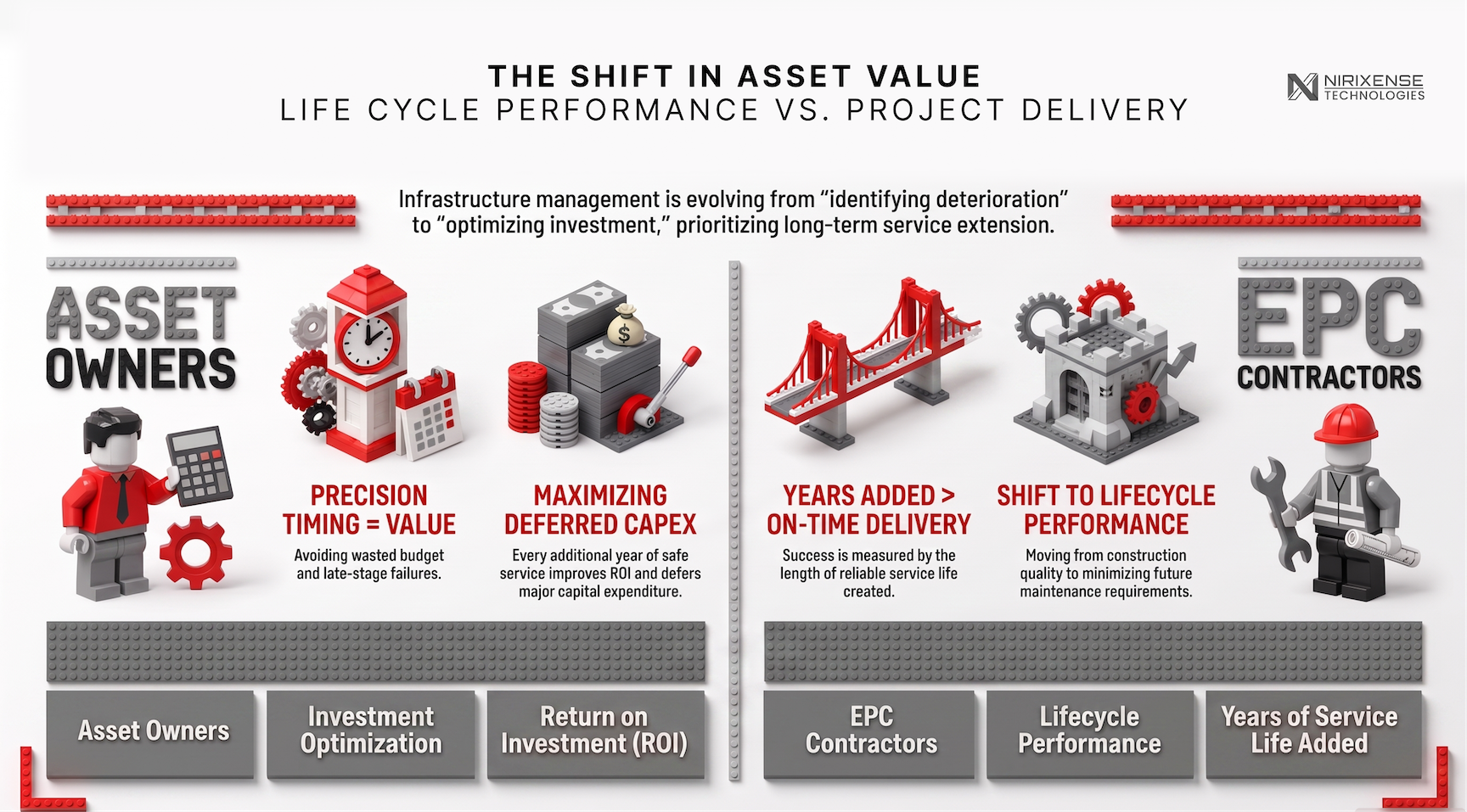
Owners are no longer evaluating projects solely on whether rehabilitation has been completed on time or within budget.
Increasingly, they are asking, “How many additional years of reliable service has this intervention created?”
That subtle change transforms the conversation.
A strengthening project is no longer judged only by its construction quality. Its long-term value is measured by how effectively it extends asset life while minimizing future maintenance requirements.
This shift is gradually moving infrastructure engineering from project delivery toward lifecycle performance.
The industry doesn’t need more data. It needs better decisions.
As monitoring technologies mature, data collection is becoming less of a challenge. Reflecting on this, Dr. Faroz remarked, “The huge data will be there.”
He is right.
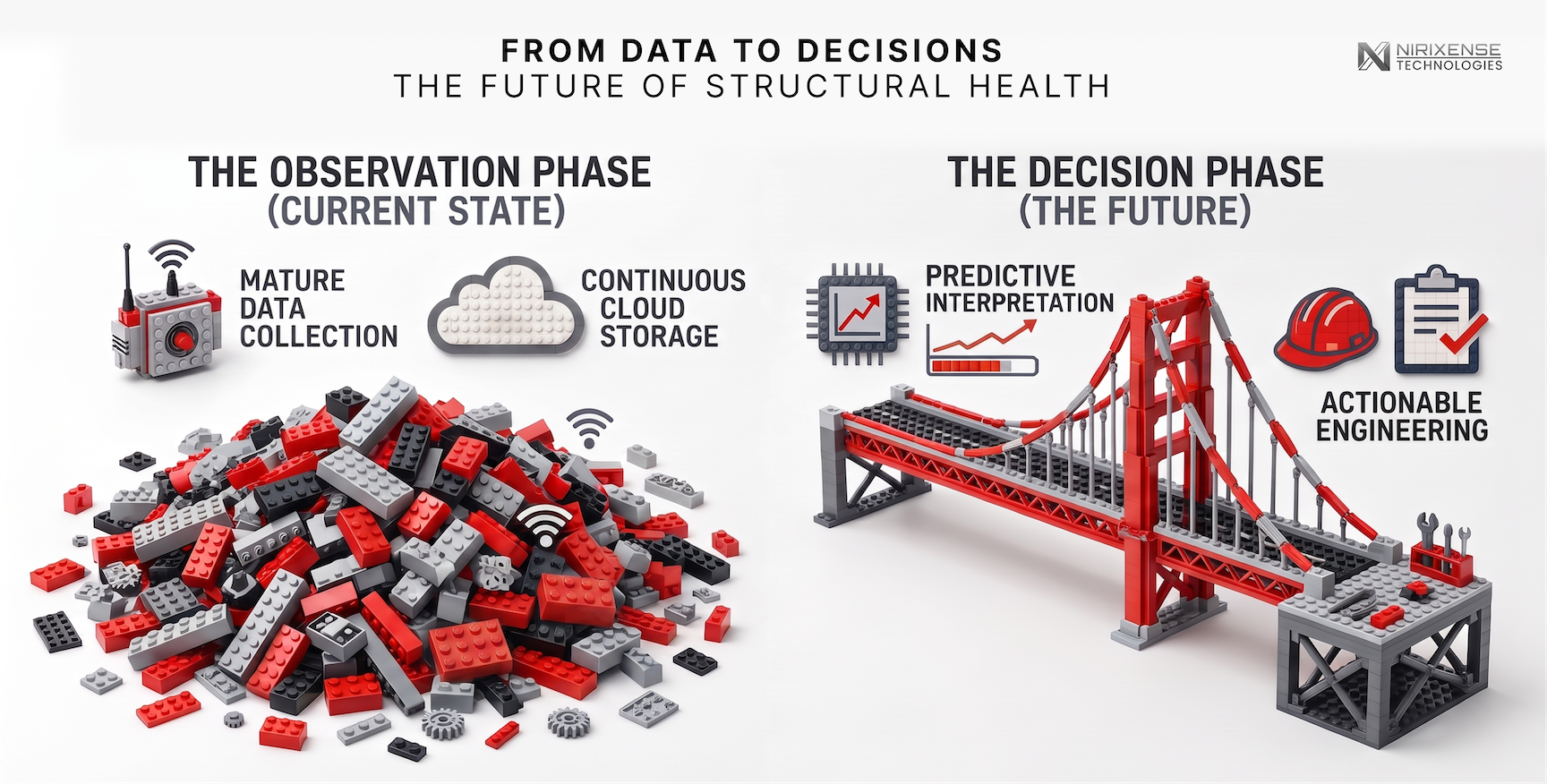
Sensors are becoming smaller. Wireless communication is becoming more reliable. Cloud platforms can store years of continuous monitoring data.
But data itself does not answer engineering questions.
Measurements become valuable only when they help engineers make confident decisions about maintenance, rehabilitation and risk. Without interpretation, even the most sophisticated monitoring system remains an observation tool. With predictive modelling and Remaining Useful Life estimation, it becomes a decision-support system.
That distinction may define the next generation of Structural Health Monitoring.
Beyond monitoring
For years, the infrastructure community has focused on understanding what structures are doing today.
The next decade will demand something different.
Infrastructure owners will need to understand what structures are likely to do tomorrow.
As India’s infrastructure continues to expand and as existing assets continue to age, the ability to estimate Remaining Useful Life will become increasingly central to maintenance planning, capital allocation and long-term resilience.
Perhaps the future of SHM will not be defined by the number of sensors we install, or the volume of data we collect.
Perhaps it will be defined by our ability to answer one deceptively simple question with confidence:
How much life is still left in your structure?
© 2026 Nirixense Technologies Pvt. Ltd. All rights reserved. email: connect@nirixense.com
About this series: Field Notes in Structural Intelligence is a thought leadership series by Nirixense Technologies, where we engage with experts across structural engineering and monitoring to understand how SHM actually works in practice and where it needs to evolve next.