
Why long term monitoring quietly fails and what needs to change
In conversation with Dr. Mahesh Varma
Technology Perspective
Divya Koppikar, Product and UI/UX Designer, Nirixense Technologies
Om Narayan Singh, Applications Engineer, Nirixense Technologies
(May 2026)
Dr. Mahesh Varma is a distinguished structural engineer, Director at Nandadeep Designers and Valuers Pvt. Ltd., and associated with HONE Structural Health Monitoring (India) Pvt. Ltd., with advanced training from Indian Institute of Technology Bombay and Politecnico di Milano.
He is widely recognized for his pioneering work in AVD masonry structures, along with significant contributions to prestressed concrete systems and international projects. Combining research, design, and consulting, he continues to drive innovative structural solutions and monitoring-led engineering practices, with strong academic and industry impact.
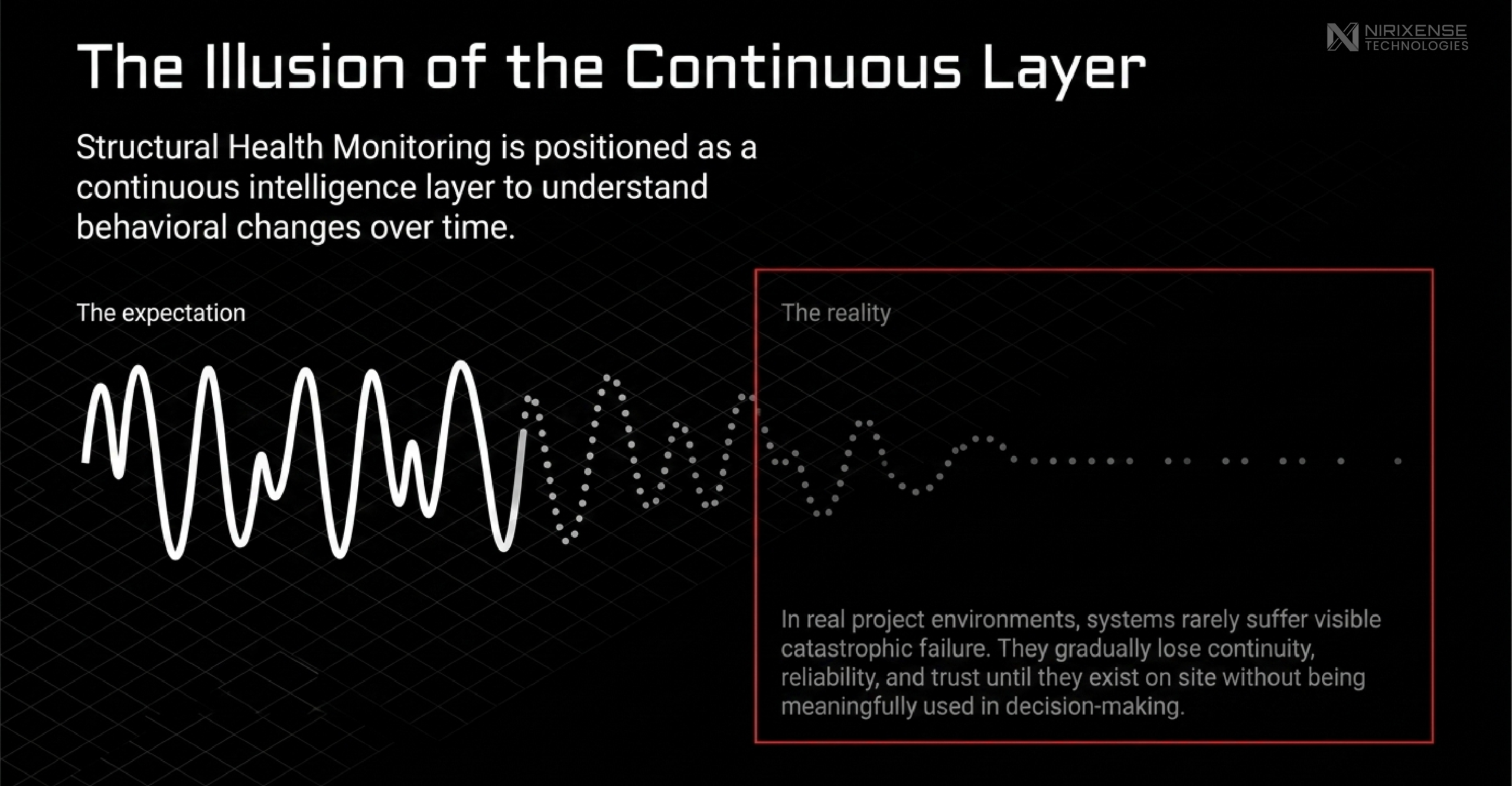
Structural Health Monitoring is often positioned as a continuous layer of intelligence that enables engineers to understand how structures behave over time and make better decisions based on data, yet in real project environments systems rarely fail in ways that are visible or immediate, instead they gradually lose continuity, reliability, and trust until they exist on site without being meaningfully used in decision making processes.
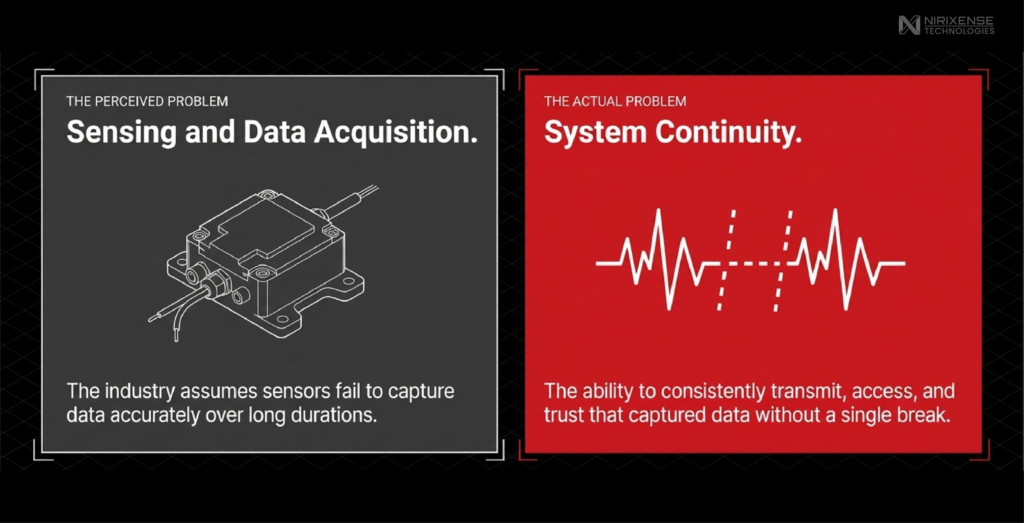
The real failure is not in sensing; It is in continuity
In most deployments, the ability to capture data is already established, but the real challenge lies in ensuring that this data is consistently transmitted, accessed, and trusted over long durations, which is where long term monitoring begins to weaken in practice.
“Data acquisition is not typically a problem. Data acquisition happens but the data transmission continuous data transmission without a break is typically a problem with long term monitoring.”
This insight directly shifts the problem from sensing to continuity, because what begins as small interruptions in transmission gradually leads to incomplete datasets and reduced confidence in the system.
“Typically, we need to do that. That’s a huge problem.”
This was said in the context of repeated site visits for troubleshooting, reinforcing that even when systems are technically functional, they are not operationally stable.
Where long term SHM systems actually break
Long term monitoring does not fail at a single point, instead it weakens across multiple layers that are tightly interconnected in real execution environments.
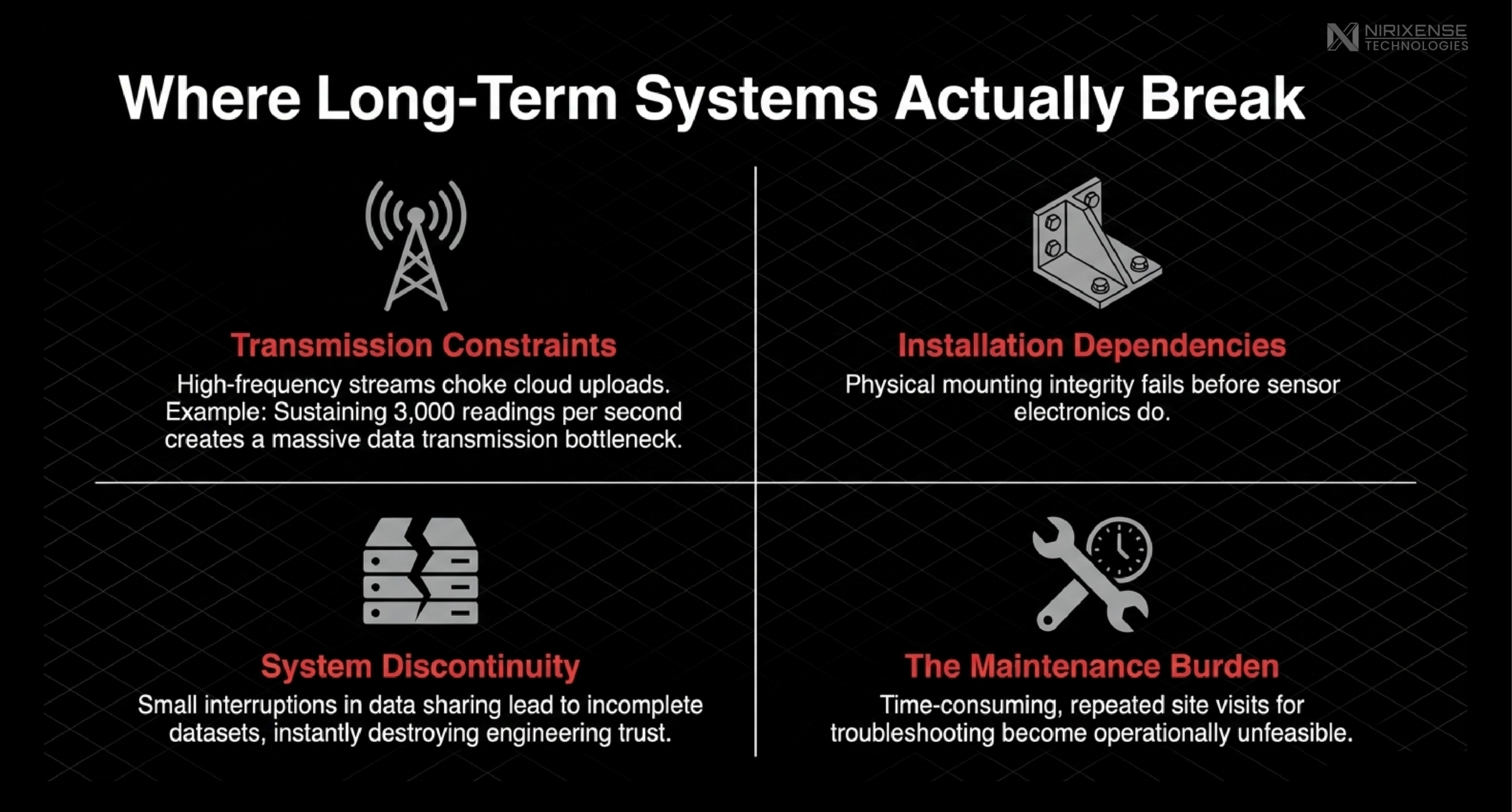
- Data transmission constraints, where high frequency data streams become difficult to sustain over time
“If I am doing long term monitoring, data acquisition can be at 3000 readings per second. So transmitting all those readings oto cloud may become a problem.”
- Installation and mounting dependencies, where physical setup affects long term reliability
“Typically yes.” (In response to failures due to poor mounting rather than sensor performance)
- System discontinuity and data gaps, which reduce trust in monitoring outputs
“Discontinuity in the data acquisition and data sharing in cloud is typically a problem.”
- Maintenance and troubleshooting burden, which slows down operations
“We do our own troubleshooting and keep doing whatever we can do best to acquire the data and troubleshoot the situation. But that is time consuming, absolutely time consuming.”
Each of these reflects a real constraint observed on site, not an assumed limitation.
Why the current model struggles
The issue is not just technological, it is structural, because SHM is still implemented as a one time deployment within a project lifecycle rather than as a continuously managed system.
“I do not find any long term monitoring solution in the market which can be maturely used into SHM project.”
This explains why most teams continue to rely on short term monitoring, where conditions are controlled and systems are easier to manage.
How Nirixense reframes the problem
“If the principal structural engineer is getting his data on his system without we going back to the site, then long term monitoring really become a feasible thing which sounds today more like a dream today.”
This clearly establishes that the real value lies not just in capturing data, but in ensuring that it is accessible without repeated intervention.
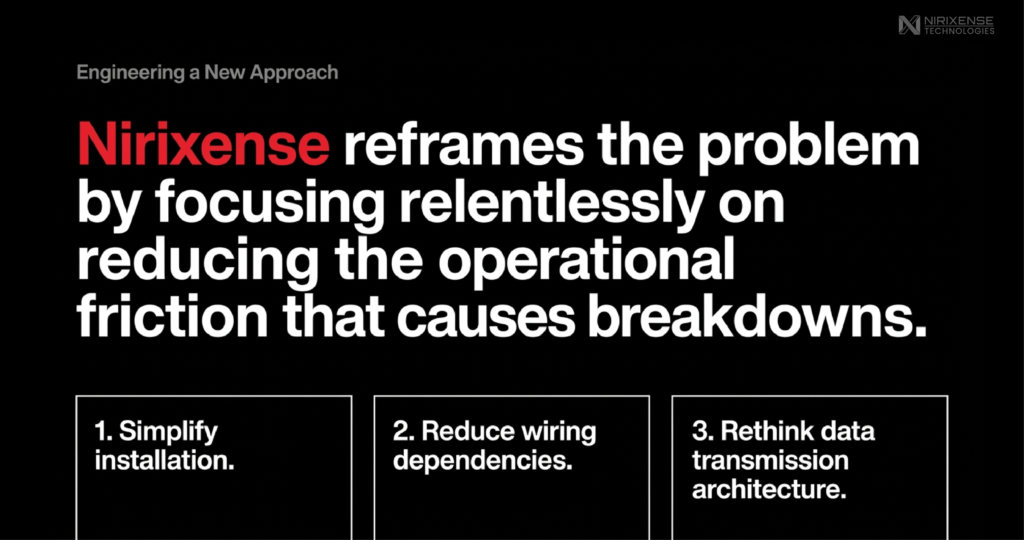
This is where Nirixense focuses on reducing the operational friction that leads to these breakdowns by simplifying installation, reducing wiring dependencies, and enabling more reliable data handling approaches that combine local storage with selective cloud transmission instead of relying entirely on continuous streaming.
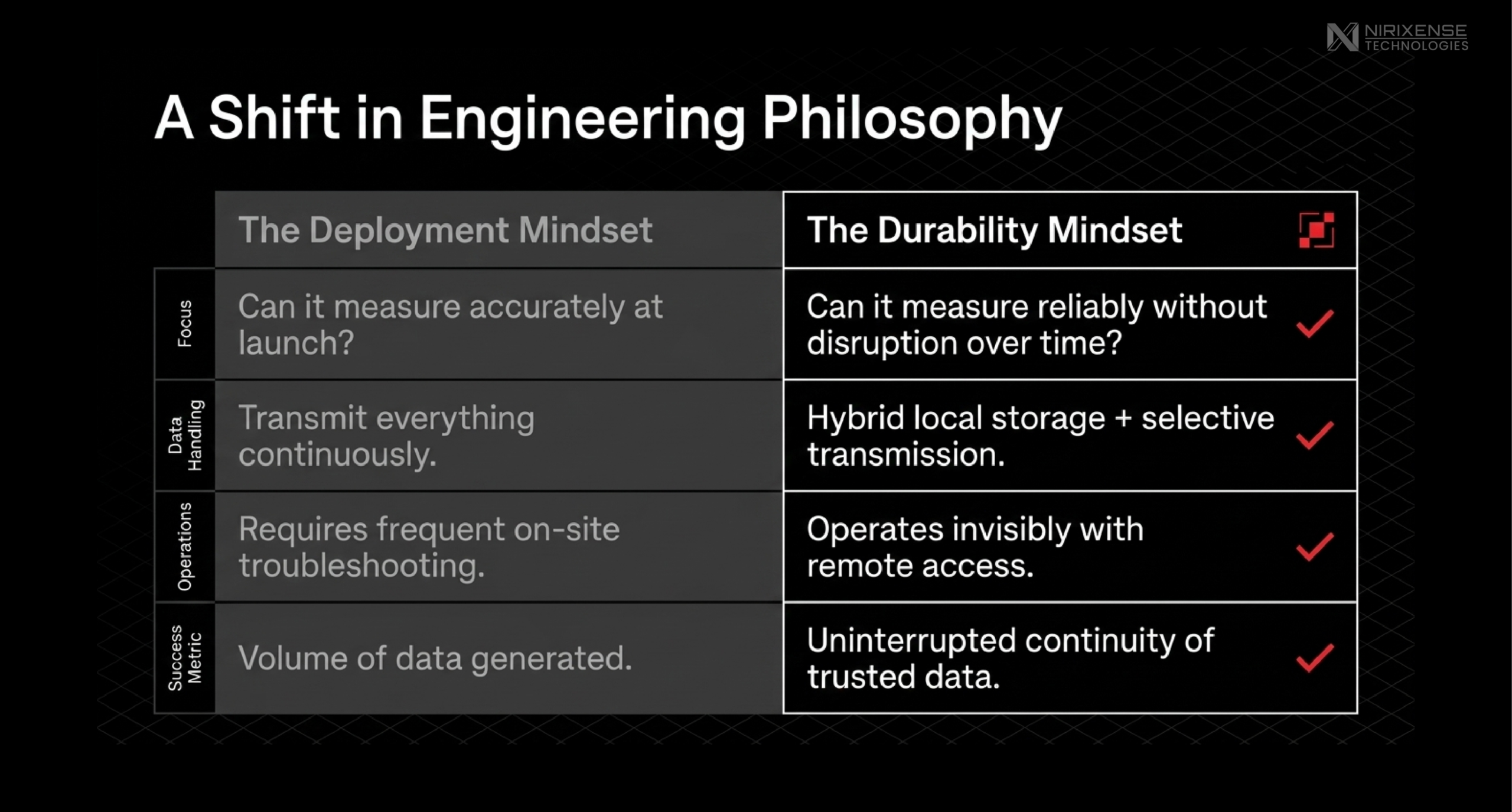
From deployment to durability
For SHM to function as a true long term intelligence layer, the focus must shift from whether a system can measure accurately to whether it can continue measuring reliably without disruption, because long term monitoring fails not at installation but in the prolonged phase of operation where real constraints emerge.
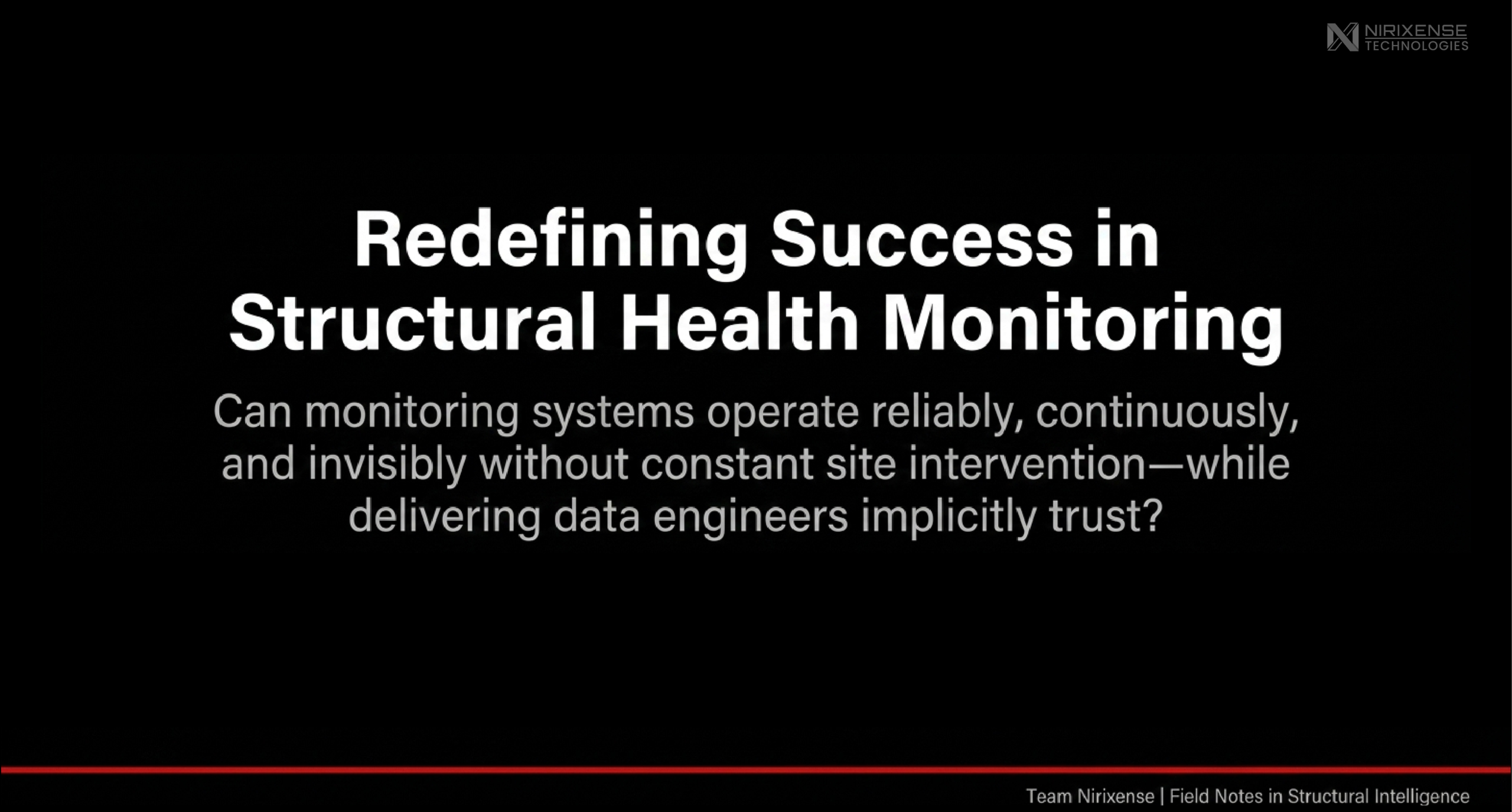
The real question
Can monitoring systems continue to operate reliably continuously and invisibly without requiring constant site intervention while still delivering data that engineers trust?
Because in SHM, success is not defined by how much data a system can generate,
But by whether it can continue delivering that data without interruption over time.
© 2026 Nirixense Technologies Pvt. Ltd. All rights reserved. email: connect@nirixense.com
About this series: Field Notes in Structural Intelligence is a thought leadership series by Nirixense Technologies, where we engage with experts across structural engineering and monitoring to understand how SHM actually works in practice and where it needs to evolve next.