
When the best maintenance decision is knowing where not to spend
Divya Koppikar, Product and UI/UX Designer, Nirixense Technologies
Om Narayan Singh, Applications Engineer, Nirixense Technologies
(August 2026)
Infrastructure maintenance has always involved a difficult allocation problem: the number of assets requiring attention is large, while the engineering teams, inspection windows and maintenance budgets available to look after them are finite. For an organisation managing a handful of critical structures, detailed periodic inspections may be sufficient. For agencies responsible for hundreds or thousands of bridges, however, treating every asset with the same inspection frequency or maintenance intensity can quickly become inefficient.
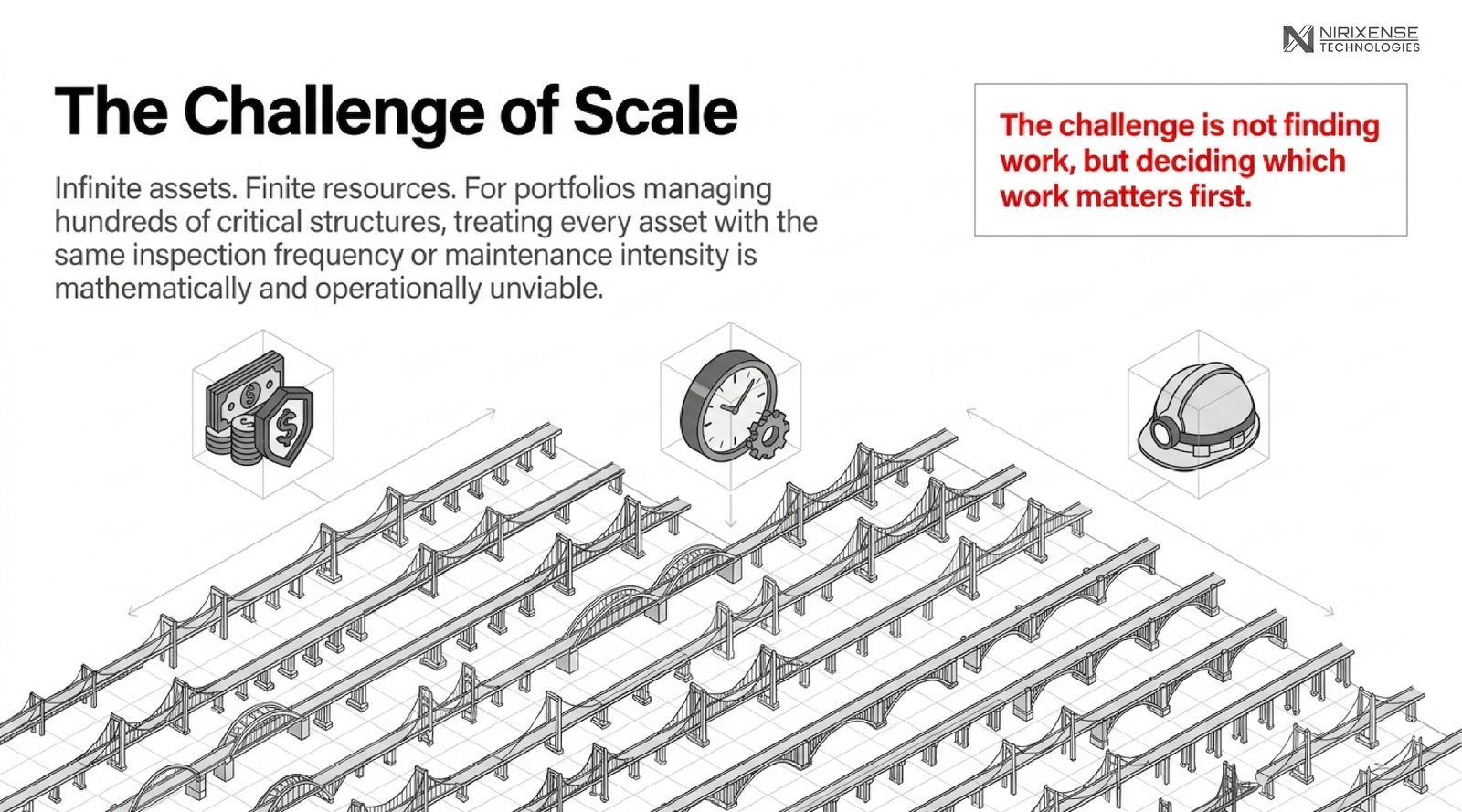
This is where Structural Health Monitoring (SHM) introduces a different way of thinking. Instead of asking only whether an asset should be inspected or maintained according to a predetermined schedule, continuous monitoring can add another layer of information: how is the asset actually behaving between inspections, and where is attention most likely to be needed?
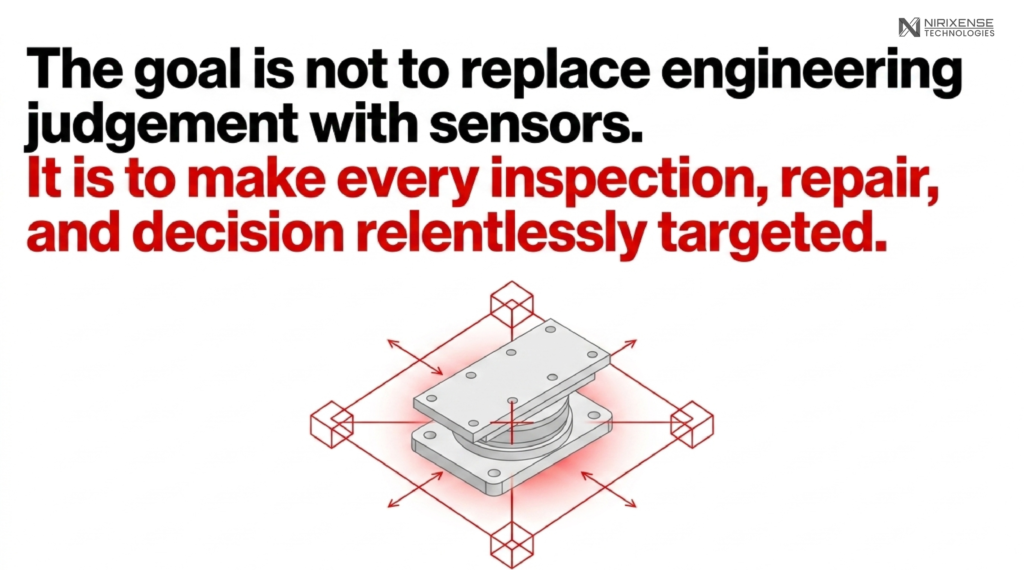
The opportunity is not to replace engineering inspections or maintenance with sensors. It is to make those activities more targeted.
The cost of looking everywhere, all the time
The scale of India’s infrastructure makes this challenge difficult to ignore. Maintaining the country’s highway network to required standards has been estimated to require substantially more funding than was historically being spent, while inadequate maintenance has contributed to growing backlogs and higher future rehabilitation costs. At the same time, maintenance expenditure can generate significant economic returns when it is directed towards the right interventions.
The challenge, then, is not simply spending more on maintenance, but ensuring that limited engineering teams, inspection budgets and maintenance funds are directed where they matter most. Repeated scheduled inspections can provide essential assurance, but they may also consume resources without necessarily revealing how an asset is behaving between inspection cycles. SHM introduces another layer of evidence by continuously observing structural behaviour, helping distinguish assets that continue to perform as expected from those where changing conditions may warrant closer investigation.
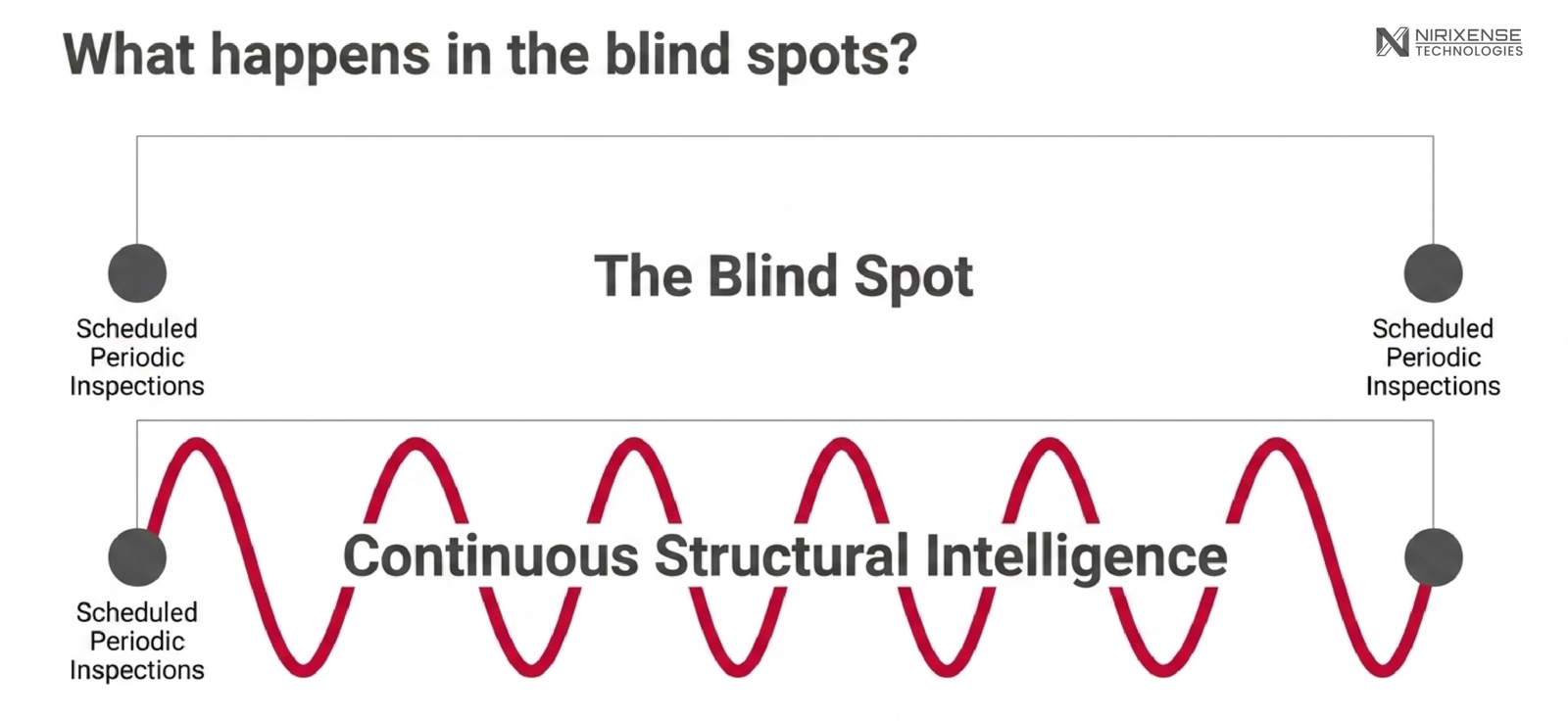
This is where the value becomes clear: SHM does not need to replace inspection or maintenance; it can help make both more targeted. By connecting continuous structural information with inspection and maintenance planning, owners can move towards spending based not only on when an asset is due for attention, but on where the available evidence suggests that attention is most needed.
When the challenge is not finding work, but deciding which work matters first
The scale of India’s infrastructure makes this distinction particularly relevant. The National Highways Authority of India describes GIS-based Bridge Management Systems as a means of distributing available funds according to the priority of needs, road condition and serviceability. Bridge information including physical characteristics, condition surveys and sufficiency ratings is intended to form part of the underlying database for this prioritisation.
The underlying principle is straightforward: not every asset carries the same level of risk, and therefore not every asset should necessarily receive the same intervention.
SHM can take this principle further at the asset level. Continuous measurements can reveal changes in strain, displacement, vibration, temperature or other indicators of structural behaviour, allowing engineers to identify where behaviour is changing and where closer investigation may be justified.
That can change the workflow from a purely schedule-driven process towards a more informed one in which monitoring helps determine where to investigate first.
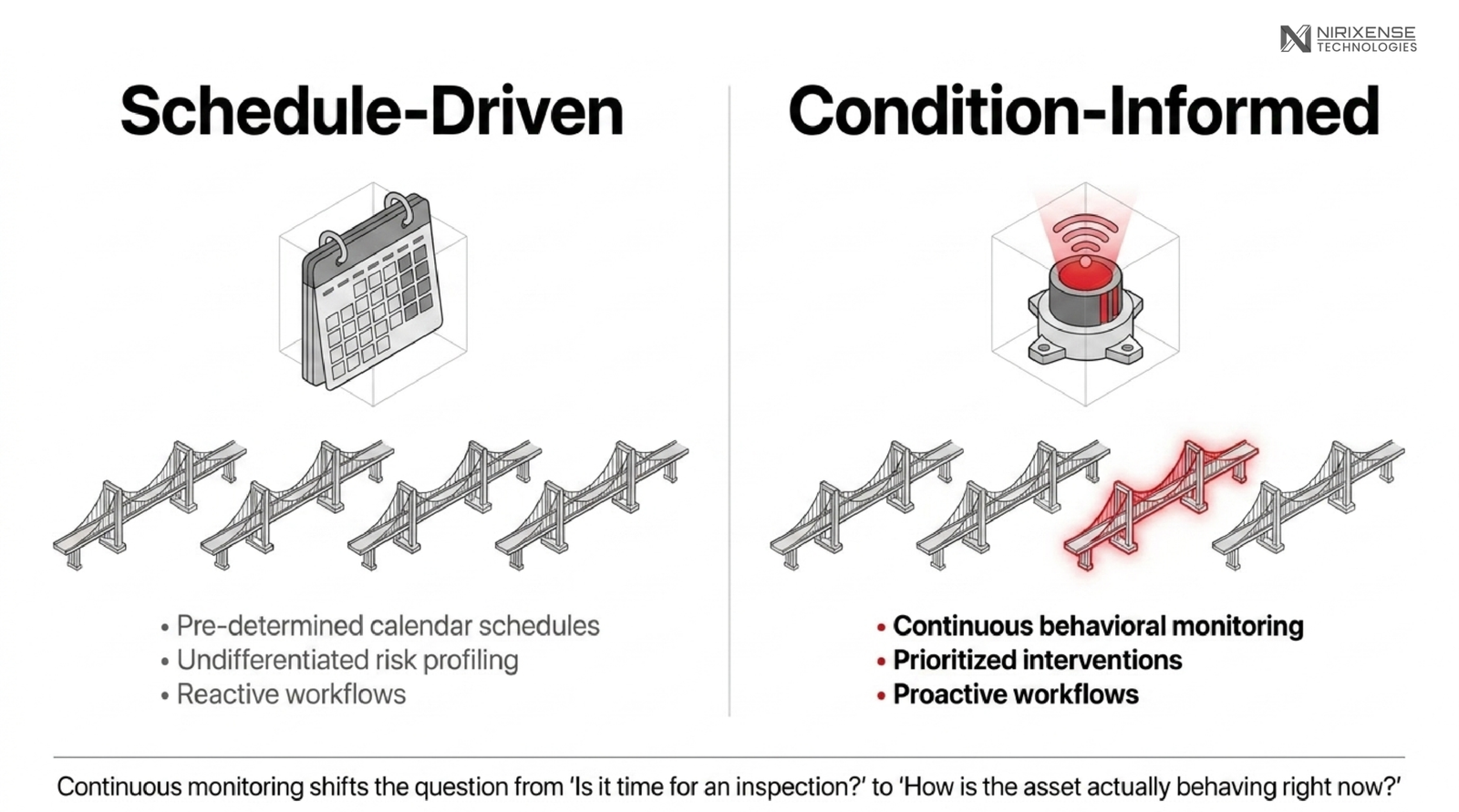
For a large infrastructure portfolio, the efficiency does not necessarily come from reducing the number of inspections. It comes from making sure scarce engineering time is directed towards the structures and components where it can create the greatest value.
Naini Bridge: When monitoring was designed to answer a maintenance question
One of India’s early SHM deployments illustrates how closely monitoring and maintenance management can be connected.
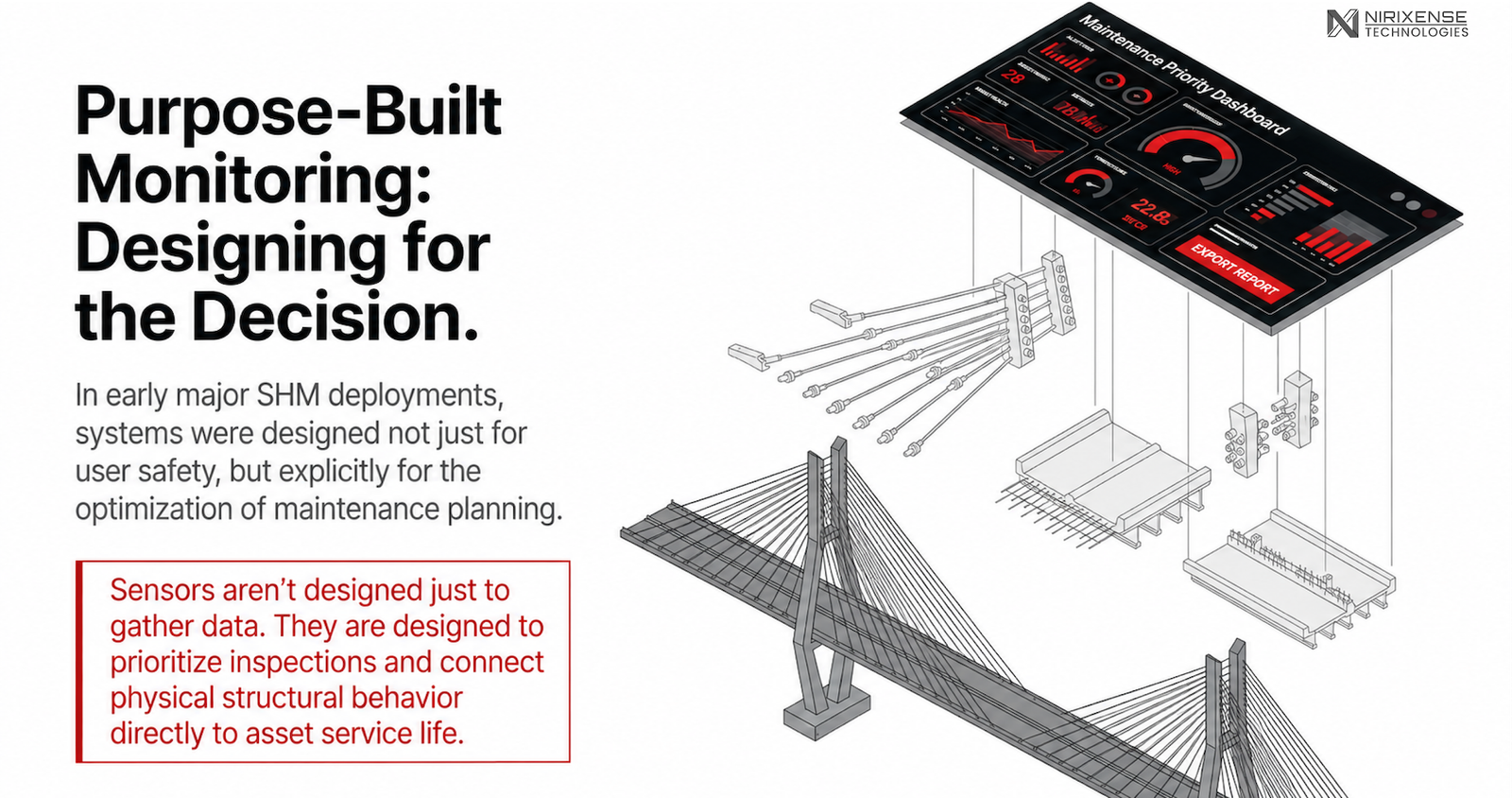
The SHM system developed for the Naini Bridge in Allahabad was designed not only for design verification and user safety, but explicitly for optimisation of maintenance planning. The system included a bridge rating approach intended to provide a rational basis for prioritising inspections and maintenance across primary and secondary structural components.
That is an important distinction. The purpose was not simply to know more about the bridge. The monitoring framework was intended to help determine what required attention and how that attention should be prioritised.
The value of SHM changes depending on who is using it. The system was designed around the needs of the bridge owner, operators and users, connecting structural information with service life, maintenance planning, availability and safety.
The monitoring system, in other words, was being designed around the decisions surrounding the asset not around the sensors alone.
What happens when the bridge itself starts telling you where to look?
A more recent example comes from the Bogibeel Bridge in Assam, a 4.94-km rail-cum-road bridge spanning the Brahmaputra.
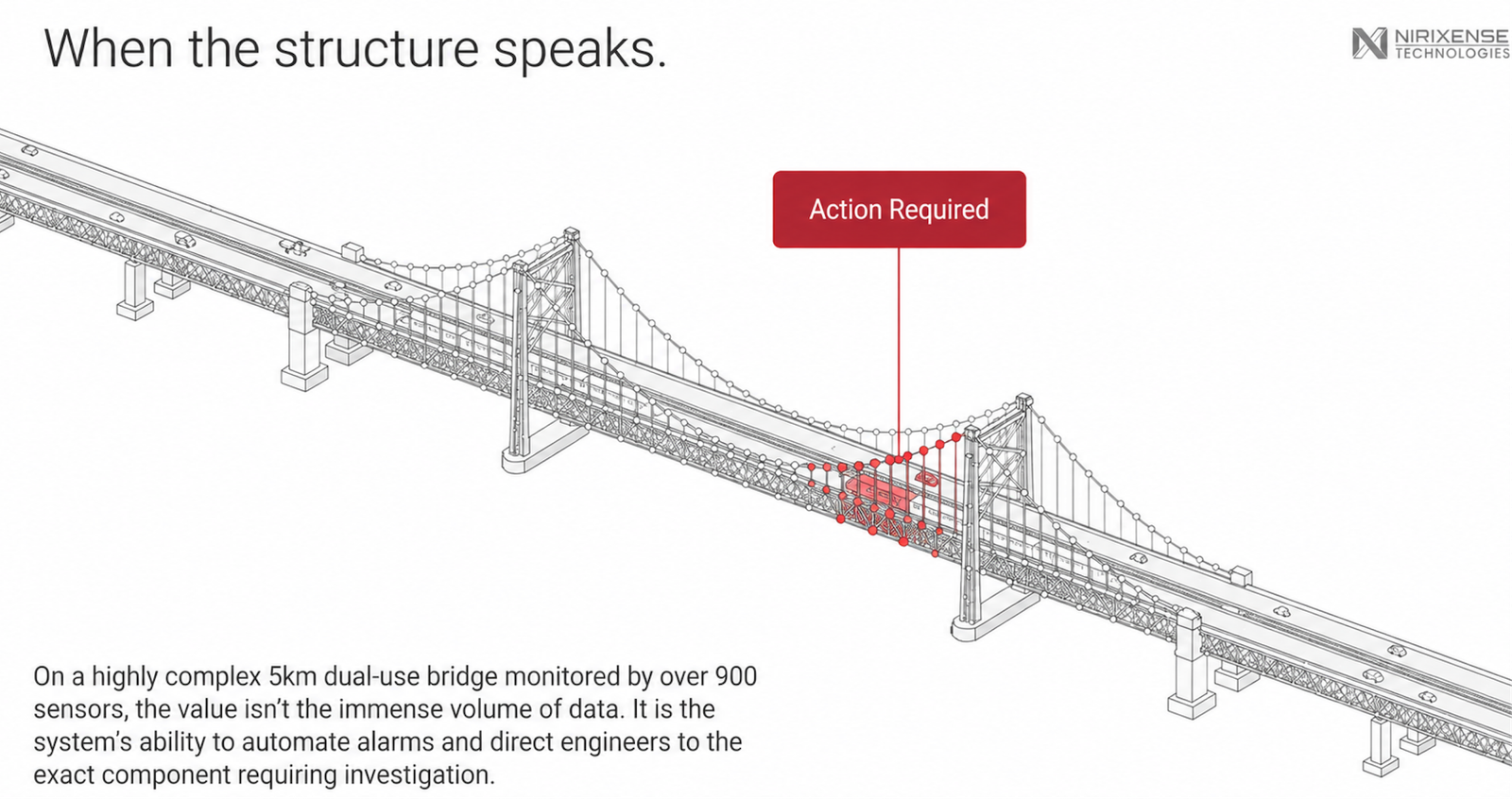
A SHM system using approximately 920 sensors to continuously monitor parameters including strain, temperature, vibration and displacement. More importantly for the maintenance question, the system is integrated with asset management, automated reporting and alarms, with the stated objective of moving maintenance from reactive towards more proactive and data-driven intervention.
The interesting part is not the number of sensors. It is what happens after the measurements are collected.
When monitoring identifies a change in behaviour, engineers have an additional basis for deciding where further investigation may be warranted. Instead of treating the entire structure as an undifferentiated maintenance problem, structural intelligence can help direct attention towards particular behaviours or components.
This specifically links the approach with operational efficiency, safety and cost-effectiveness, while describing earlier detection and timely intervention as mechanisms for reducing downtime.
For an asset that is both technically complex and operationally important, knowing where to look can be almost as valuable as knowing what to measure.
And sometimes, the most expensive maintenance decision is the one that disrupts operations unnecessarily
The management value of SHM becomes even clearer when the cost of taking an asset out of service is high.
For major transportation infrastructure, maintenance decisions are rarely isolated engineering decisions. They can affect traffic, train operations, access, inspection windows, manpower deployment and the availability of the asset itself.
This is one reason the shift from reactive towards proactive maintenance is important.
The economic value therefore does not necessarily come from avoiding a repair altogether. It can also come from planning the right intervention at the right time, mobilising resources with better information and reducing the likelihood that an unexpected condition turns into an operational disruption.
For infrastructure owners, that is a very different definition of maintenance efficiency.
The question is not how much maintenance we can do, but where our resources create the most value
There is a natural temptation to think that better infrastructure monitoring means more sensors, more inspections and more data.
But for an organisation managing a large asset portfolio, that can quickly become another resource problem.
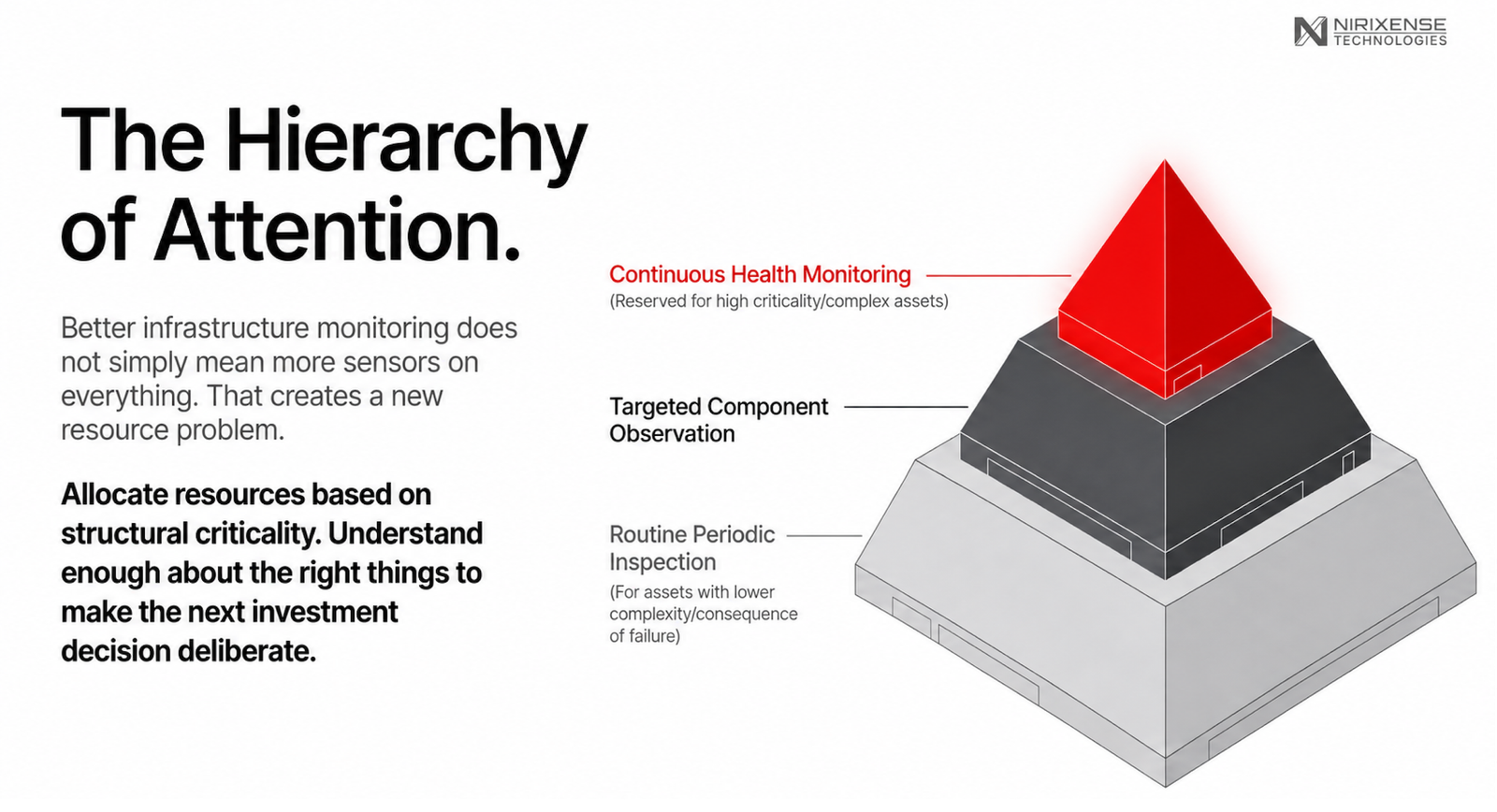
The more useful objective is to create a hierarchy of attention. Some assets may justify continuous monitoring because their criticality, complexity or consequences of failure warrant it. Others may remain adequately served by periodic inspection. Within a monitored asset, some components may warrant closer observation than others.
This is consistent with the logic behind bridge management systems: when resources are constrained, condition and risk information should help determine where those resources are deployed. NHAI’s own framework explicitly connects bridge condition information with priority-based allocation of available funds. (National Highways Authority of India)
SHM can add another dimension by providing information about how an asset is behaving between conventional inspections.
The goal, therefore, is not to monitor everything. It is to understand enough about the right things to make the next inspection, maintenance action or investment decision more deliberate.
So, what does “Optimisation” actually mean?
For an asset owner, optimisation does not simply mean reducing expenditure or extending inspection intervals. It means directing limited resources to the right assets, at the right time, with enough evidence to be confident that the decision is justified.

That can happen at several levels.
At the asset level, periodic monitoring can provide an additional layer of evidence between scheduled inspections, helping engineers determine whether an asset is continuing to behave within expected limits or whether a closer investigation is warranted. The value here is not in replacing inspections, but in reducing uncertainty between them and making the next intervention more informed.
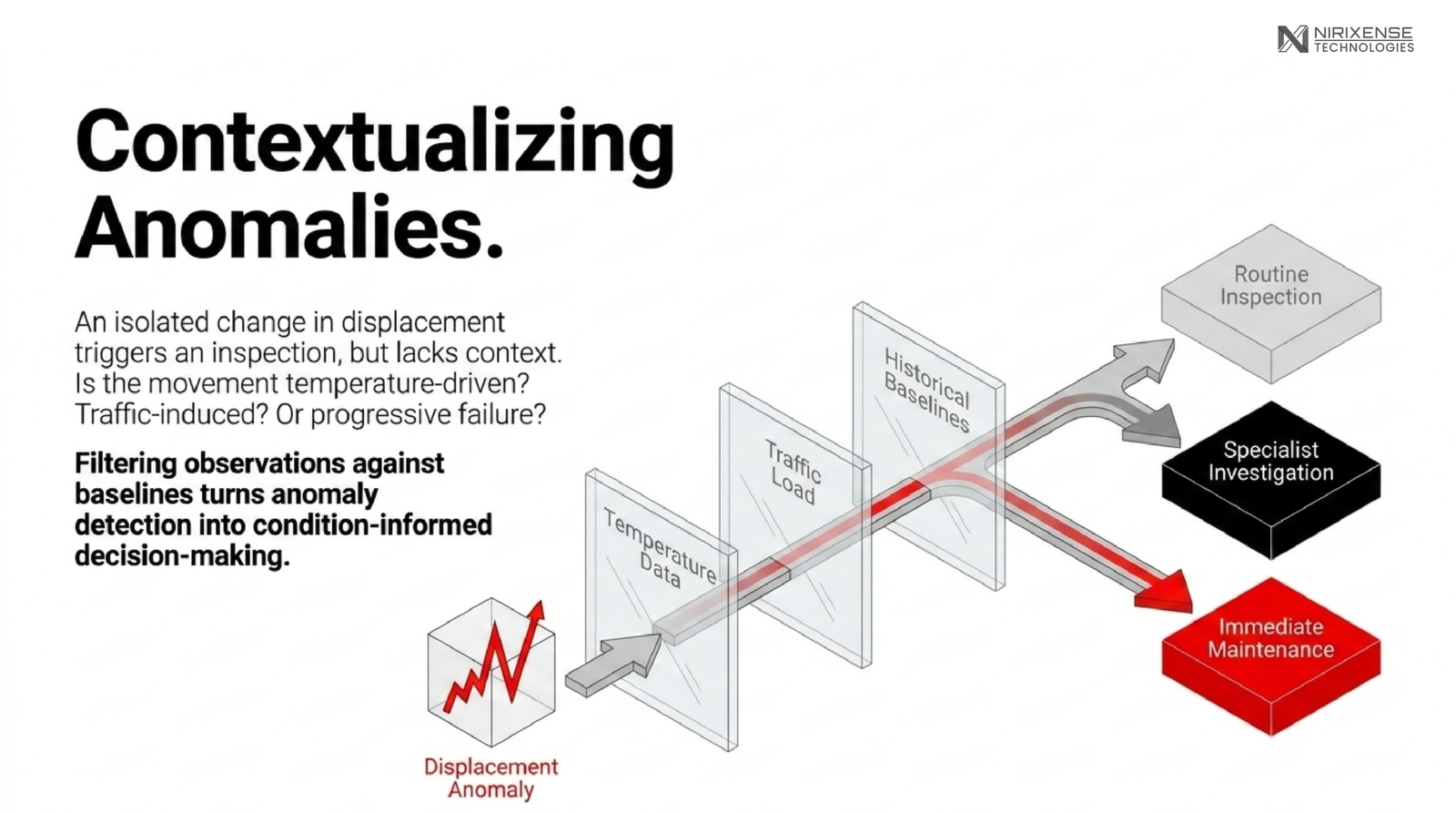
At the maintenance level, continuous monitoring of parameters such as strain, displacement, vibration or temperature can support a shift from purely calendar-based maintenance towards condition-informed planning. Instead of treating every intervention as equally urgent, maintenance teams can use observed changes in behaviour to determine where attention is justified and where an asset may continue operating without immediate intervention.
At the portfolio level, the opportunity becomes even more significant. When information from multiple structures is brought together, asset owners can compare condition and behaviour across their network and begin prioritising limited engineering resources and maintenance budgets according to measured need. This is particularly relevant to large infrastructure organisations, where the question is rarely whether maintenance is required somewhere, but which asset should receive attention first.
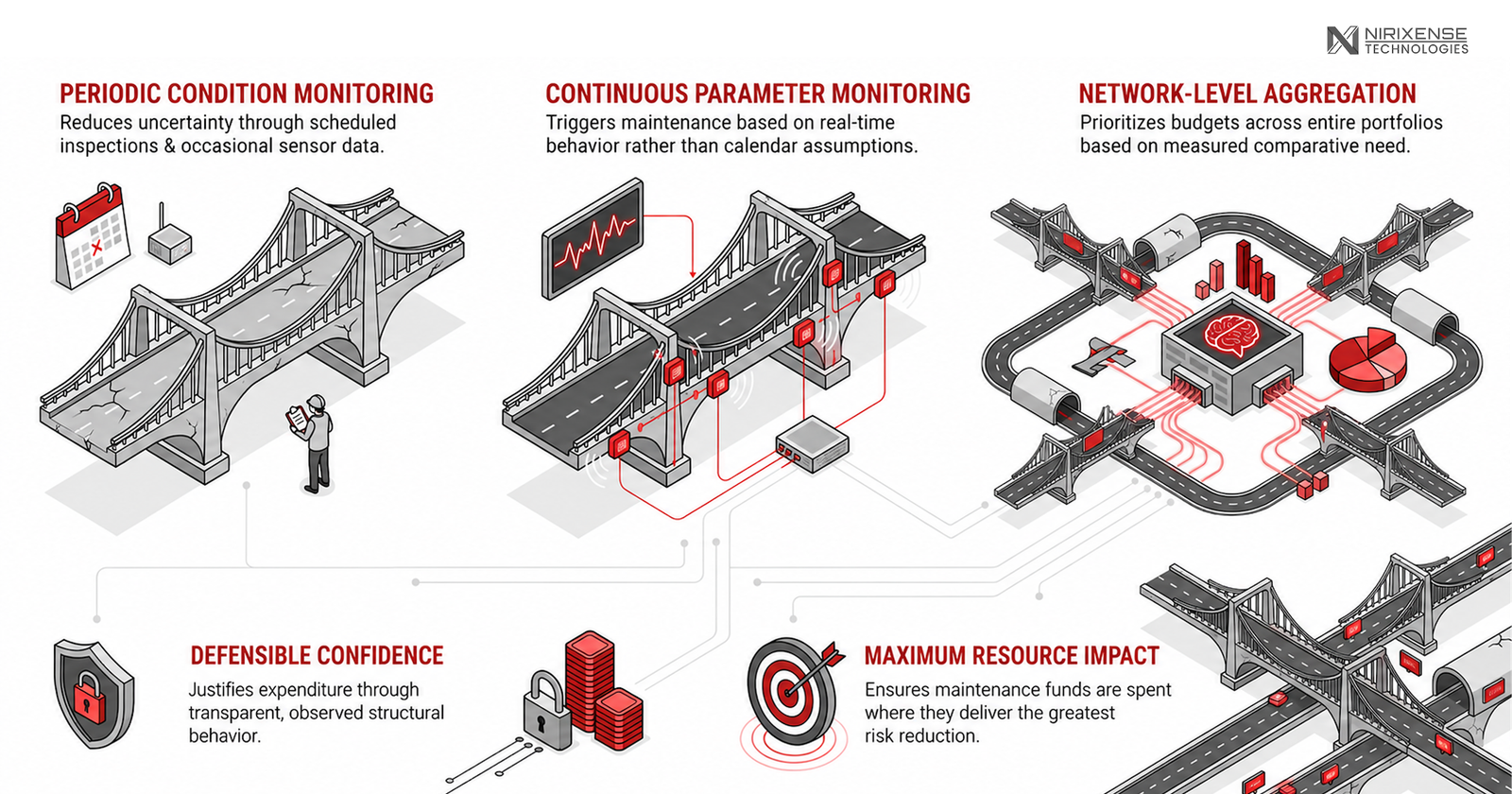
The implications extend beyond engineering and maintenance. For finance teams and public authorities, better structural intelligence can provide a more defensible basis for allocating constrained budgets across competing infrastructure needs. Instead of relying entirely on conservative assumptions or fixed priorities, expenditure can increasingly be connected to observed asset condition, risk and performance.
In that sense, optimisation is not about doing less maintenance. It is about making sure that the maintenance, inspection and investment decisions being made are directed towards where they can create the greatest reduction in risk and the greatest long-term value.
And perhaps that brings us back to the central question: if SHM can help an organisation decide where to inspect, where to intervene and where investment matters most, is it still only an engineering tool or has it become part of how infrastructure itself is managed?
What we’re building at Nirixense
At Nirixense, we are building towards this idea of structural intelligence as a continuous layer between an asset and the teams responsible for maintaining it. Our focus is on developing monitoring systems that can continuously capture structural and environmental behaviour, translate that information into meaningful signals, and help engineers and asset teams understand where attention may be required over the life of an asset.
The longer-term opportunity is not to replace inspection, engineering judgement or maintenance planning with monitoring.
It is to make all three more informed, more targeted and more efficient.
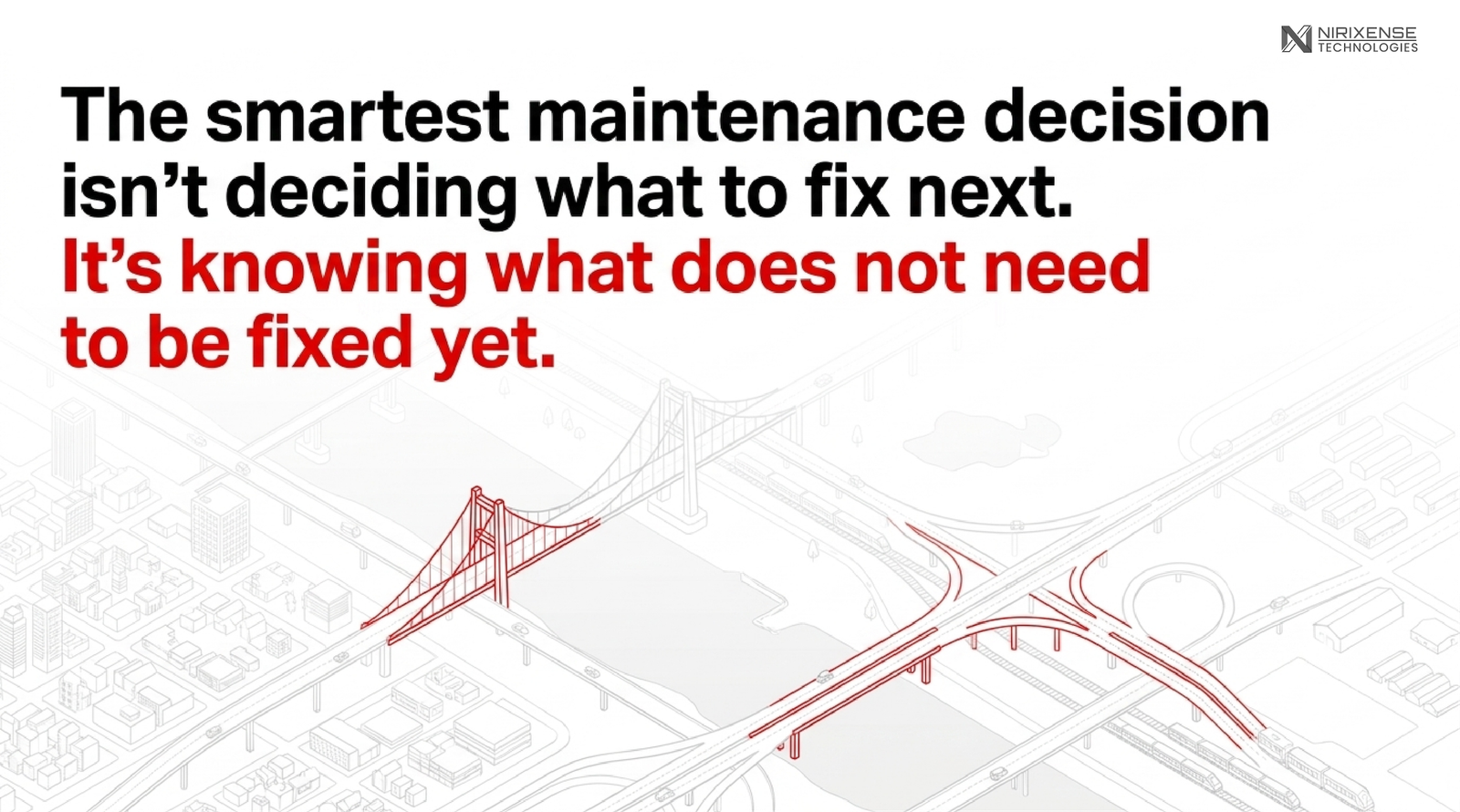
Because sometimes the smartest maintenance decision is not deciding what to fix next. It is knowing what does not need to be fixed yet.
© 2026 Nirixense Technologies Pvt. Ltd. All rights reserved. email: connect@nirixense.com
About this series: Field Notes in Structural Intelligence is a thought leadership series by Nirixense Technologies, where we engage with experts across structural engineering and monitoring to understand how SHM actually works in practice and where it needs to evolve next.