
The most critical structural errors happen before a building is complete
In conversation with Dr. Jaswant Arlekar
Technology Perspective
Divya Koppikar, Product and UI/UX Designer, Nirixense Technologies
Om Narayan Singh, Applications Engineer, Nirixense Technologies
(April 2026)
Dr. Jaswant Arlekar is a visionary leader in structural engineering, renowned for his profound expertise in seismic resilience and pioneering advancements in Structural Health Monitoring (SHM). His decades of innovative contributions continue to shape safer, smarter infrastructure worldwide.
The most critical structural errors happen before a building is complete. The phase we monitor the least and need the most.
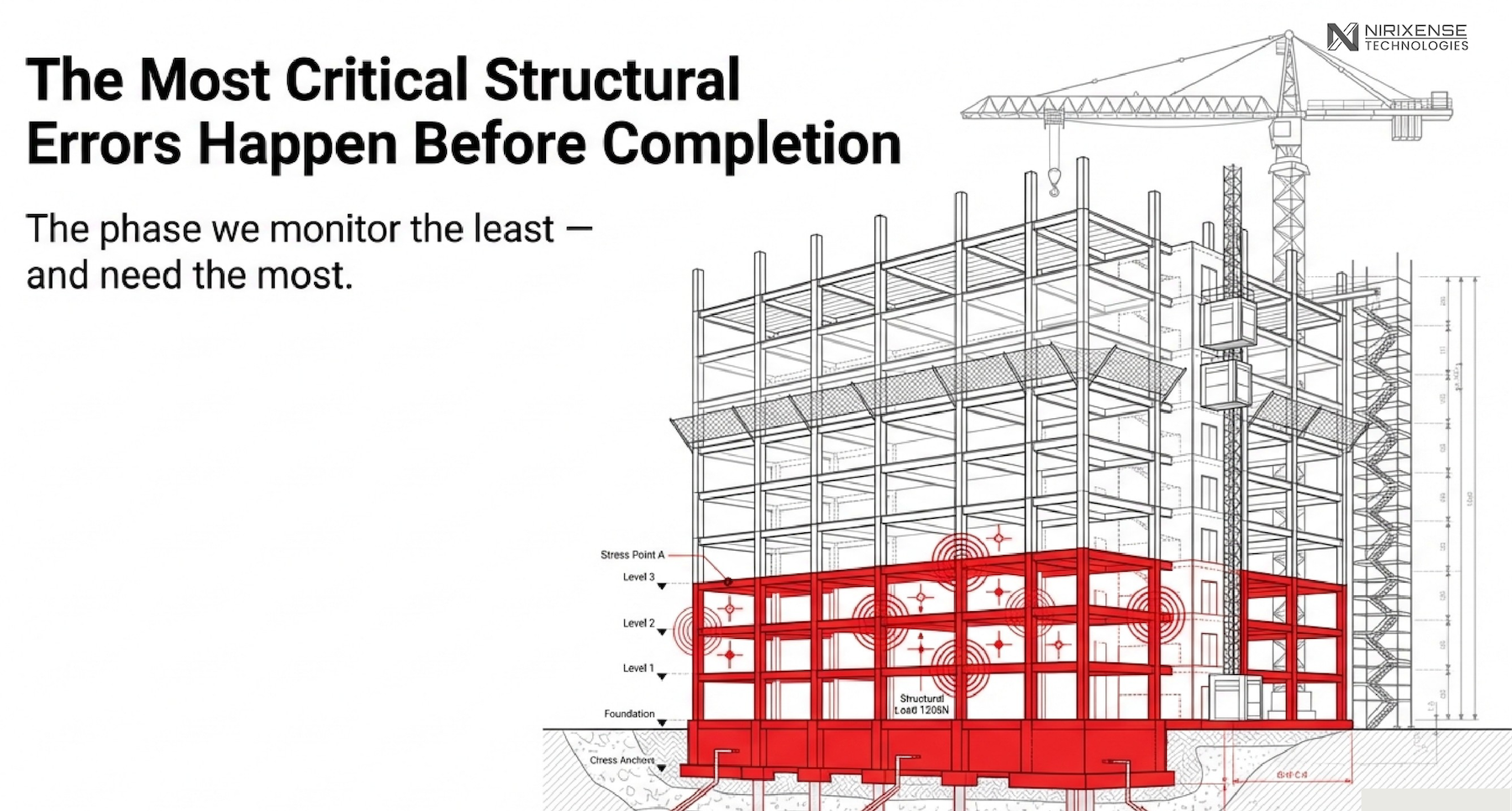
SHM is typically introduced once a structure is operational when performance needs to be tracked or when concerns arise. Monitoring, in most cases, is reactive.
But this overlooks the phase where structural risk is actually at its peak.
“The first 30% of construction progress is when the most critical execution mistakes are made.”
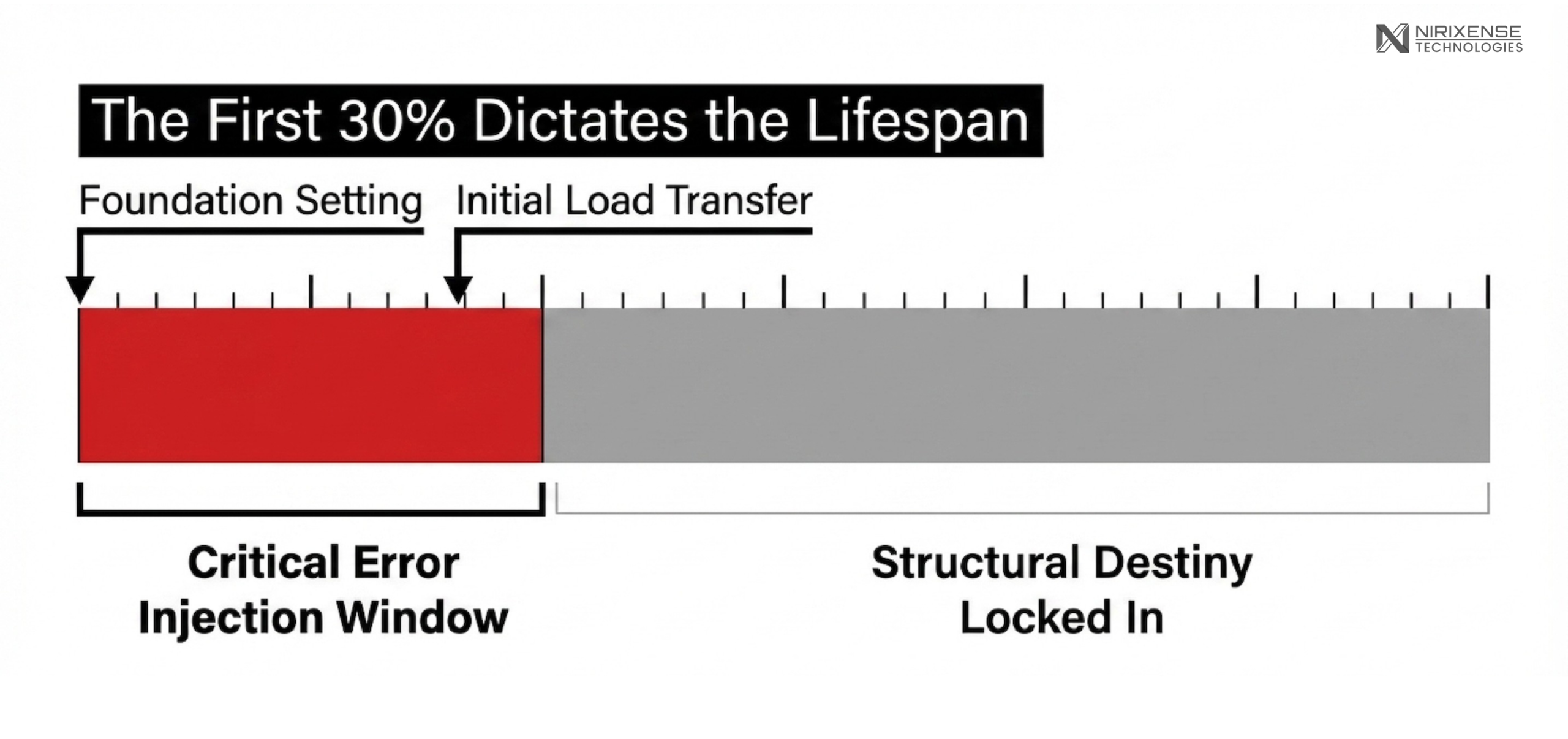
This is the stage where the structure is most vulnerable, not because of external loads, but because design intent is being translated into physical reality. And that translation is rarely perfect.
Where structures actually take shape
Design defines how a structure should behave. Construction defines how it actually behaves.
Every stage of execution, pouring, sequencing, tensioning, alignment, introduces variability. Even small deviations in these steps can alter stress distribution, stiffness, and long-term performance.
As observed in practice:
“Stresses and deformations… are significantly influenced by construction sequence and methodology.”
These are not visible errors. They don’t show up in drawings or inspections. They embed themselves into the structure as it is being built.
The compounding nature of early deviations
What makes construction-stage issues critical is not just their occurrence, but how they propagate.
A slight misalignment, an unexpected deformation, or a variation in force does not remain localized. As construction progresses, these deviations influence subsequent stages, compounding into larger structural effects.
By the time the structure is complete:
- Root causes are difficult to trace
- Corrections become expensive
- In some cases, behavior is permanently altered
This is why timing matters. Detecting issues early is not just beneficial, it fundamentally changes what is possible to fix.
Geometry control: the silent driver of performance
One of the most critical and often overlooked aspects of construction-stage monitoring is geometry control.
For many structures, especially cable-supported or long-span systems, geometry is not just an outcome. It directly governs how loads are distributed and how the structure responds.
As emphasized:
“Structural geometry, cable forces, and deformations must match design expectations during construction and service stages.”
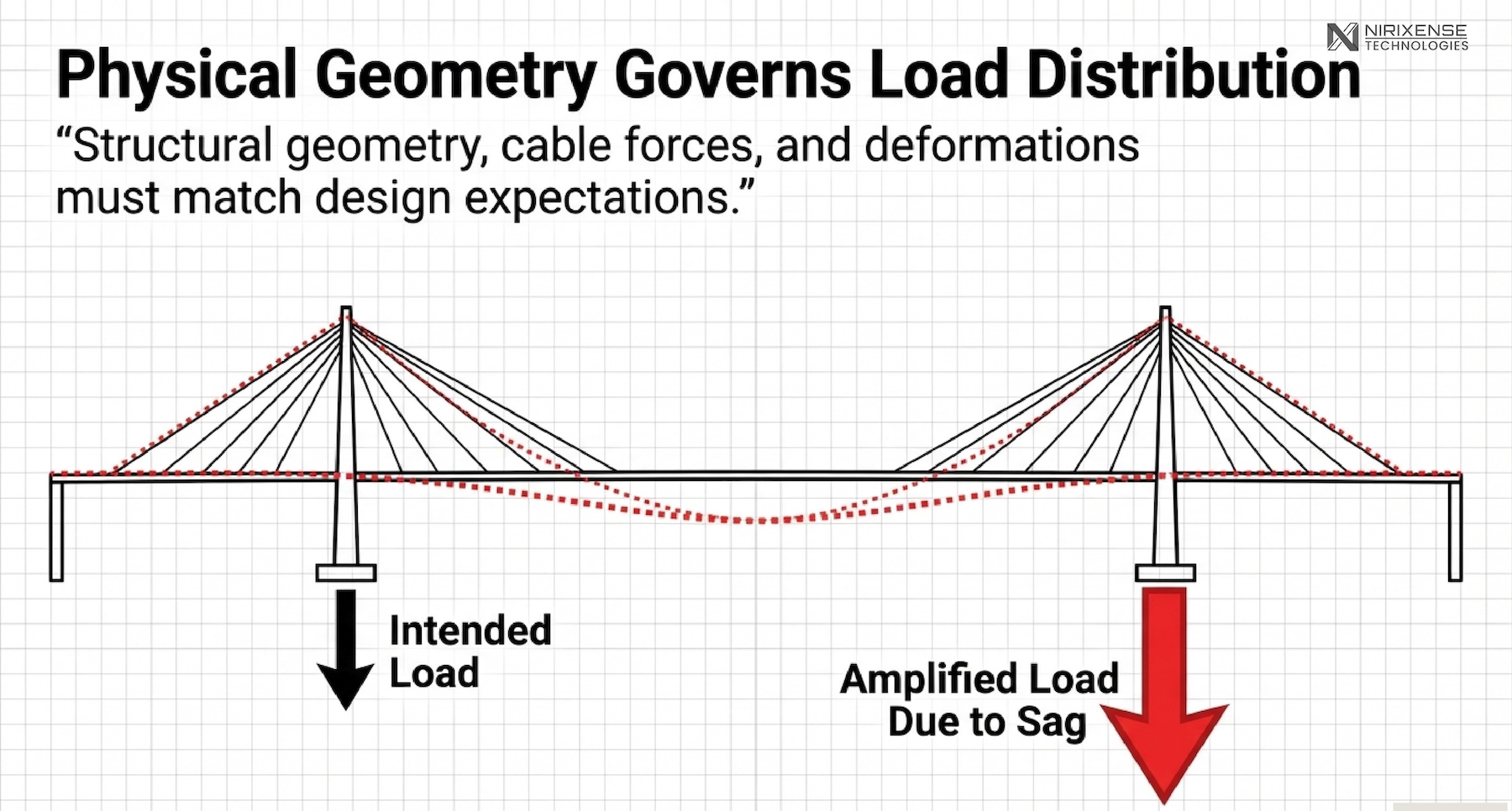
Even small deviations in geometry can shift internal forces in ways that are difficult to detect later. Without continuous monitoring, these deviations go unnoticed until they manifest as performance issues.
From passive monitoring to active control
When SHM is introduced during construction, its role changes.
It is no longer just about observing behavior after the fact. It becomes part of the construction process itself, a feedback system that informs decisions in real time.
Instead of asking:
- “What went wrong?”
It enables teams to ask:
- “Is this stage behaving as expected?”
- “Do we need to correct before proceeding?”
This aligns with a deeper shift in how SHM is used:
“SHM acts as a ‘blood test’… to fine-tune models until they reflect real behavior.”
During construction, this feedback loop is most powerful, because the structure is still adjustable.
What we’re building at Nirixense
At Nirixense, we see construction not as a preliminary phase, but as the highest-leverage stage for monitoring. A consistent insight from field experience is:
“A large part of SHM complexity today is not analysis, but installation and data acquisition.”
On construction sites, this challenge is amplified tight timelines, evolving geometry, and coordination constraints make traditional monitoring systems difficult to deploy.
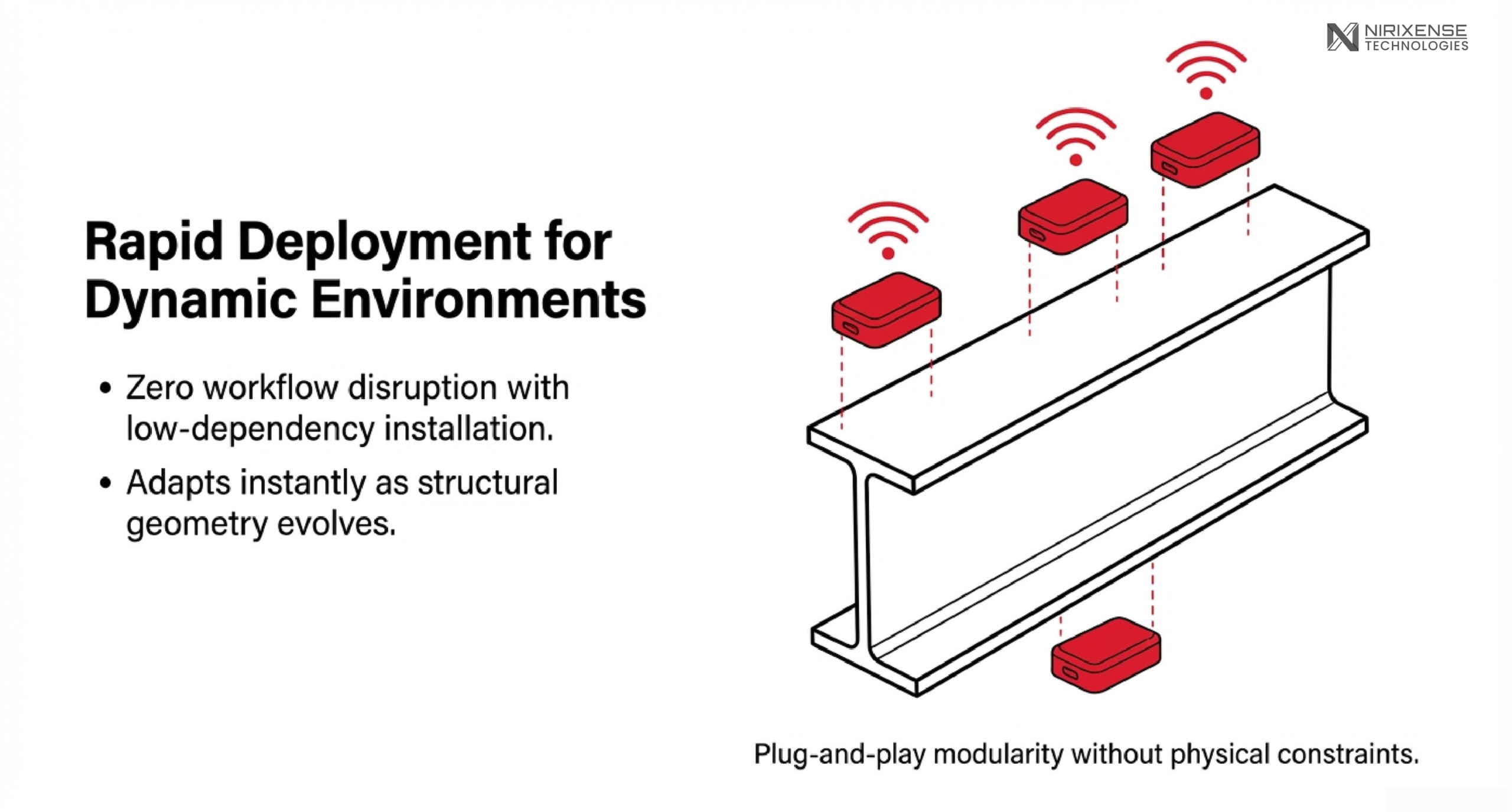
We are therefore building systems designed for this exact environment:
- Flexibility to adapt as the structure evolves
- Rapid, low-dependency installation
- Minimal wiring and setup complexity
Closing thought
By the time a structure is complete, many of its most important decisions have already been made, physically, not just on paper.
Monitoring at that stage provides visibility.
Monitoring during construction provides control.
© 2026 Nirixense Technologies Pvt. Ltd. All rights reserved. email: connect@nirixense.com
About this series: Field Notes in Structural Intelligence is a thought leadership series by Nirixense Technologies, where we engage with experts across structural engineering and monitoring to understand how SHM actually works in practice and where it needs to evolve next.