
The business of monitoring
In conversation with Mr. Atul Bhobe
Technology Perspective
Divya Koppikar, Product and UI/UX Designer, Nirixense Technologies
Om Narayan Singh, Applications Engineer, Nirixense Technologies
(May 2026)
Mr. Atul Bhobe is a highly respected structural engineering expert and industry leader, known for his deep expertise in structural health monitoring, bridge engineering, and infrastructure diagnostics, with decades of consulting experience on complex projects.
He has played a pivotal role in advancing practical SHM applications in India, combining engineering judgment with real-world implementation, and is widely regarded for shaping how monitoring is actually deployed and used in critical infrastructure.
How SHM systems are actually sold and paid for
Structural Health Monitoring (SHM) is often positioned as a high value engineering capability defined by precision instrumentation, continuous data, and the promise of better decision making, but in reality its adoption across infrastructure projects is shaped far more by how it is procured, packaged, and justified commercially than by what it is capable of delivering technically.
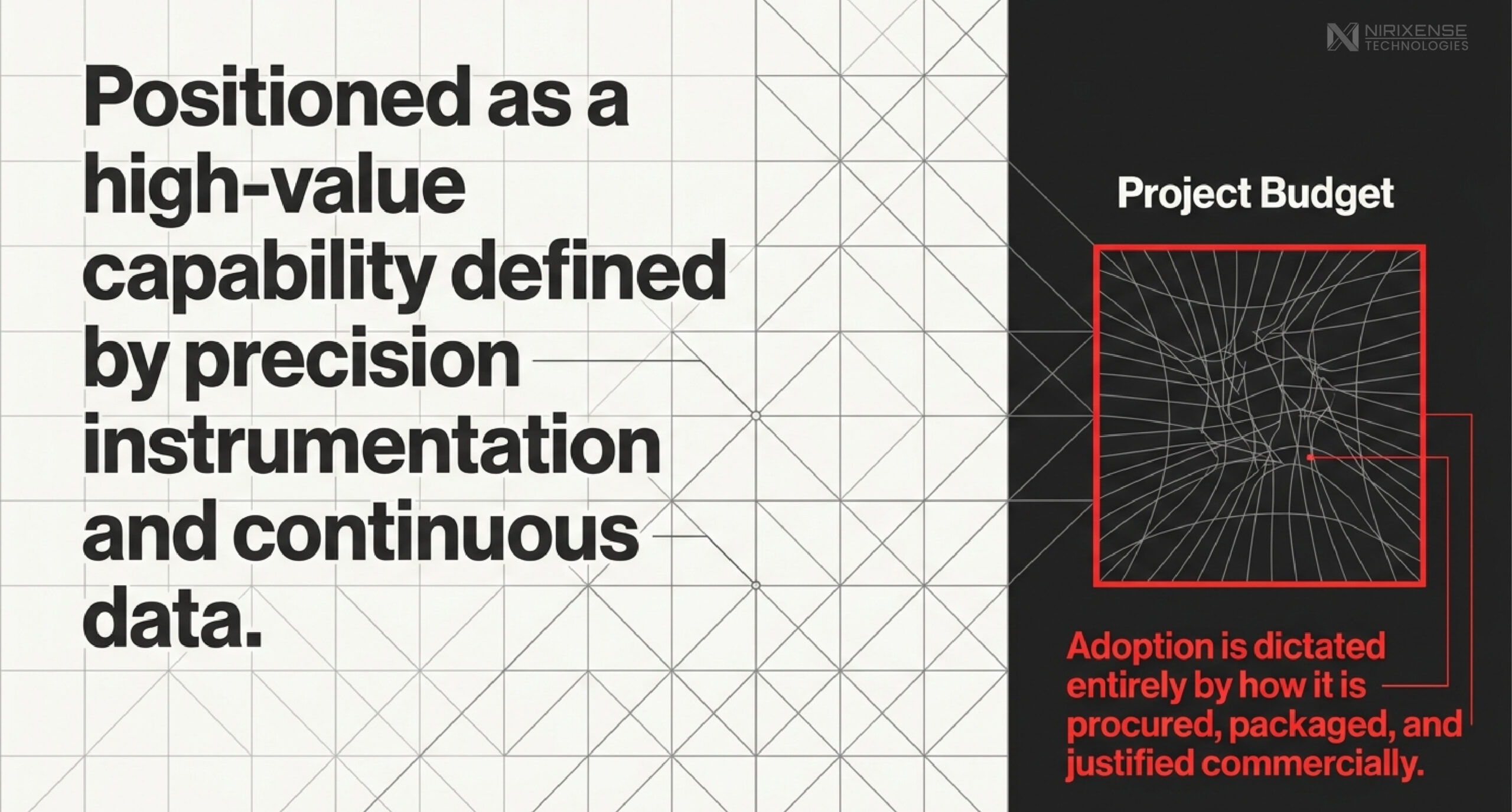
Because in most projects, monitoring does not enter as a system level engineering decision. It enters as a cost component within an already constrained project structure, and that framing fundamentally determines how it is implemented and whether it delivers any meaningful value.
Where monitoring actually sits
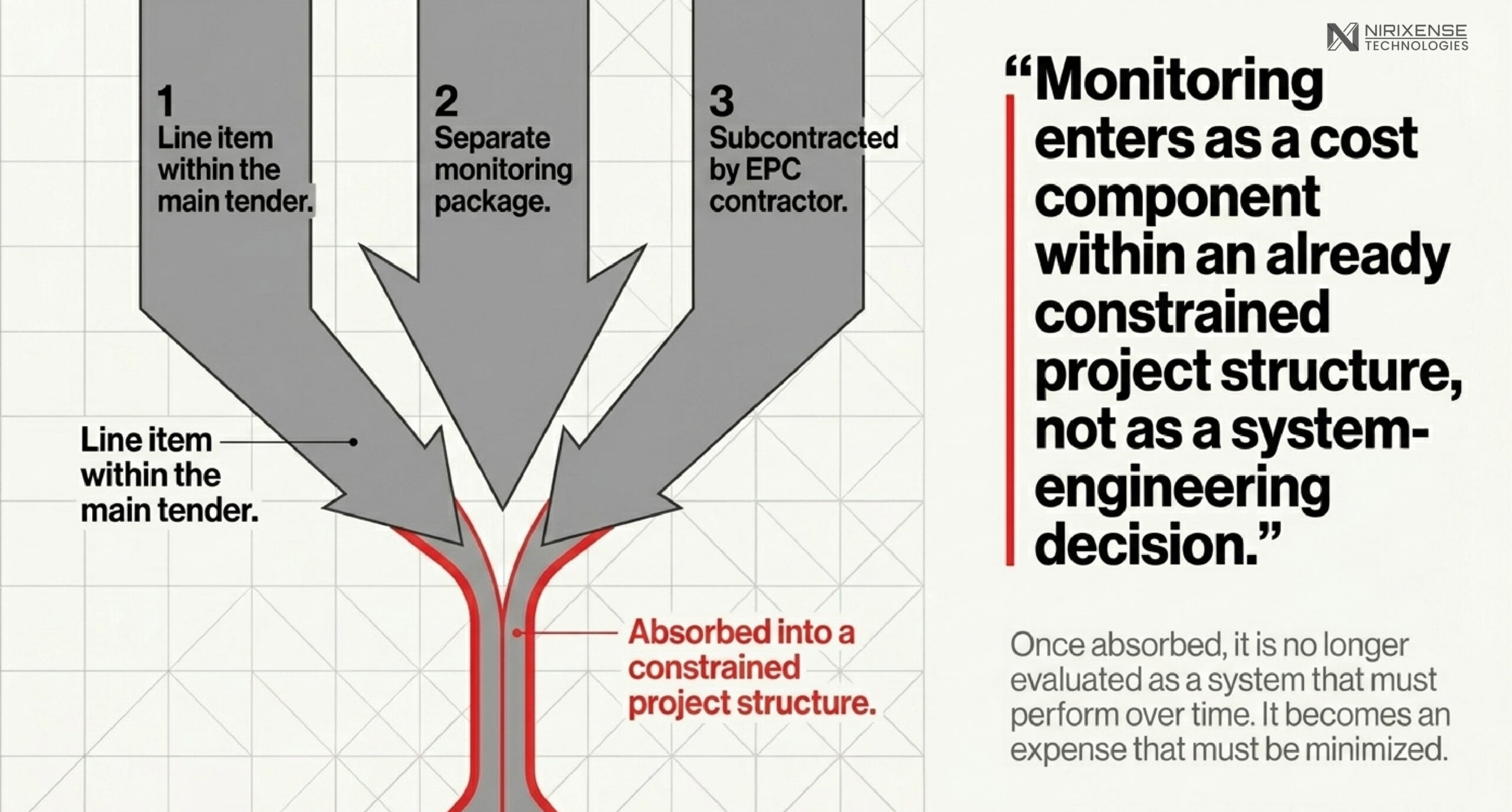
Across projects, SHM typically finds its way into execution through one of three routes. It is either included as a line item within the main infrastructure tender, introduced as a separate monitoring package, or more commonly subcontracted by the EPC contractor as part of execution.
As Mr. Bhobe explains:
“Monitoring is often a line item or subcontracted.”
While this may appear to be a procedural detail, it has far reaching implications, because once monitoring is absorbed into a broader project budget, it is no longer evaluated as a system that must perform over time, but rather as an expense that must be minimized and delivered within scope.
Decisions without ownership
The complexity deepens when you look at how decisions are actually made, because the selection of sensors, the definition of monitoring strategies, and the overall system architecture are typically influenced by consultants, independent engineers, or EPC contractors rather than specialists in SHM.
“Decisions are often made by consultants or EPC contractors, not necessarily SHM specialists.”
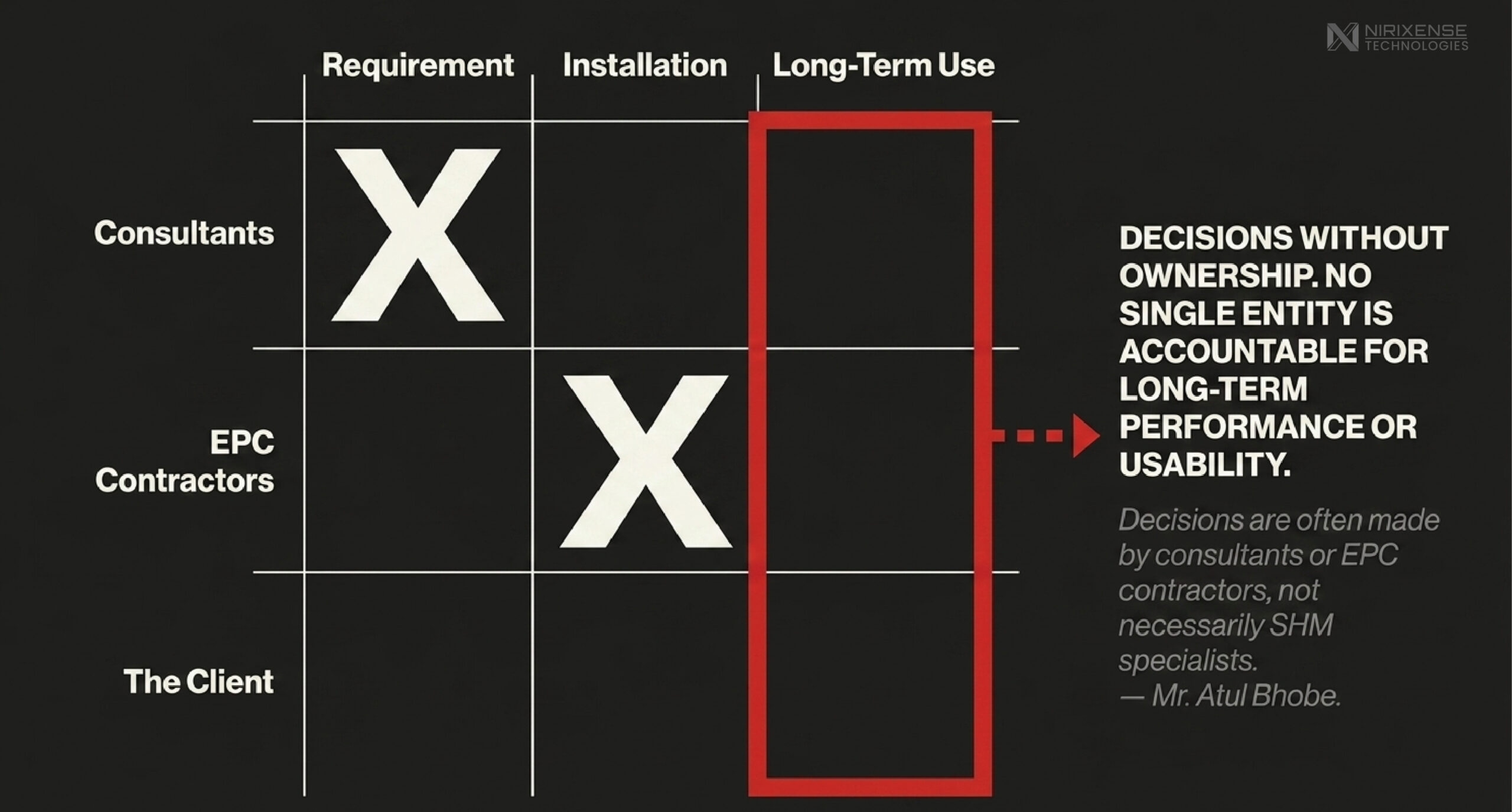
At the same time, the entity that ultimately pays for the system, whether through the client budget or the EPC contract, is often not the one that directly interacts with or depends on the monitoring data.
This creates a fragmented structure where:
- One stakeholder defines the requirement
- Another executes the installation
- No single entity is accountable for long term performance or usability
In such a system, it is almost inevitable that monitoring is optimized for delivery and compliance rather than for sustained engineering value.
What the market ends up optimizing
When you combine line item procurement, fragmented decision making, and installation heavy deployment models, the system naturally gets optimized for what the project structure rewards:
- Lower upfront cost
- Faster execution timelines
- Minimal disruption to construction
Rather than what monitoring is actually meant to achieve:
- Integration into engineering decisions
- Reliable and continuous data
- Clear, actionable insights
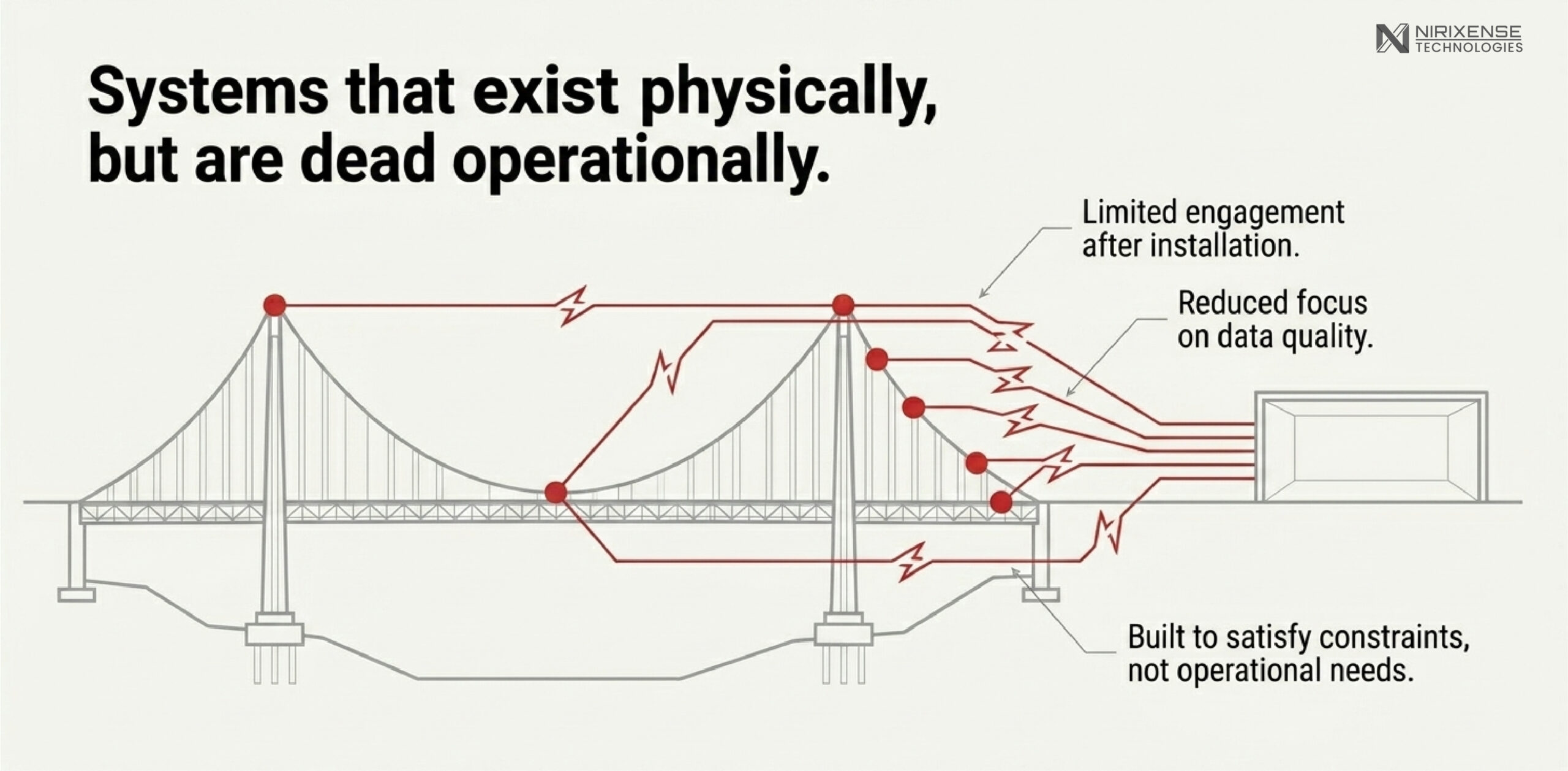
This is why many SHM systems, despite being technically functional, end up underutilized. They are built to satisfy project constraints, not operational needs.
How systems are paid for
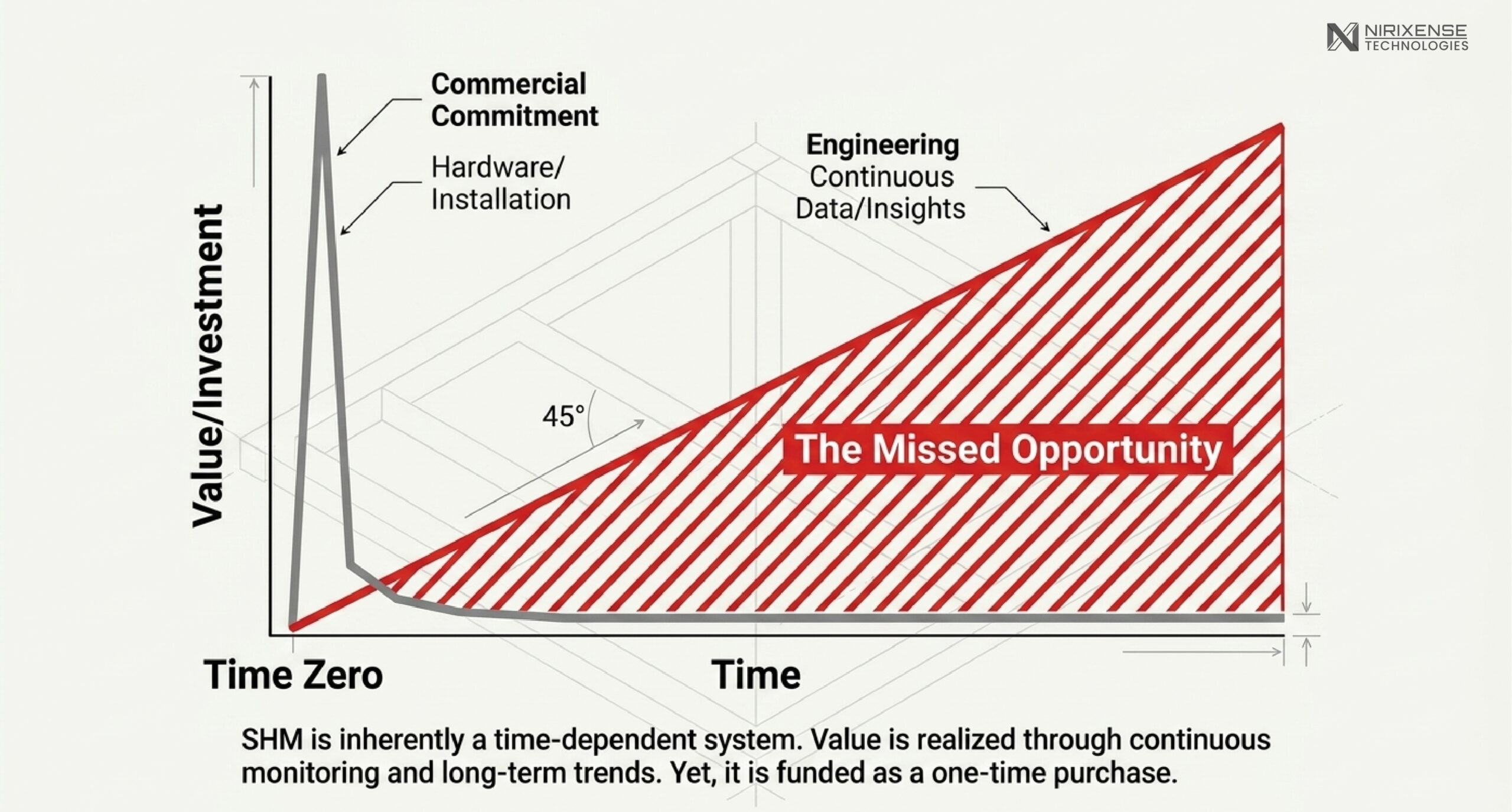
From a commercial standpoint, most projects still favor models that revolve around upfront hardware procurement, where sensors, data acquisition systems, and installation define the primary scope and cost.
In some cases, this is supplemented by:
- Annual monitoring or maintenance contracts
- Data analysis or reporting services
However, these are often secondary, and the core financial commitment remains tied to initial deployment.
This creates a fundamental mismatch, because SHM is inherently a time dependent system, where value is realized through continuous monitoring, long term data trends, and ongoing insights, yet it is funded as a one time purchase.
The result is predictable:
- Limited engagement after installation
- Reduced focus on data quality and usability
- Systems that exist physically, but are not actively used for decision making
The missed opportunity
What emerges from this structure is not a lack of demand for monitoring, but a misalignment between how monitoring is needed and how it is made commercially viable.
Even incremental shifts such as reducing installation complexity, minimizing wiring dependencies, or enabling modular and scalable deployments can significantly change the economics of monitoring, making it easier to adopt across more projects and use cases.
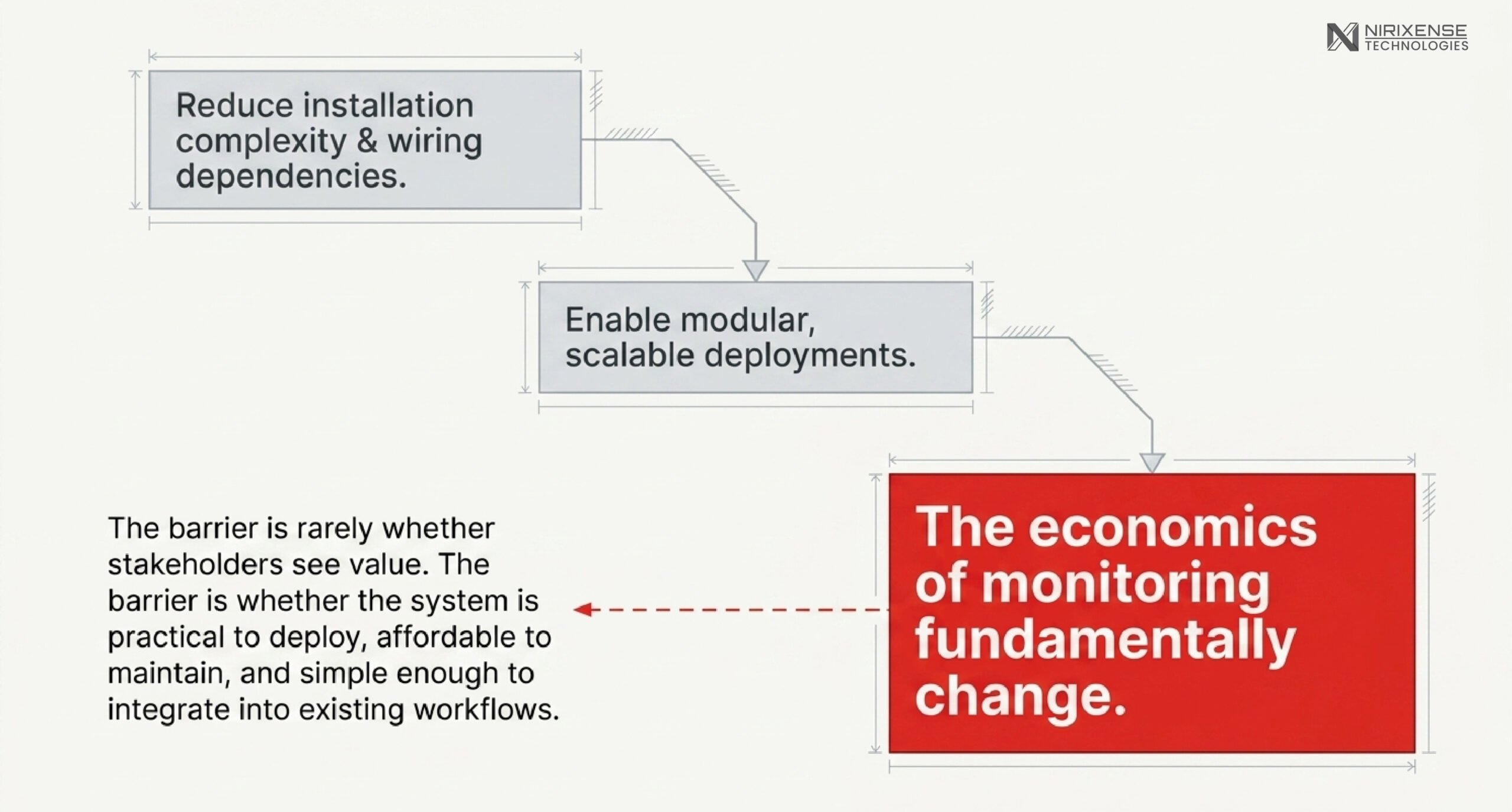
Because in many situations, the barrier is not whether stakeholders see value in SHM, but whether the system is practical to deploy, affordable to maintain, and simple enough to integrate into existing workflows.
The real question
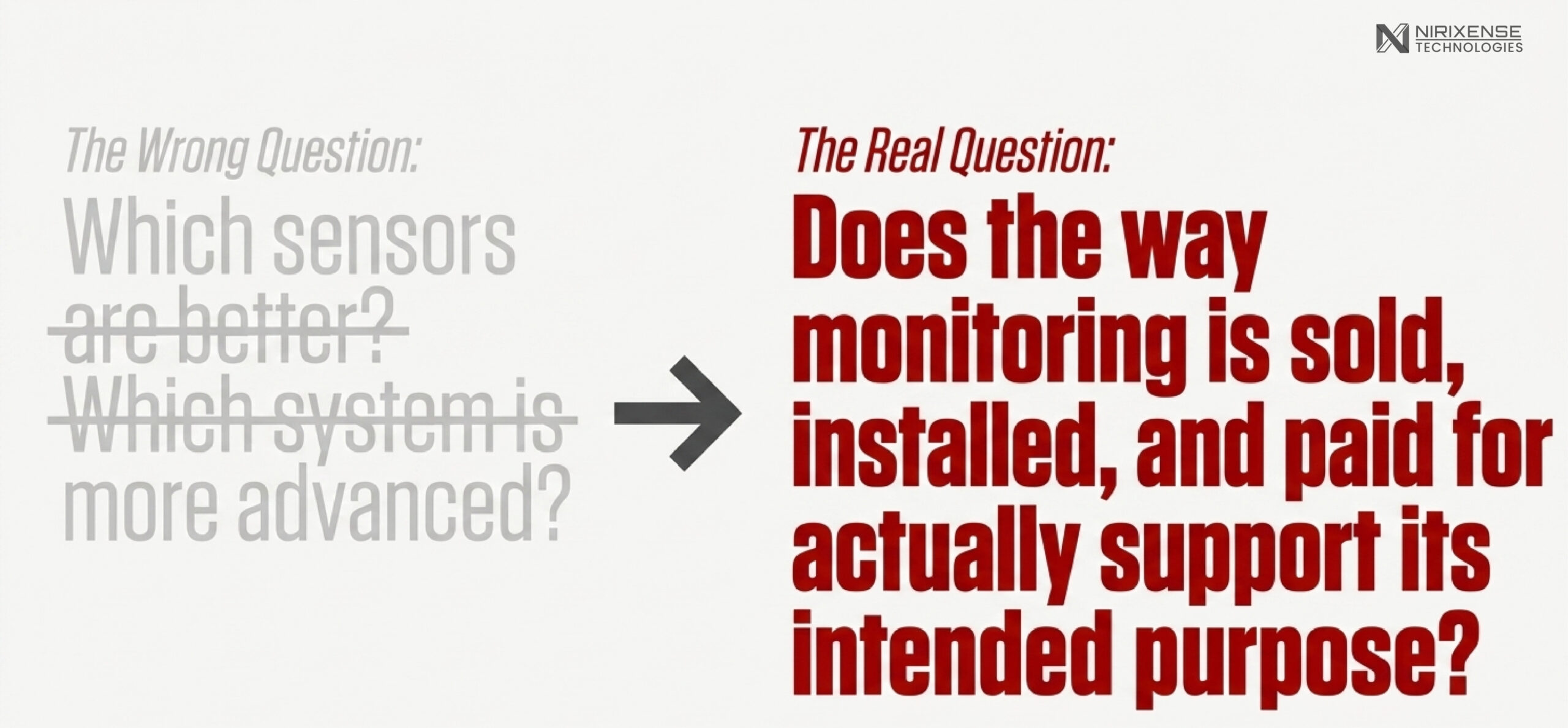
The industry often frames the conversation around technology:
- Which sensors are better?
- Which system is more advanced?
But these are not the constraints that determine adoption.
The more critical question is:
- Does the way monitoring is sold, installed, and paid for, actually support its intended purpose?
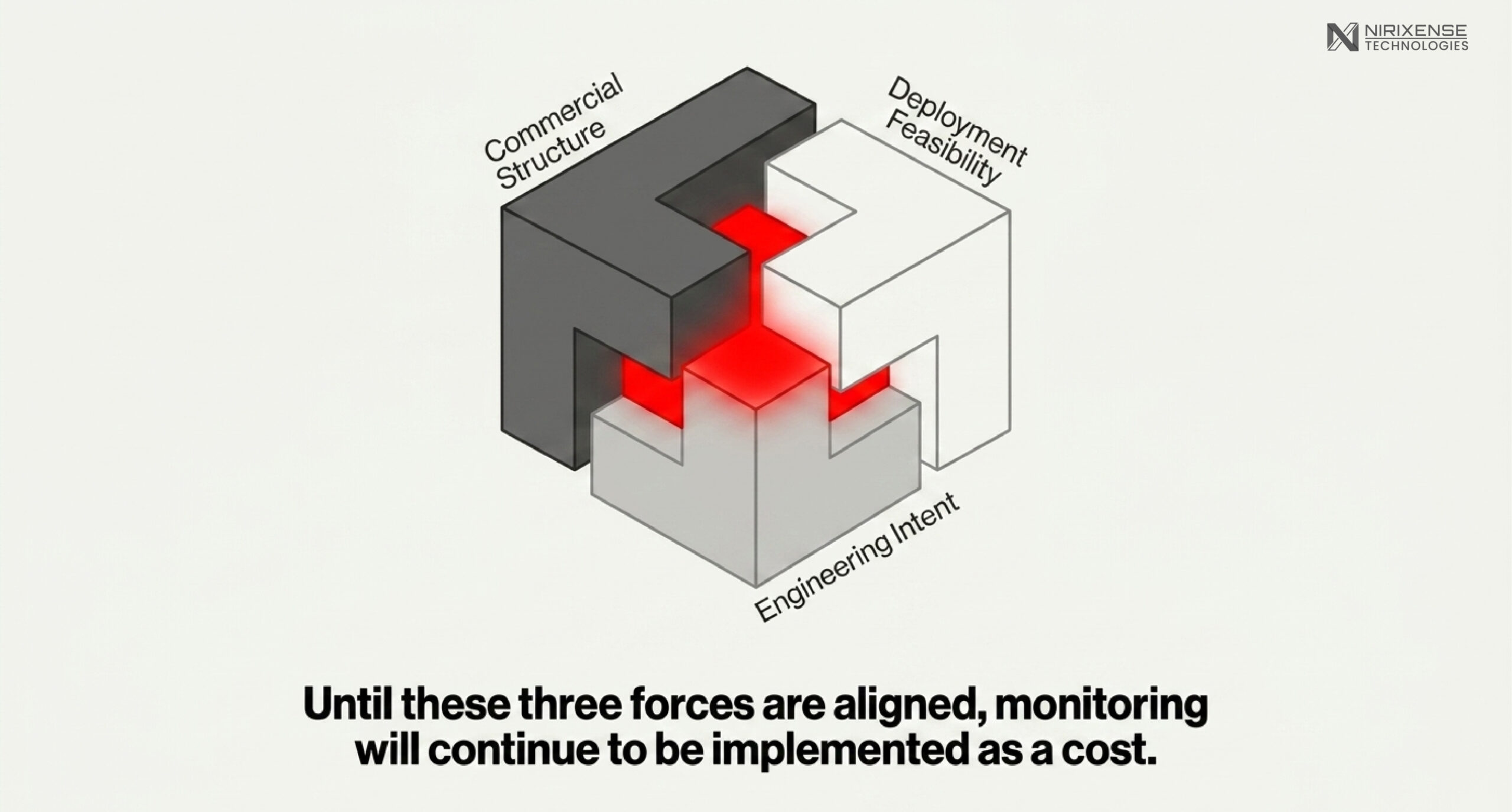
Because in SHM, success is not defined by capability alone. It is defined by alignment between commercial structure, deployment feasibility, and engineering intent.
Until those are aligned, monitoring will continue to be implemented as a cost. Not as a system.
© 2026 Nirixense Technologies Pvt. Ltd. All rights reserved. email: connect@nirixense.com
About this series: Field Notes in Structural Intelligence is a thought leadership series by Nirixense Technologies, where we engage with experts across structural engineering and monitoring to understand how SHM actually works in practice and where it needs to evolve next.