
Procurement shapes performance: Why most SHM systems fail before installation
In conversation with Mr. Atul Bhobe
Technology Perspective
Divya Koppikar, Product and UI/UX Designer, Nirixense Technologies
Om Narayan Singh, Applications Engineer, Nirixense Technologies
(June 2026)
Mr. Atul Bhobe is a highly respected structural engineering expert and industry leader, known for his deep expertise in structural health monitoring, bridge engineering, and infrastructure diagnostics, with decades of consulting experience on complex projects.
He has played a pivotal role in advancing practical SHM applications in India, combining engineering judgment with real-world implementation, and is widely regarded for shaping how monitoring is actually deployed and used in critical infrastructure.
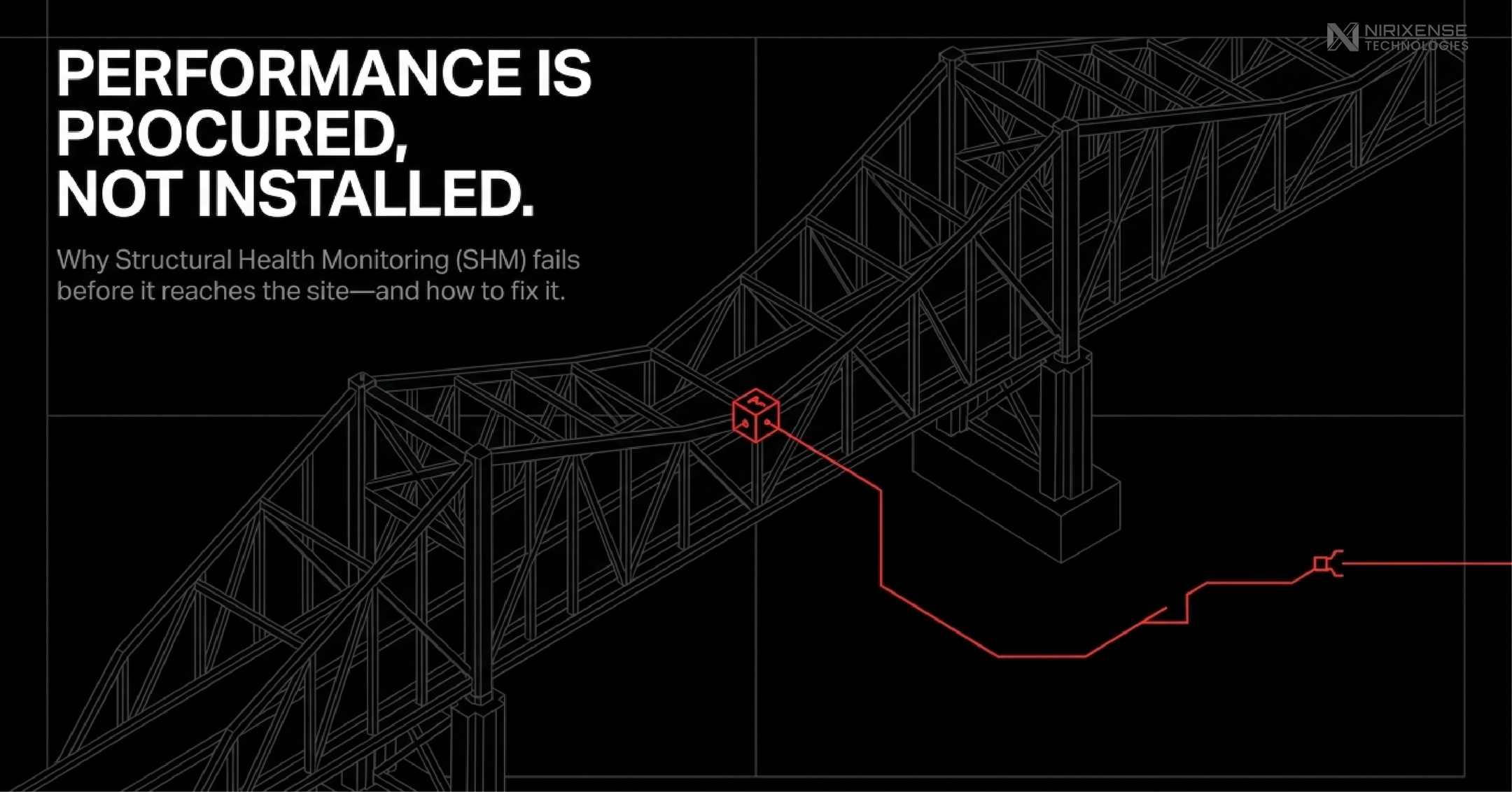
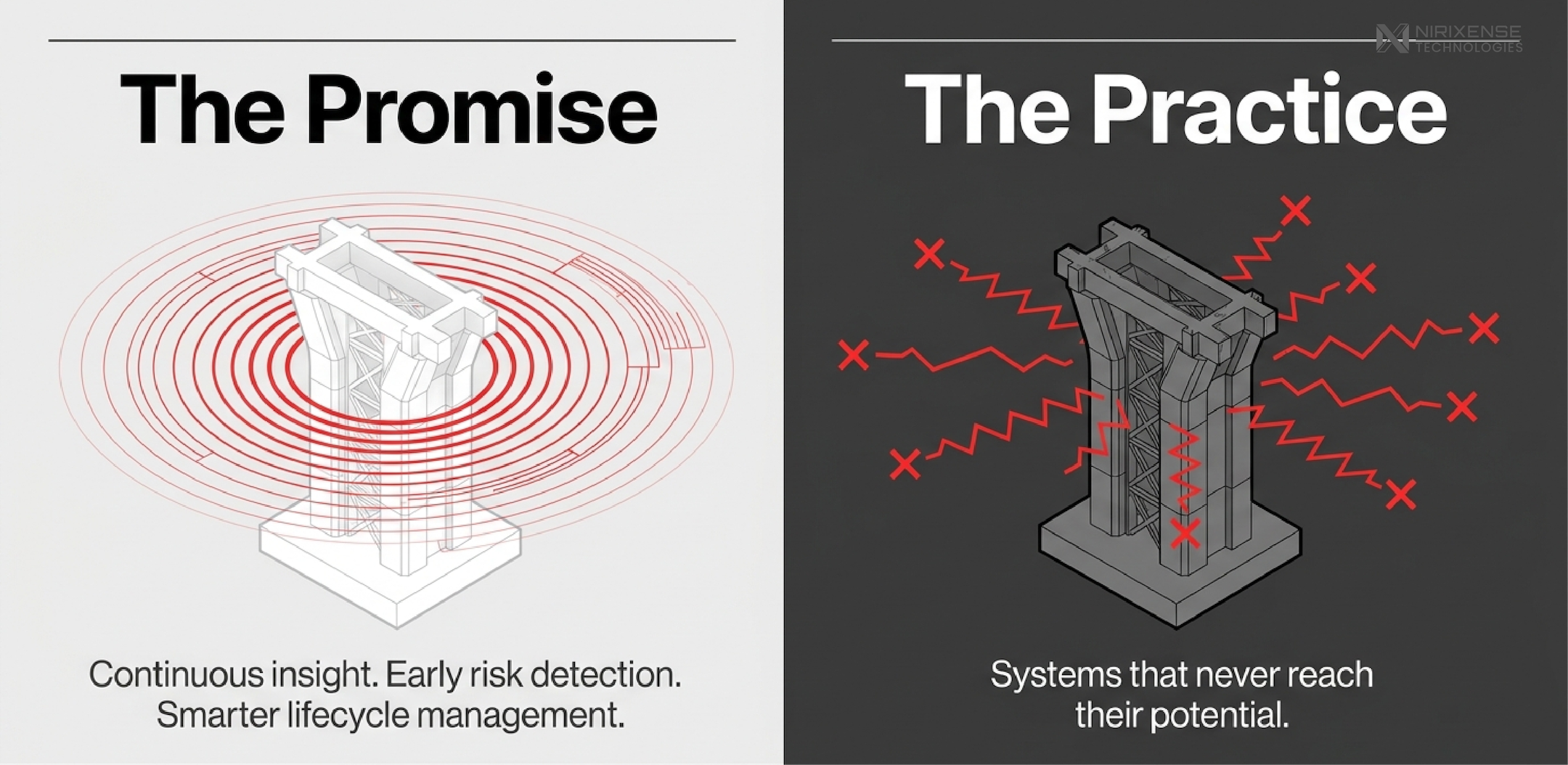
Structural Health Monitoring (SHM) is often framed as a precision-driven engineering layer that promises continuous insight, early risk detection, and smarter lifecycle management, but in practice, most systems never reach that potential, not because of technological limitations, but because of how they are introduced, defined, and ultimately procured within infrastructure projects.
It doesn’t start with design, It starts with procurement
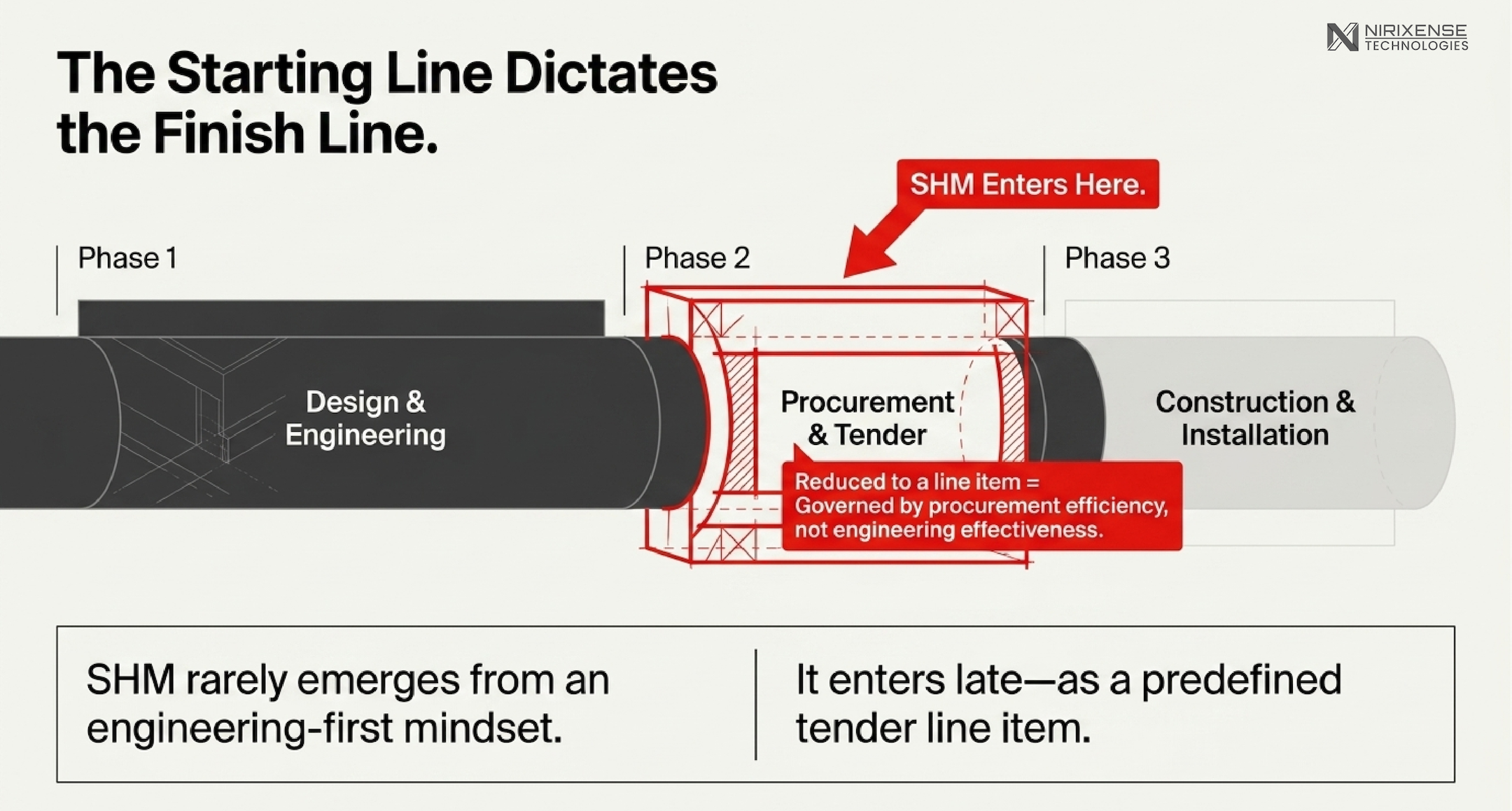
In most projects, monitoring does not emerge from an engineering-first mindset; instead, it enters late, typically as part of tender structuring or contractual packaging, where its role is already constrained by cost considerations and predefined scopes rather than performance intent.
As Atul Bhobe notes:
“Monitoring is often just a line item in the tender, or something subcontracted later.”
That framing is not incidental, it is foundational, because the moment SHM is reduced to a line item, it inherits the logic of procurement efficiency rather than engineering effectiveness, which means the system is immediately optimized to satisfy budget thresholds and compliance checklists instead of long-term usability or decision-making value.
When cost structures define technical outcomes
“Decisions are often made by consultants or EPC contractors, not necessarily SHM specialists.”
The people deciding monitoring systems are often:
- Consultants
- EPC contractors
- Procurement teams
Rarely:
- SHM specialists
This creates a structural gap where critical aspects such as sensor selection, placement strategy, and data architecture are not engineered holistically, but assembled in a fragmented manner, resulting in systems that function in isolation but fail to deliver integrated insight.
Subcontracting and the dilution of intent
The situation becomes more constrained when monitoring is subcontracted, as the system moves further down the value chain, accumulating cost pressures and losing technical clarity at each stage, until what is delivered on-site is no longer a thoughtfully designed monitoring solution, but a minimal instrumentation package intended to fulfill contractual obligations.
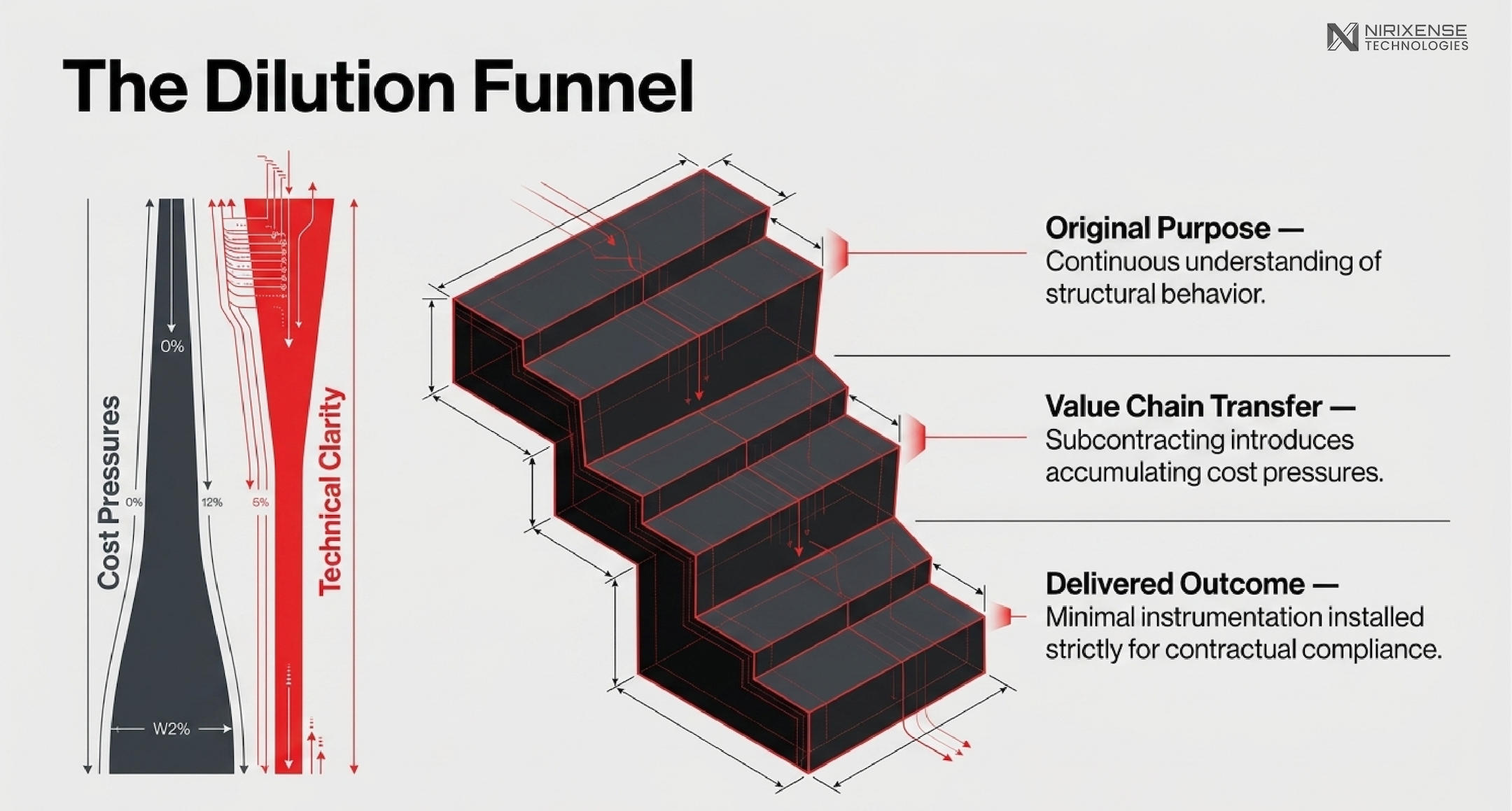
In this process, the original purpose of SHM, which is continuous understanding of structural behavior, is gradually replaced by a narrower objective focused on installation and compliance, often with limited consideration for how the system will perform, evolve, or even be used after commissioning.
Optimized to exist, not to inform
This procurement-driven approach produces systems that are technically present but functionally underwhelming, where sensors may be installed and data may be collected, yet the outputs remain disconnected from real engineering decisions because they were never designed with those decisions in mind.
“Systems end up being optimized for cost and compliance, not for long-term usability.”
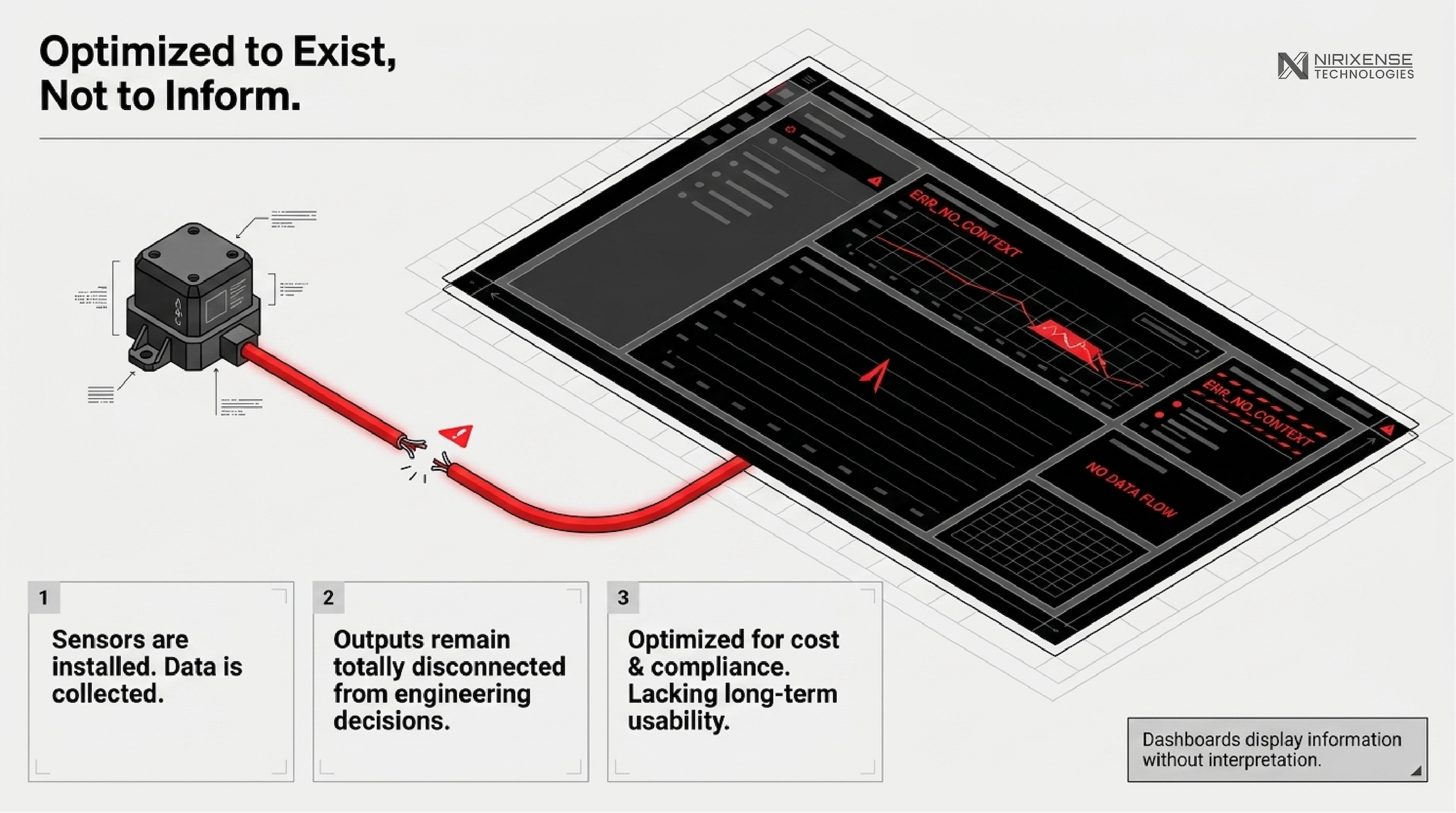
The consequences are subtle but significant, including data streams that lack context, dashboards that display information without interpretation, and monitoring setups that require effort to maintain but offer limited actionable value in return.
Rethinking the starting point
If SHM is expected to move beyond compliance and begin delivering meaningful engineering outcomes, the shift cannot happen at the level of technology alone, it must begin at the level of procurement philosophy, where monitoring is no longer treated as an add-on, but as a system that is scoped early, defined by its outputs, and aligned with lifecycle performance from the outset.
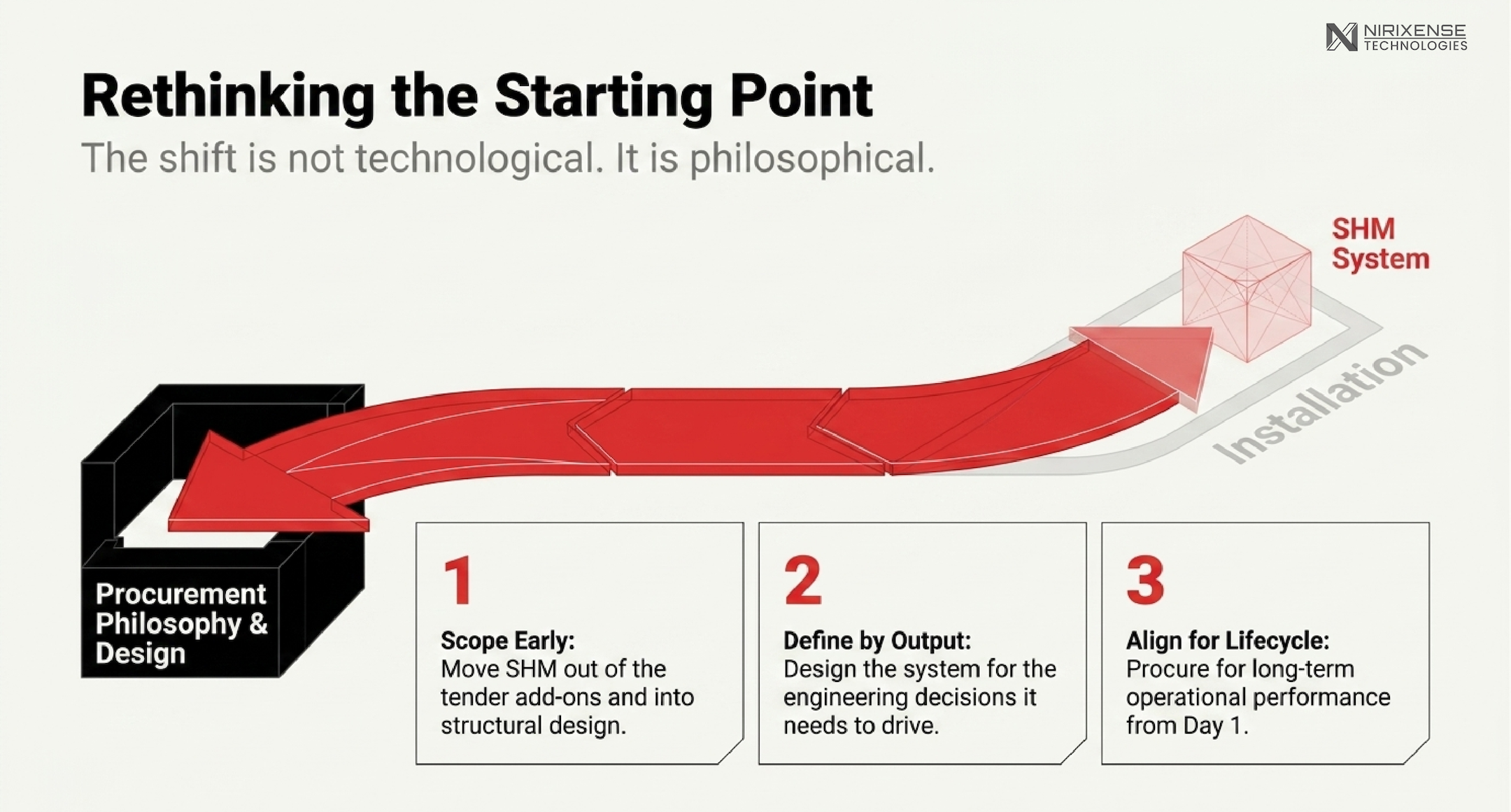
Because ultimately, the effectiveness of a monitoring system is not determined after installation, it is determined much earlier, at the moment it is specified, scoped, and purchased.
In that sense, SHM systems do not just get engineered. They get procured into success, or into failure.
© 2026 Nirixense Technologies Pvt. Ltd. All rights reserved. email: connect@nirixense.com
About this series: Field Notes in Structural Intelligence is a thought leadership series by Nirixense Technologies, where we engage with experts across structural engineering and monitoring to understand how SHM actually works in practice and where it needs to evolve next.