
Infrastructure is monitored continuously. Decisions aren’t.
Divya Koppikar, Product and UI/UX Designer, Nirixense Technologies
Om Narayan Singh, Applications Engineer, Nirixense Technologies
(August 2026)
The gap between observation and decision
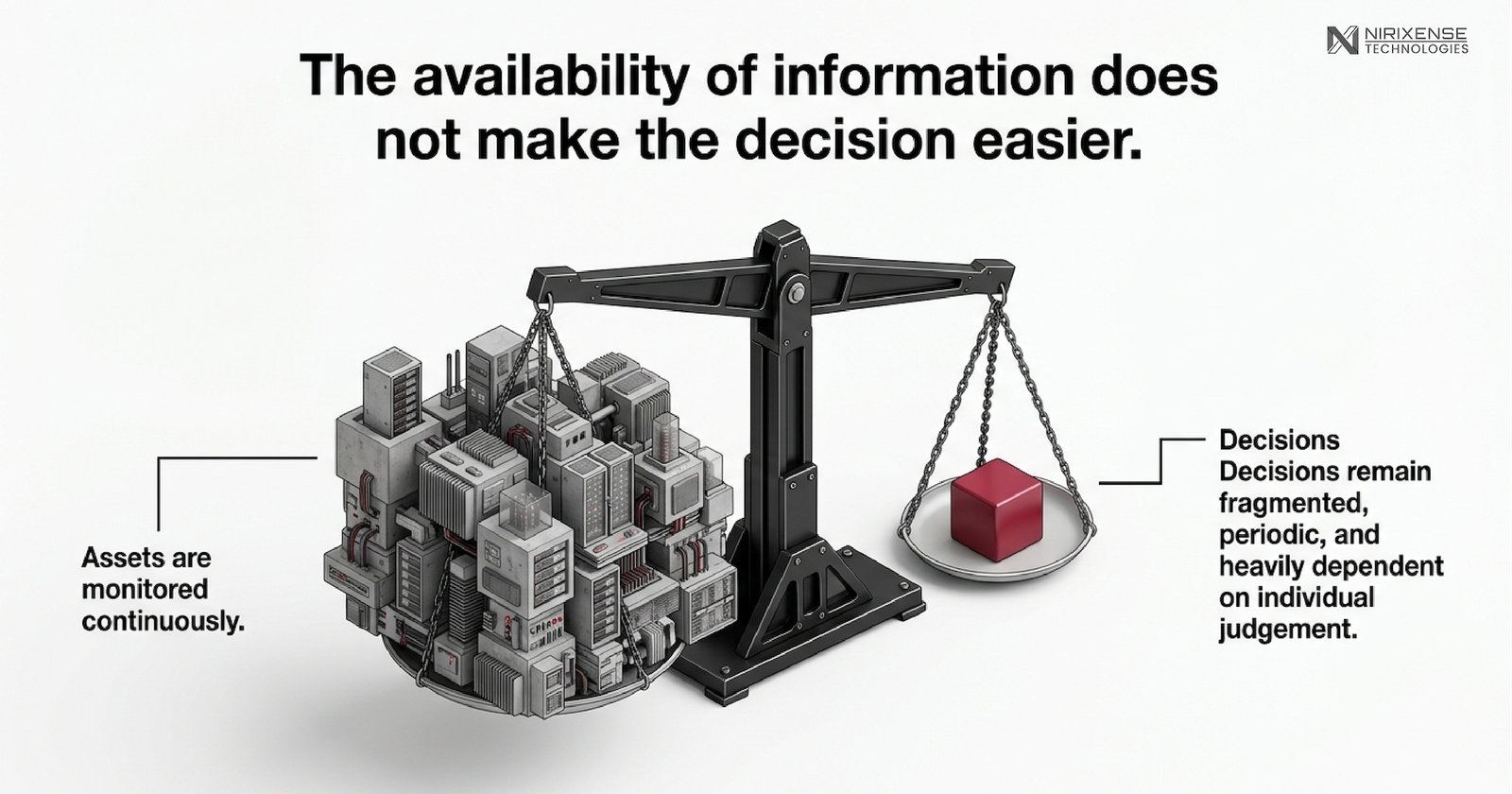
Structural Health Monitoring has become increasingly good at telling us what is happening inside an asset. Sensors can continuously capture changes in strain, vibration, displacement, temperature and other indicators of structural behaviour, giving engineers access to information that previously existed only through periodic inspections or after something had already gone wrong. But the availability of more information does not necessarily make the decision that follows easier.
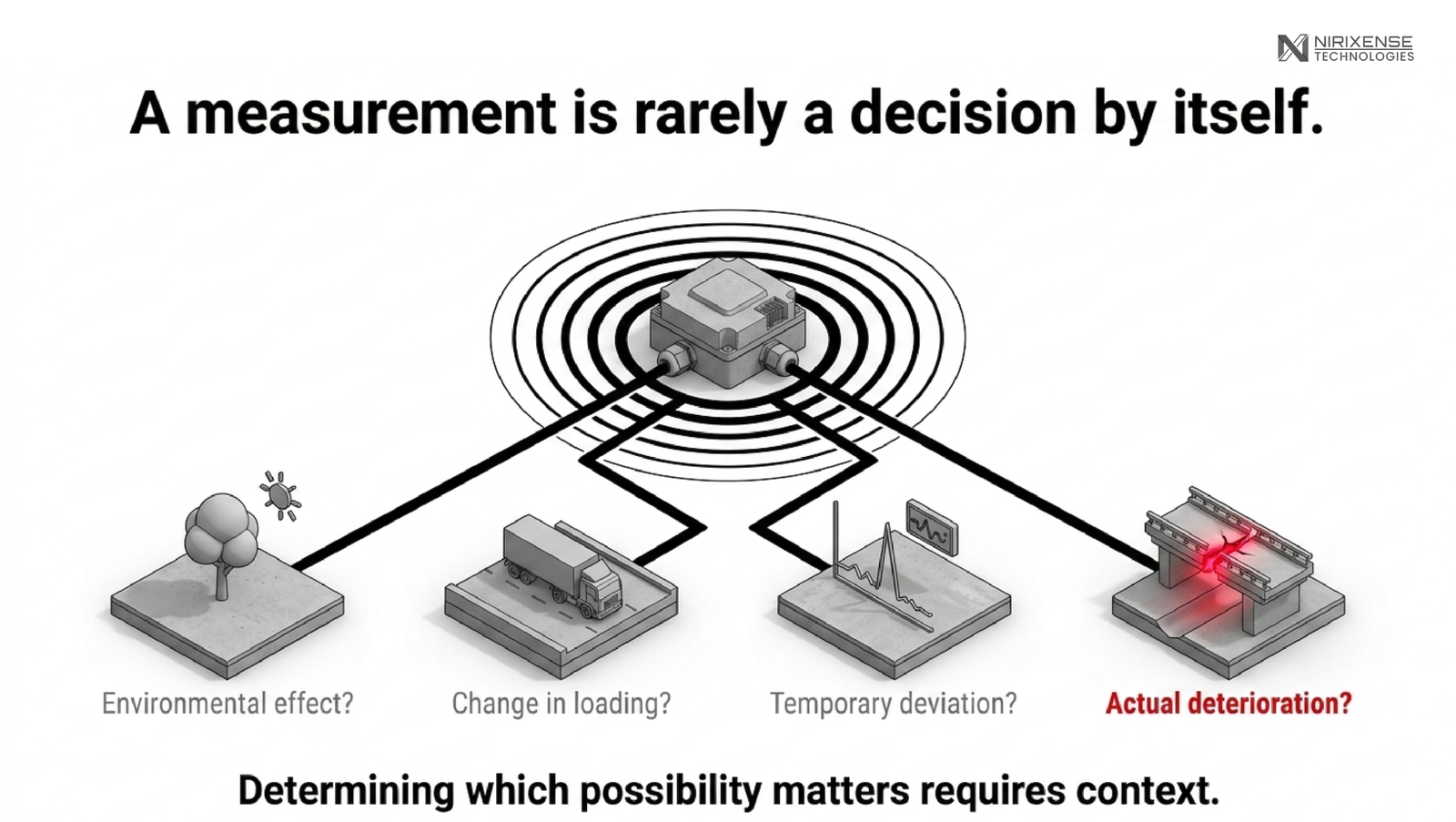
A measurement is rarely a decision by itself. An unusual reading may indicate deterioration, an environmental effect, a change in loading, or simply a temporary deviation from normal behaviour. Determining which of these possibilities matters requires context: what the asset has done before, what changed recently, what other sensors are showing, whether an inspection has already been conducted, whether maintenance altered the system, and whether a similar condition has previously been investigated. The difficult part of monitoring therefore increasingly sits not in producing the observation, but in turning that observation into a sufficiently informed judgement about what should happen next.
This creates an interesting gap in modern infrastructure management: the asset can be monitored continuously while the decision-making around it remains fragmented, periodic and heavily dependent on individual judgement.
The data exists. The context often doesn’t.
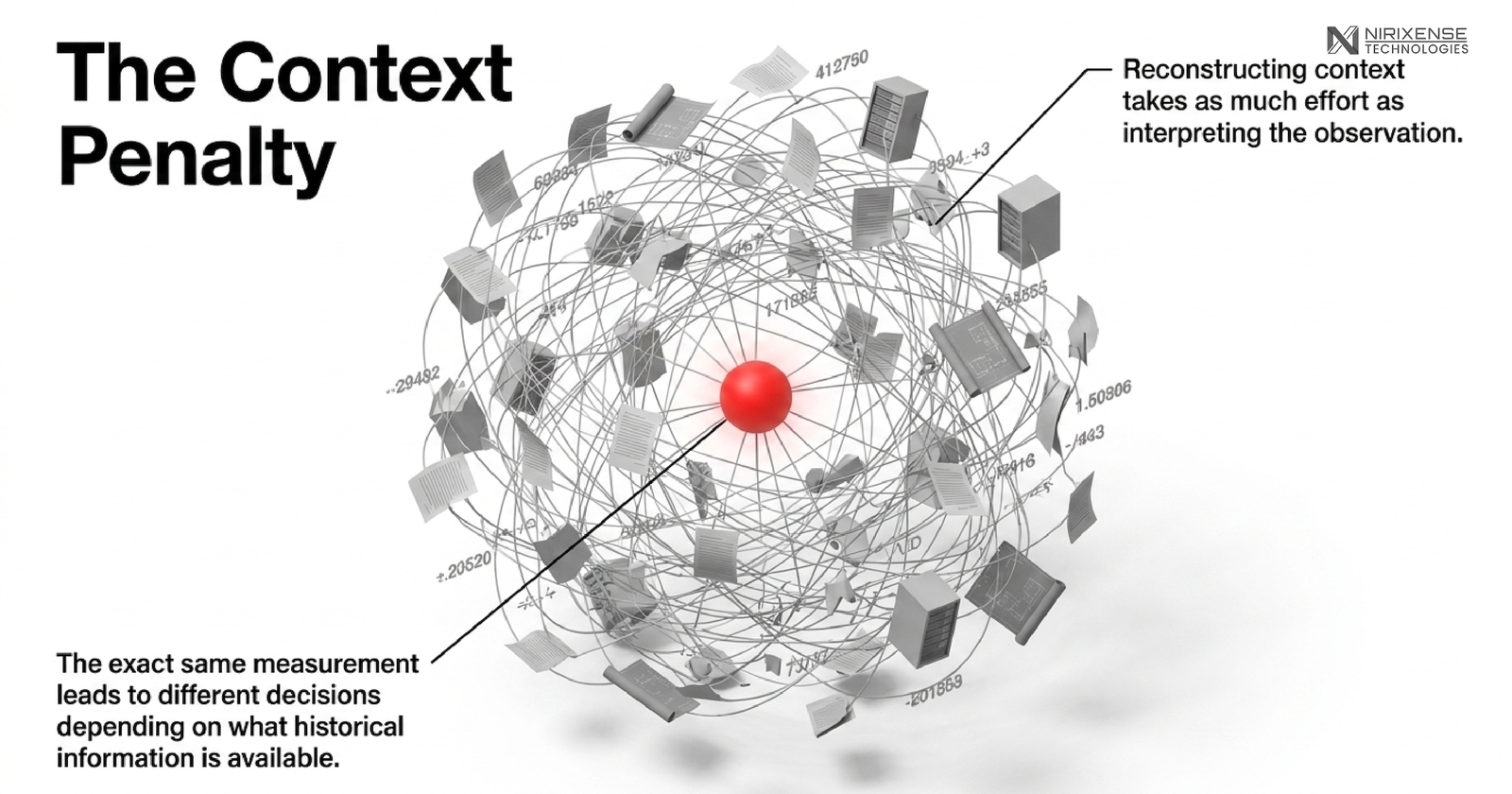
Infrastructure generates enormous amounts of information over its lifetime, but that information rarely exists as one connected story. Current sensor readings may sit in one system, inspection findings in another, maintenance records somewhere else, while drawings, previous assessments and the reasoning of experienced engineers remain distributed across documents and people.
As a result, an engineer investigating an anomaly may spend as much effort reconstructing the context around the observation as interpreting the observation itself. The same measurement can lead to different decisions depending on what historical information is available, which previous interventions are remembered, and how much institutional knowledge the person reviewing it has accumulated.
This becomes particularly important as assets age, because infrastructure does not exist in a single state. Its behaviour is continuously shaped by repairs, changing loads, environmental conditions, operating patterns and previous decisions. A monitoring system that knows only what the asset is doing now therefore knows only part of the story.
The challenge is no longer simply connecting sensors to data; it is connecting evidence to the context in which engineering decisions are made.
When more monitoring creates more decisions
There is also a limit to treating alerts as the endpoint of monitoring. An alert tells an engineer that something deserves attention, but it does not necessarily tell them whether the event matters, why it occurred, what evidence should be checked next, or whether intervention is actually necessary. As monitoring becomes more continuous, this distinction becomes increasingly important because every additional observation creates another potential demand on human attention.
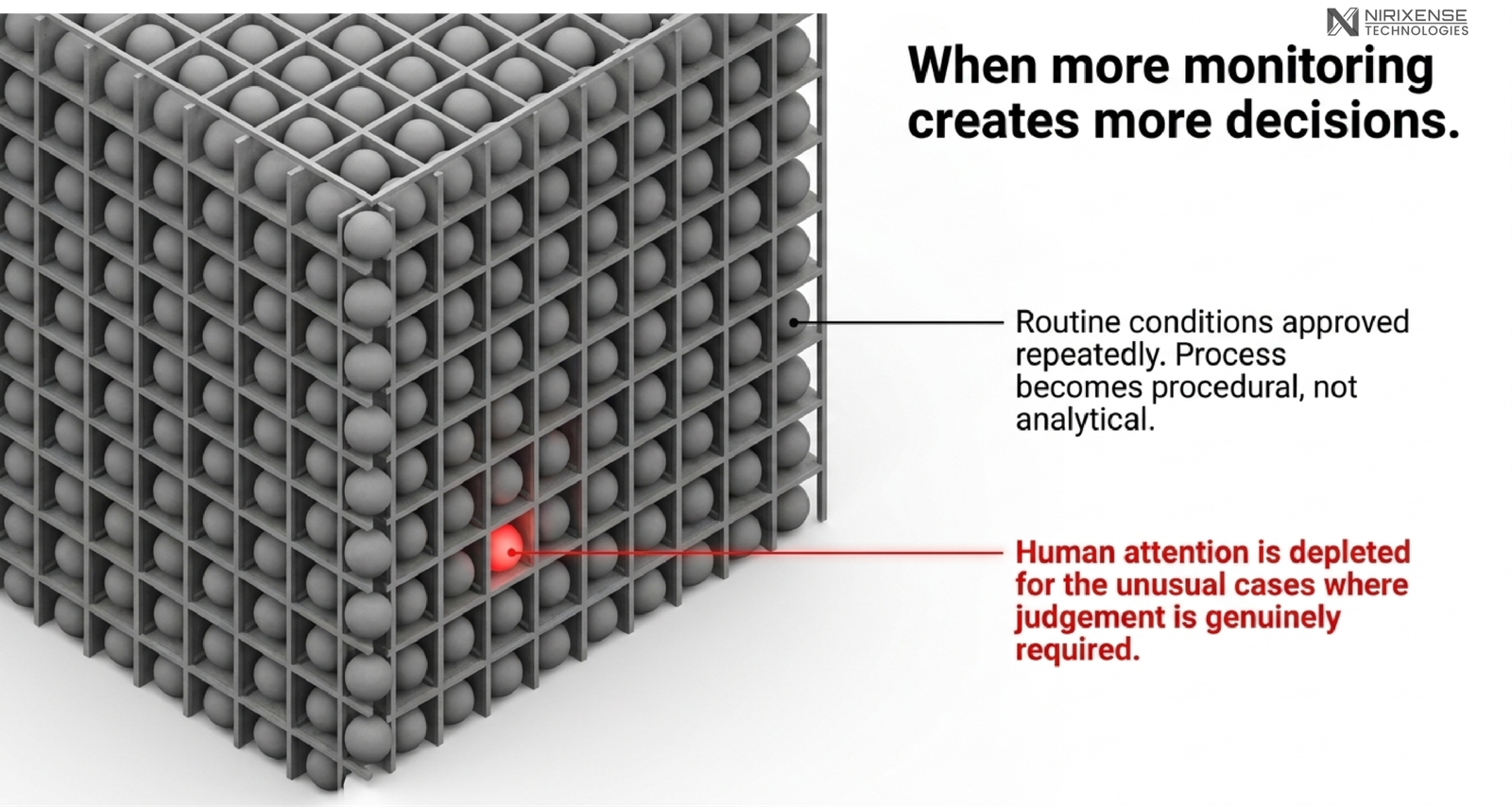
If engineers repeatedly encounter the same types of alerts, review similar measurements and approve routine conditions, the process can gradually become procedural rather than analytical. The human may technically remain responsible for every decision while having less and less attention available for the unusual cases where judgement is genuinely required.
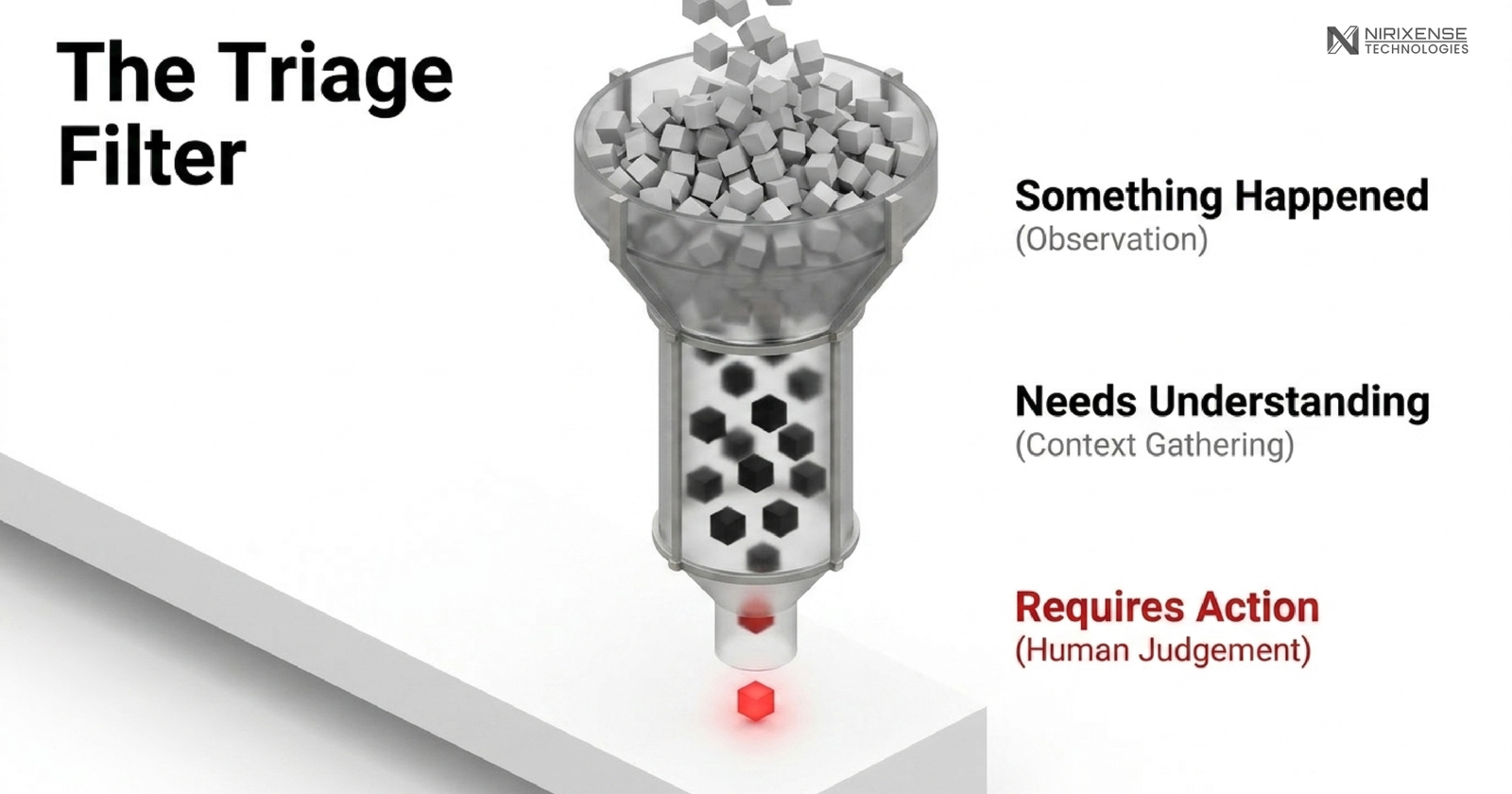
This is one reason the future of SHM cannot simply be about generating more alerts or making dashboards more sophisticated. The more useful question is whether a monitoring system can help distinguish between something that happened, something that needs to be understood, and something that actually requires action.
Decision-making has a memory problem
Engineering decisions also accumulate over time, but their reasoning does not always survive with them. An anomaly may lead to an inspection, an inspection may lead to a repair, and a repair may change the subsequent behaviour of the structure; years later, another engineer may encounter a similar measurement without immediately knowing why the original decision was made or what was learned from it.
The asset therefore retains its physical history, but the organisation can gradually lose the history of how that asset was interpreted.
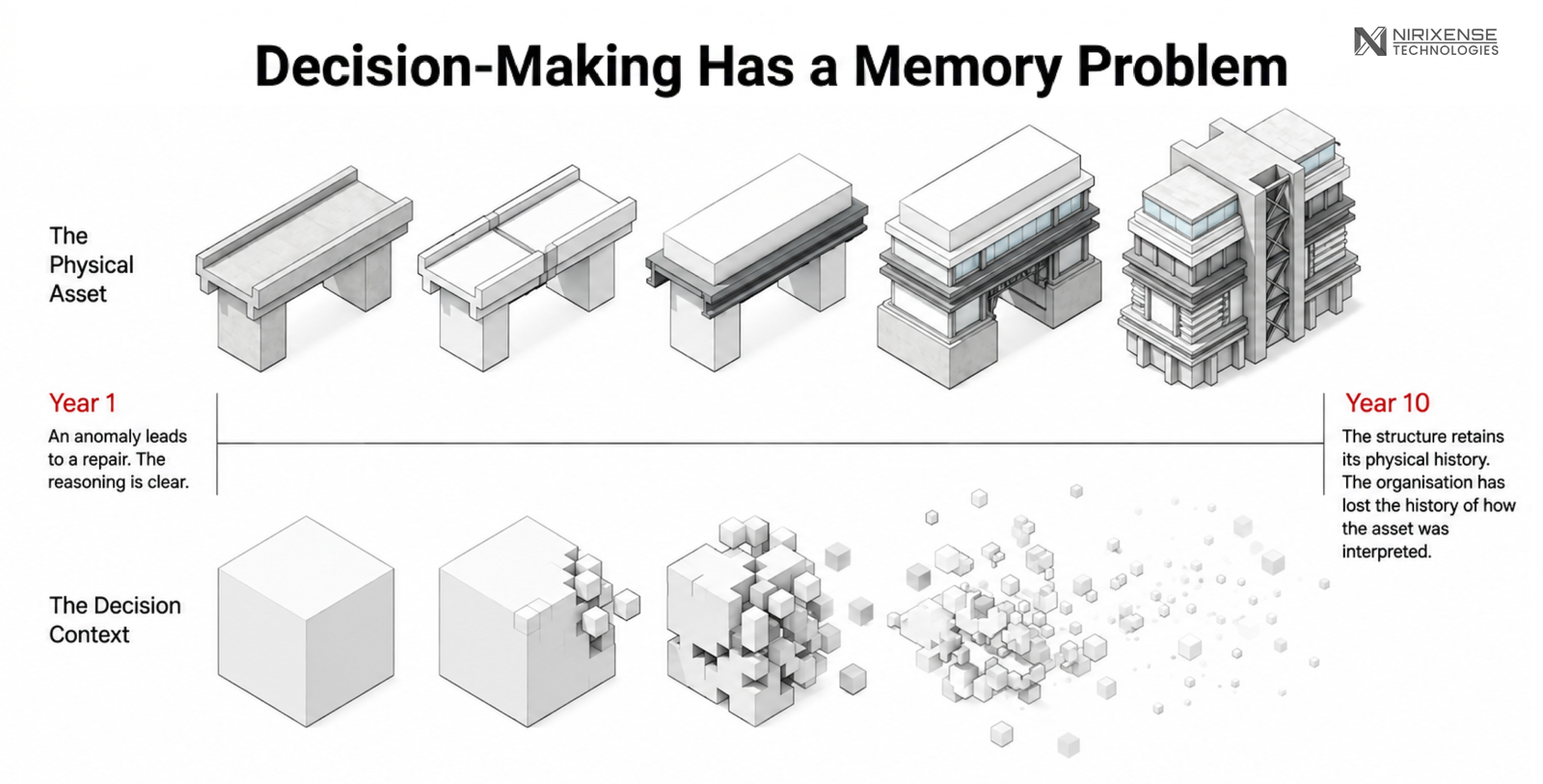
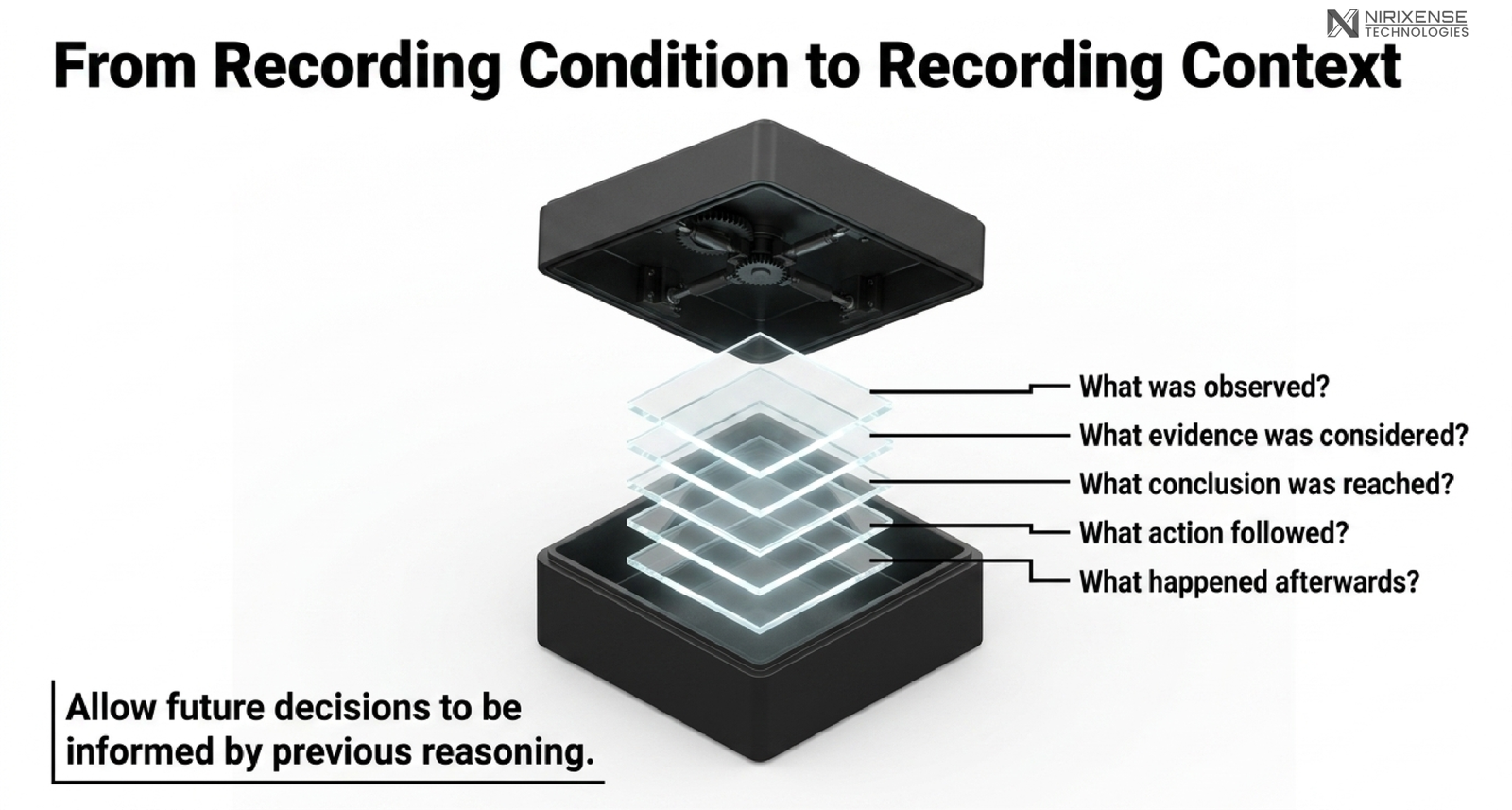
This is where monitoring can begin to evolve from simply recording condition toward recording decision context: what was observed, what evidence was considered, what conclusion was reached, what action followed, and what happened afterwards. Such a record is valuable not because it creates more data, but because it allows future decisions to be informed by previous reasoning rather than requiring engineers to reconstruct that reasoning from scratch.
Where automation actually becomes interesting
This is where automation becomes relevant, but perhaps not as a question of replacing engineering judgement. Its more immediate value may be in reducing the distance between an observation and the context required to interpret it: bringing together relevant history, identifying recurring conditions, organising evidence, following established diagnostic paths and directing attention toward situations where human judgement is actually needed.
The important distinction is between automating a decision and supporting the conditions under which a decision is made. The latter may be the more important opportunity for infrastructure because engineering contains many situations where the right answer is not simply to act, but to investigate further, continue monitoring, seek additional evidence, or deliberately do nothing until a condition changes.
That means meaningful automation cannot begin with the question, “What can we automate?” It has to begin with a more fundamental question: “How is this decision actually made, what information does it depend on, and where does judgement become necessary?”
Only then does it become possible to determine what a system should handle, what it should surface, and where responsibility should return to the engineer.
Where automation enters the conversation
If the challenge is moving from observation to decision, automation becomes meaningful not by replacing engineering judgement, but by supporting the process around it. A system can help bring relevant history into view, connect related observations, surface previous decisions, organise evidence and guide an engineer through established diagnostic paths, while recognising when a situation falls outside what is already understood.
The important question therefore is not simply what can we automate? It is what actually happens between an observation and a decision? What evidence does an engineer consider, what context changes its interpretation, how much confidence is required, and when is the right response to investigate further rather than act?
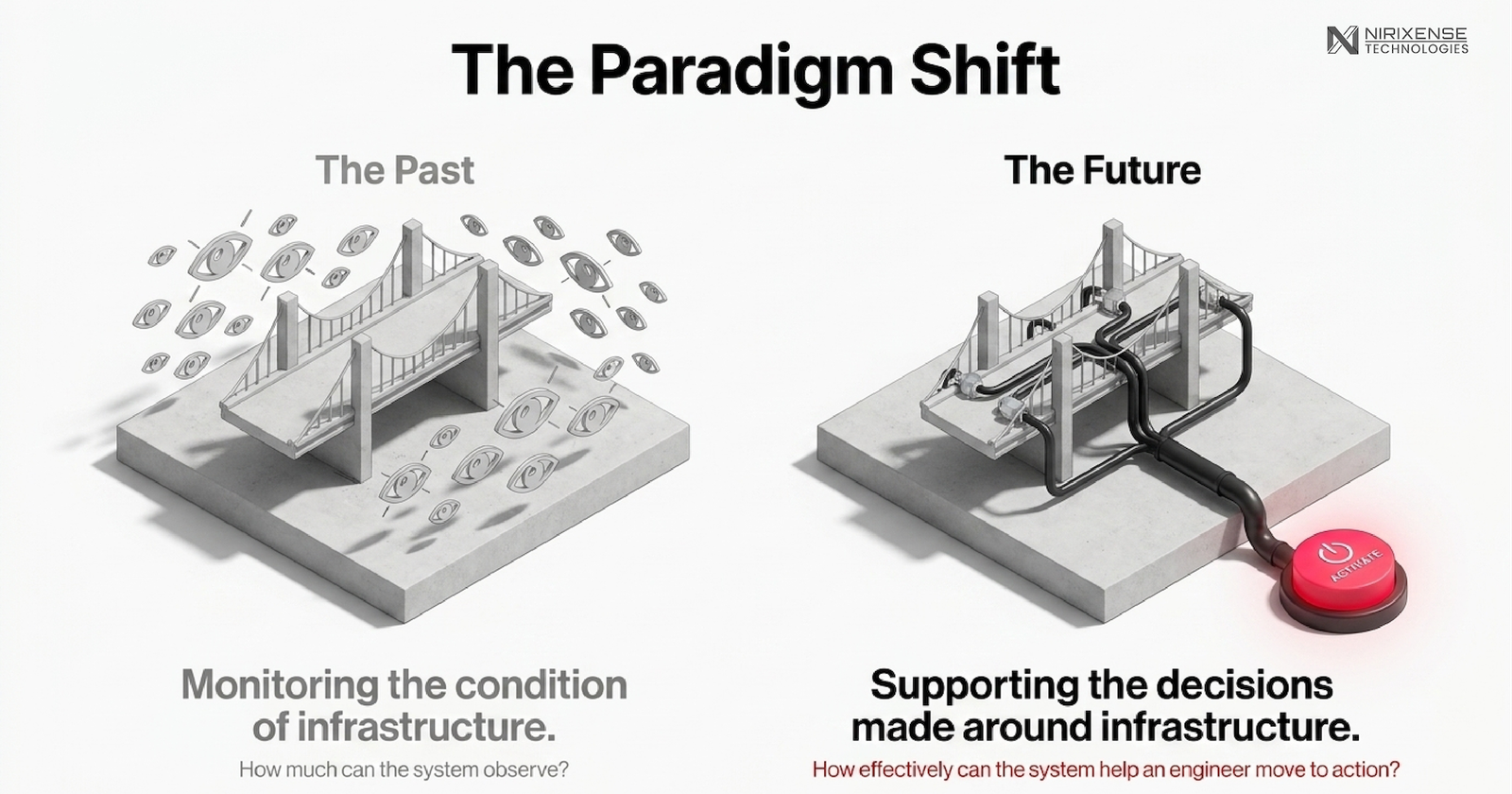
Understanding this workflow creates a more useful path toward automation. Some parts may be repeatable, some may depend heavily on context, and others may require human judgement because of their consequence. The goal is not to erase those distinctions, but to make them part of the system.
This also raises a more fundamental question: when should a system proceed, when should it recommend, and when should it stop and ask?
The next step is not more monitoring
Structural Health Monitoring has already made infrastructure increasingly observable. The next challenge is making the reasoning around those observations equally structured.
That means recognising that engineering decisions are not simply outputs of data. They are judgements formed through evidence, context, uncertainty and consequence, with different levels of confidence required for different actions. A useful monitoring system therefore needs to do more than identify that something has changed; it needs to help establish what that change means, what remains unknown, and what decision should follow.
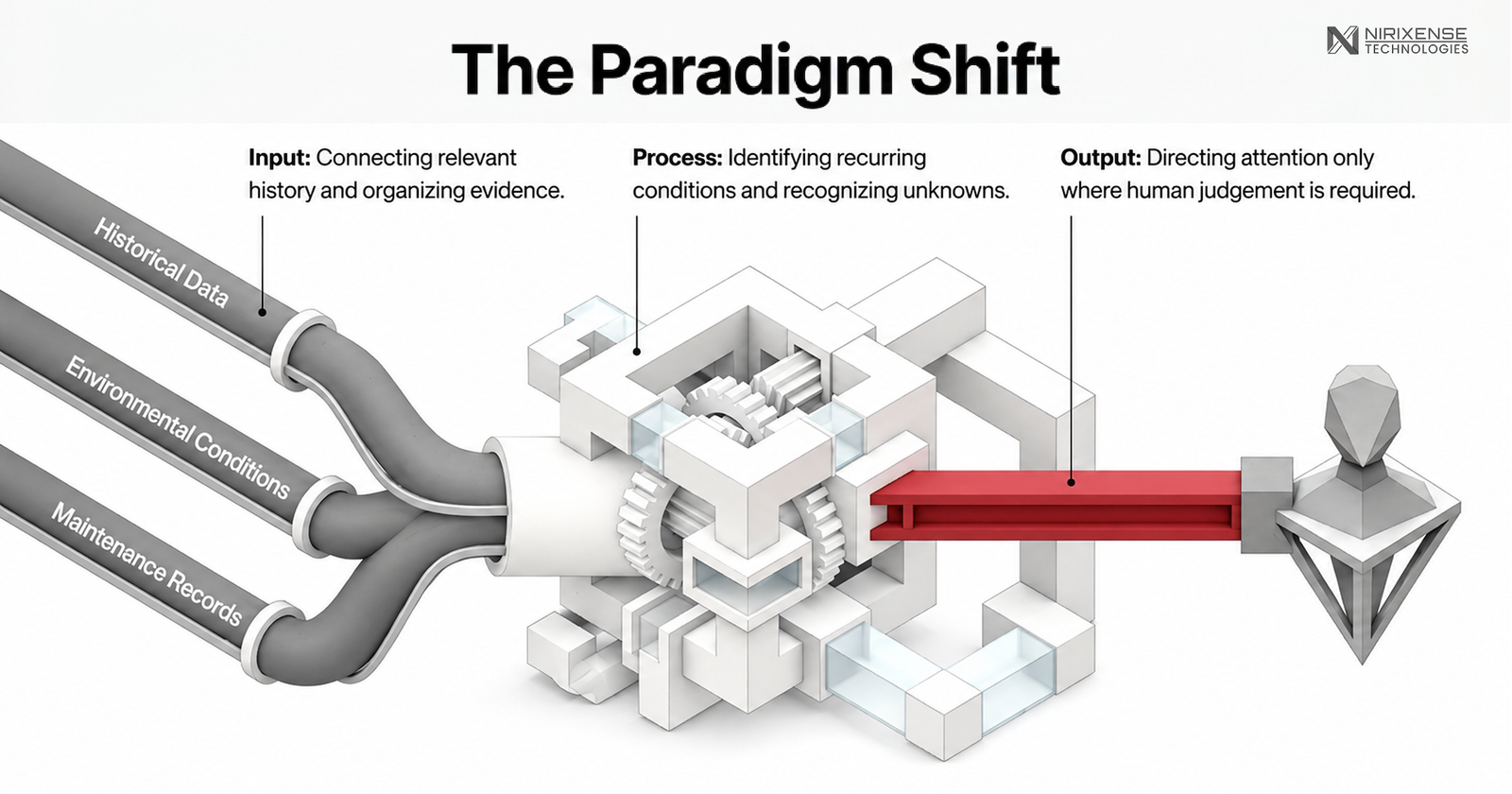
This is the direction in which we at Nirixense are increasingly thinking about structural intelligence: not simply collecting more information, but creating a more connected layer between what infrastructure tells us and the decisions engineers need to make.
That may ultimately be the more interesting evolution of Structural Health Monitoring: not moving from manual to automated, but from observation to informed decision-making.

Because infrastructure owners do not create value simply by knowing that something has changed.
They create value by knowing what that change means, how certain they need to be, and what they should do next.
© 2026 Nirixense Technologies Pvt. Ltd. All rights reserved. email: connect@nirixense.com
About this series: Field Notes in Structural Intelligence is a thought leadership series by Nirixense Technologies, where we engage with experts across structural engineering and monitoring to understand how SHM actually works in practice and where it needs to evolve next.