
Is SHM an engineering tool or a management tool?
Divya Koppikar, Product and UI/UX Designer, Nirixense Technologies
Om Narayan Singh, Applications Engineer, Nirixense Technologies
(August 2026)
When a bridge is instrumented with a Structural Health Monitoring (SHM) system, the assumption is often that the data belongs to engineers. After all, it is engineers who specify sensor locations, interpret structural behaviour and validate whether an asset is performing as intended.
But once that data enters an organisation, its journey rarely ends with engineering.
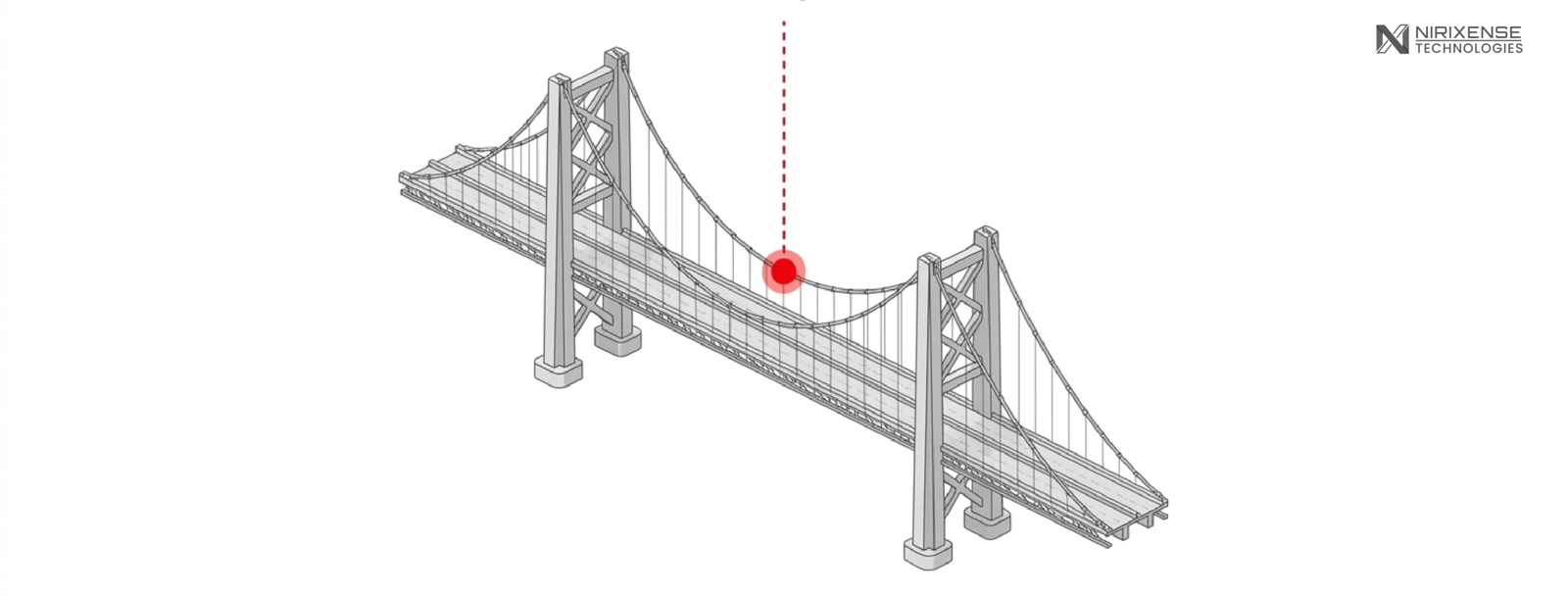
The same structural intelligence can influence whether maintenance is advanced or deferred, whether construction activities continue or pause, where limited budgets are invested, how operational restrictions are imposed, and which assets receive immediate attention across an entire infrastructure portfolio.
Perhaps the most interesting question is no longer what SHM measures, but who ultimately benefits from those measurements.
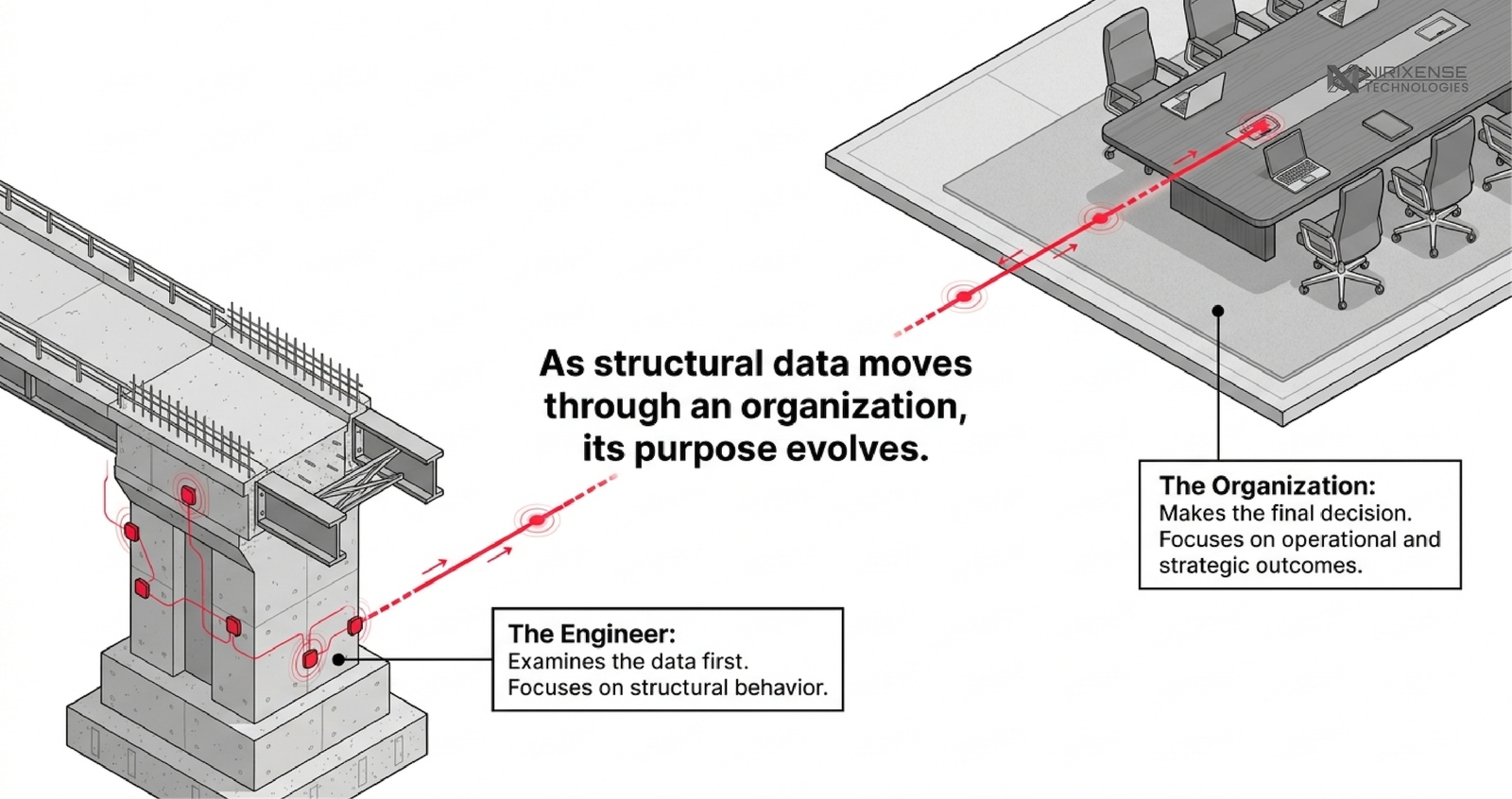
Is SHM still an engineering tool, or has it quietly become one of infrastructure management’s most valuable decision-support systems?
When one set of measurements starts driving an entire organisation
One of the most thought-provoking observations from the discussion was: “You cannot see SHM in isolation.” That statement reflects how infrastructure is managed today.
A structural engineer studies changes in strain, displacement or modal behaviour to understand how an asset is performing.
The maintenance team looks at the same information to determine where inspections should be prioritised.
Project managers use it to decide whether construction activities can continue safely.
Finance teams evaluate whether immediate intervention will reduce larger lifecycle costs in the future.
Infrastructure owners use it to prioritise investments across hundreds—or even thousands—of assets.
Government authorities rely on the same structural intelligence when balancing public safety with operational continuity.
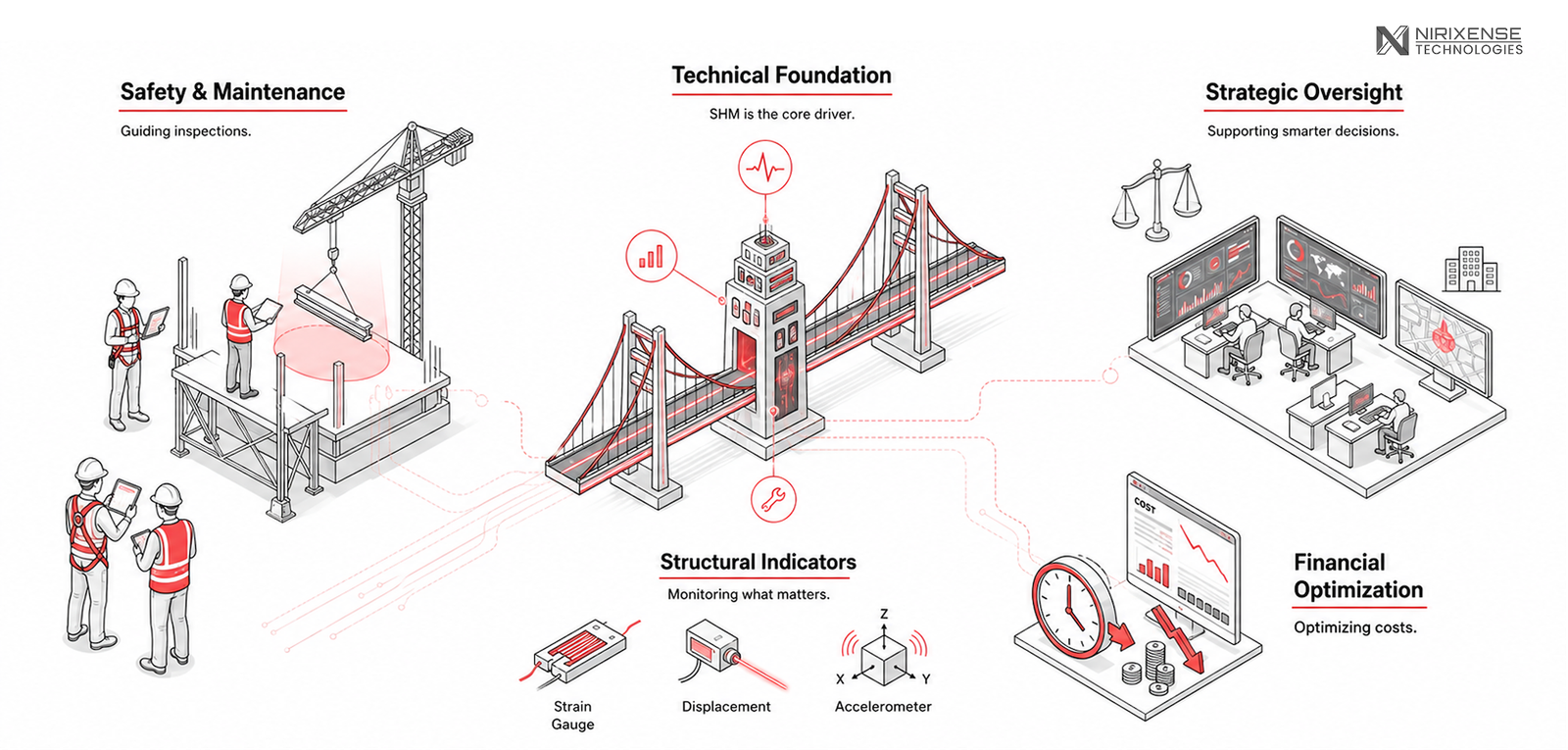
The monitoring system never changes. Only the questions being asked of it do.
When bridge data starts deciding which bridges get fixed first
One of the clearest examples of this evolution can already be seen across India’s national highway network.
Through the Indian Bridge Management System (IBMS), now evolving into the Unified Bridge Management System (UBMS), the National Highways Authority of India is moving beyond individual bridge inspections towards managing an entire portfolio of infrastructure assets. Rather than relying solely on periodic inspections, bridge condition data is increasingly being used to assess structural risk, prioritise inspections, allocate maintenance budgets and plan long-term rehabilitation strategies.
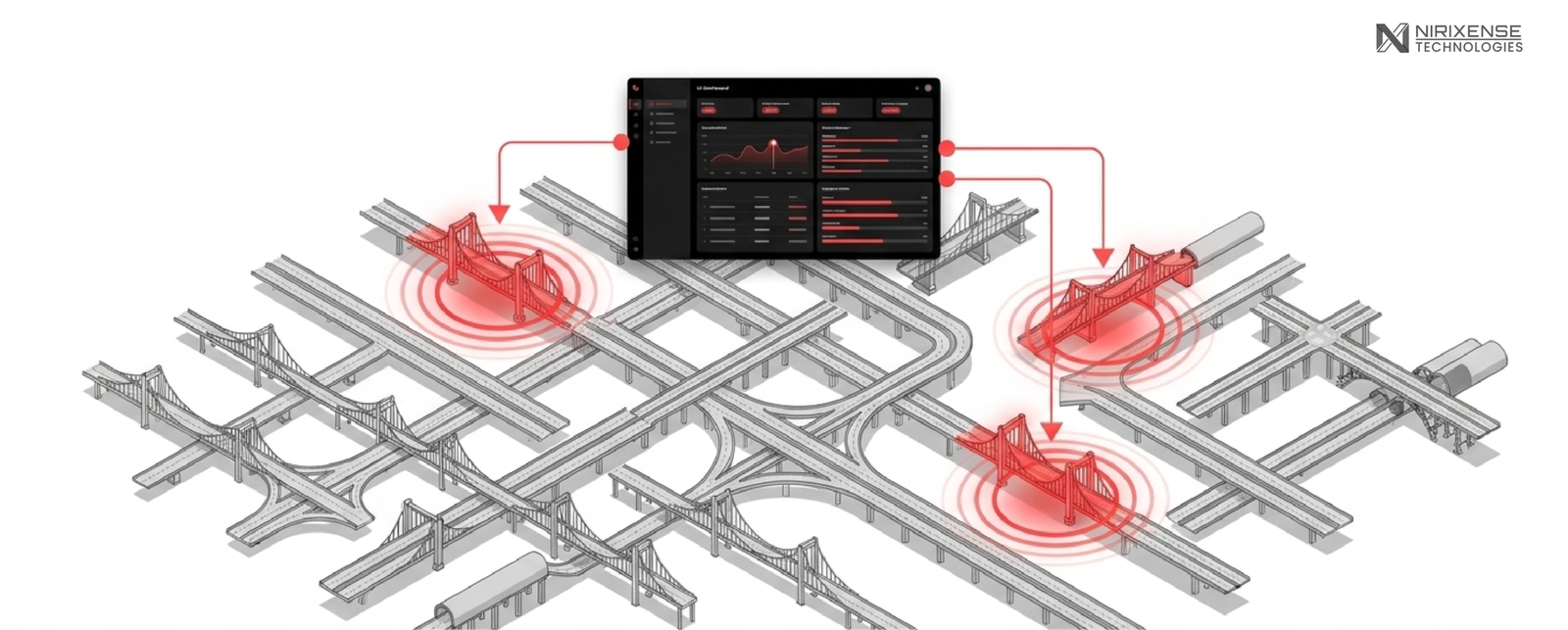
In this environment, SHM is no longer generating information exclusively for structural engineers.
It is helping determine which bridge receives attention first, where maintenance funding delivers the greatest value, and how public infrastructure investments are prioritised.
Engineering measurements become management decisions.
When sensors keep tunnel boring machines moving
The role of SHM becomes even more apparent during urban infrastructure construction.
Throughout metro projects undertaken by organisations such as the Delhi Metro Rail Corporation and Mumbai Metro Rail Corporation, instrumentation is routinely deployed to monitor ground settlement, adjacent buildings, utilities and surrounding infrastructure as tunnel boring progresses beneath densely populated cities.
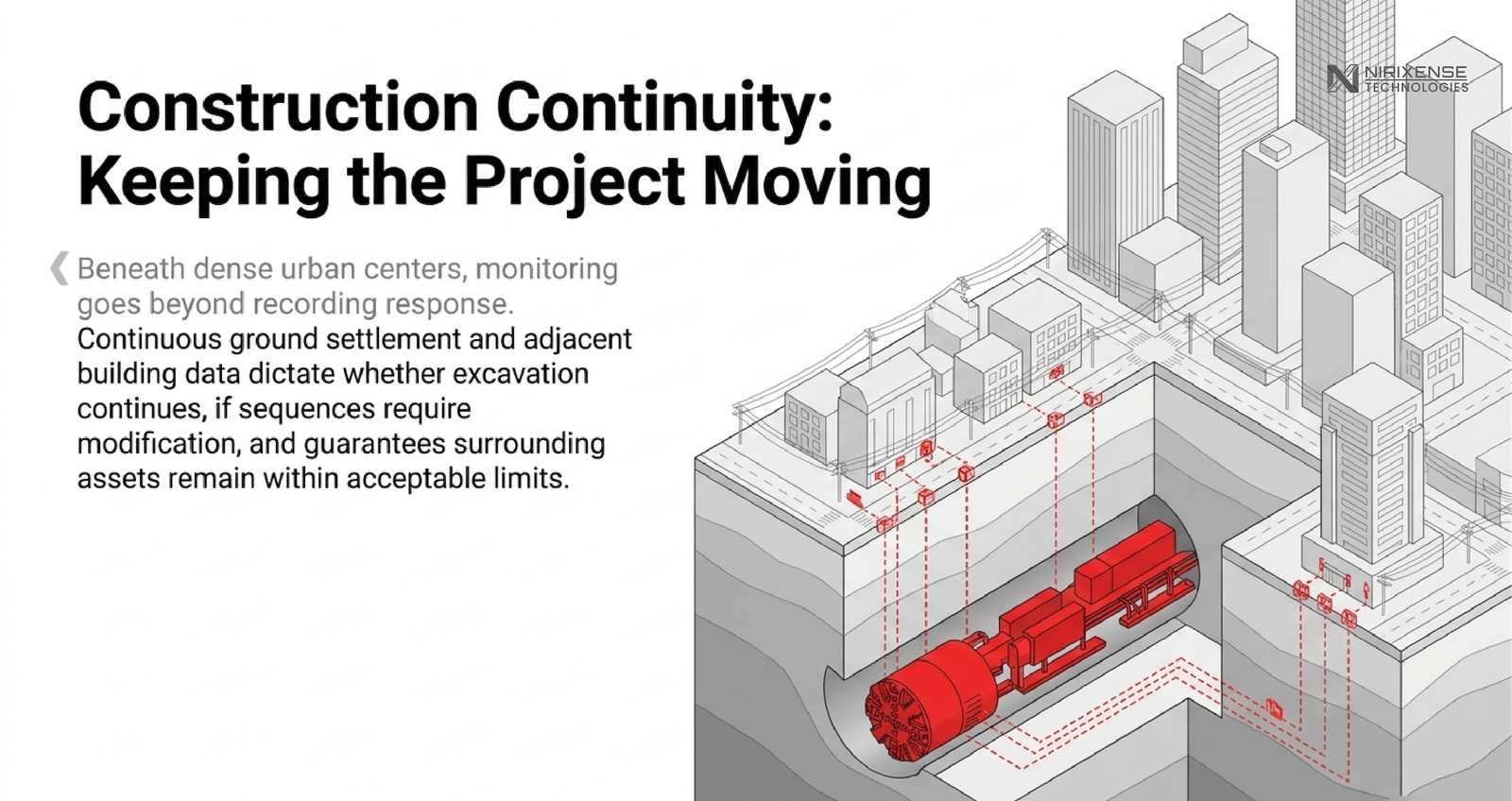
The purpose extends well beyond recording structural response.
Monitoring data helps determine whether excavation can safely continue, whether construction sequences need to be modified, whether temporary support measures should be introduced and whether nearby assets remain within acceptable performance limits. Instead of reacting to problems after they occur, project teams use continuous structural intelligence to make informed decisions while work is still underway.
In many respects, the monitoring system becomes as much a project management tool as an engineering one.
When the best maintenance decision is knowing where Not to spend
Maintenance has traditionally been governed by fixed inspection intervals and scheduled interventions.
Continuous monitoring offers a different possibility.
Rather than assuming every critical asset requires the same level of attention, infrastructure owners can increasingly focus inspections and maintenance activities where measurable changes in structural behaviour actually occur. Resources can be redirected towards higher-risk assets while reducing unnecessary interventions on structures that continue to perform as expected.
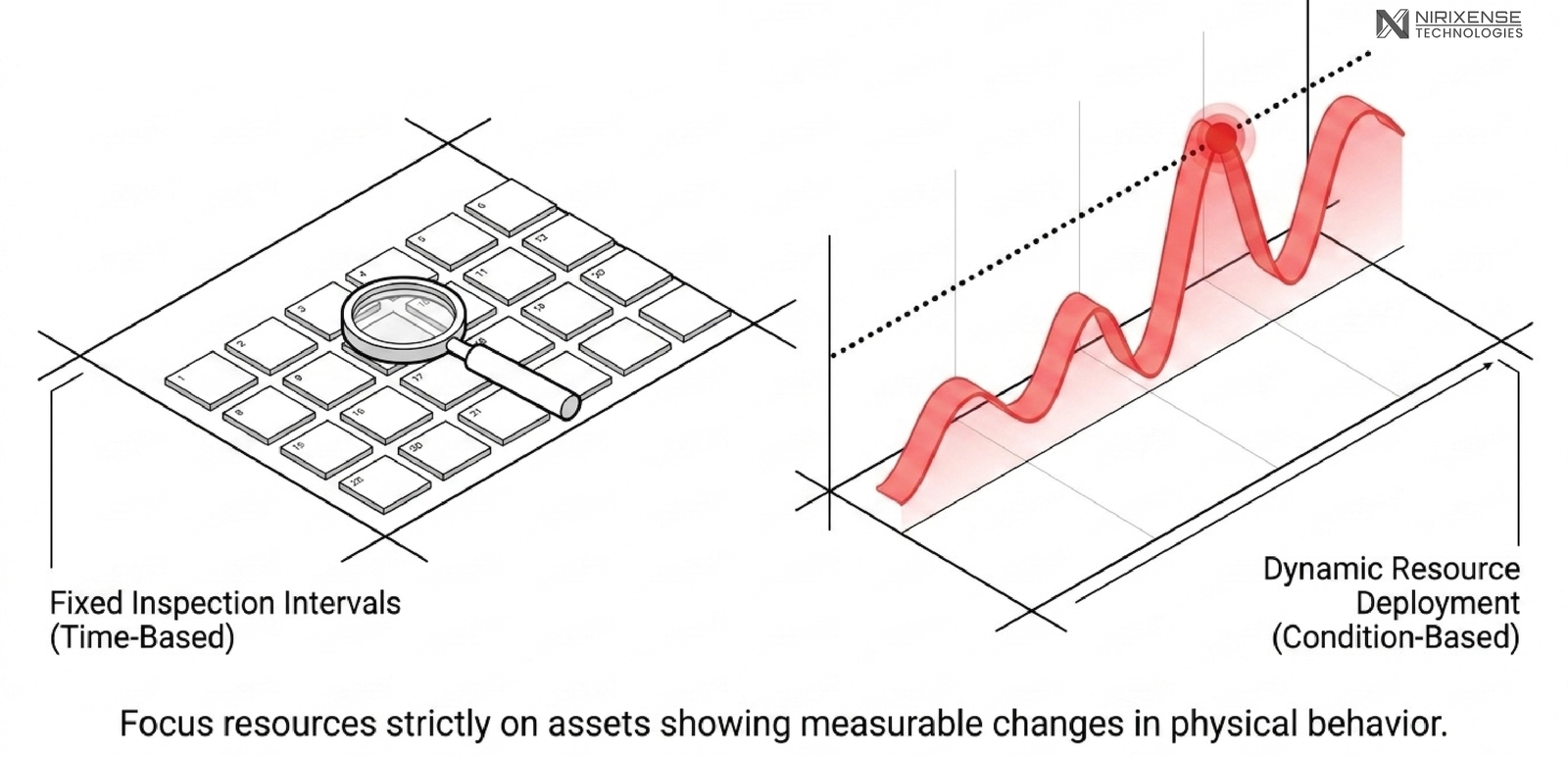
For organisations managing large bridge inventories, the value of SHM is therefore measured not only in structural insight, but in better utilisation of engineering teams, maintenance budgets and inspection resources.
Sometimes, the greatest efficiency comes not from doing more work, but from knowing where less work is required.
The question was never about data
Throughout the discussion, one observation repeatedly shifted the conversation away from technology and towards purpose.
“Second problem is what are we trying to get from SHM?”
It is a deceptively simple question.
Infrastructure owners are rarely investing in monitoring systems because they want more measurements. They invest because they want greater confidence in decisions that carry significant operational, financial and public safety consequences.
Should maintenance be advanced?
Can rehabilitation wait another year?
Is a traffic restriction genuinely necessary?
Which bridge deserves the next capital investment?
These are not questions that belong exclusively to engineers. They belong to everyone responsible for the performance of an infrastructure asset.
Engineering still makes the final decision
Recognising SHM as a management tool should never diminish the role of engineering judgement.
In fact, the discussion made exactly the opposite point. While discussing operational responses to uncertainty, an apparently simple solution emerged:
“Let’s go slow.”
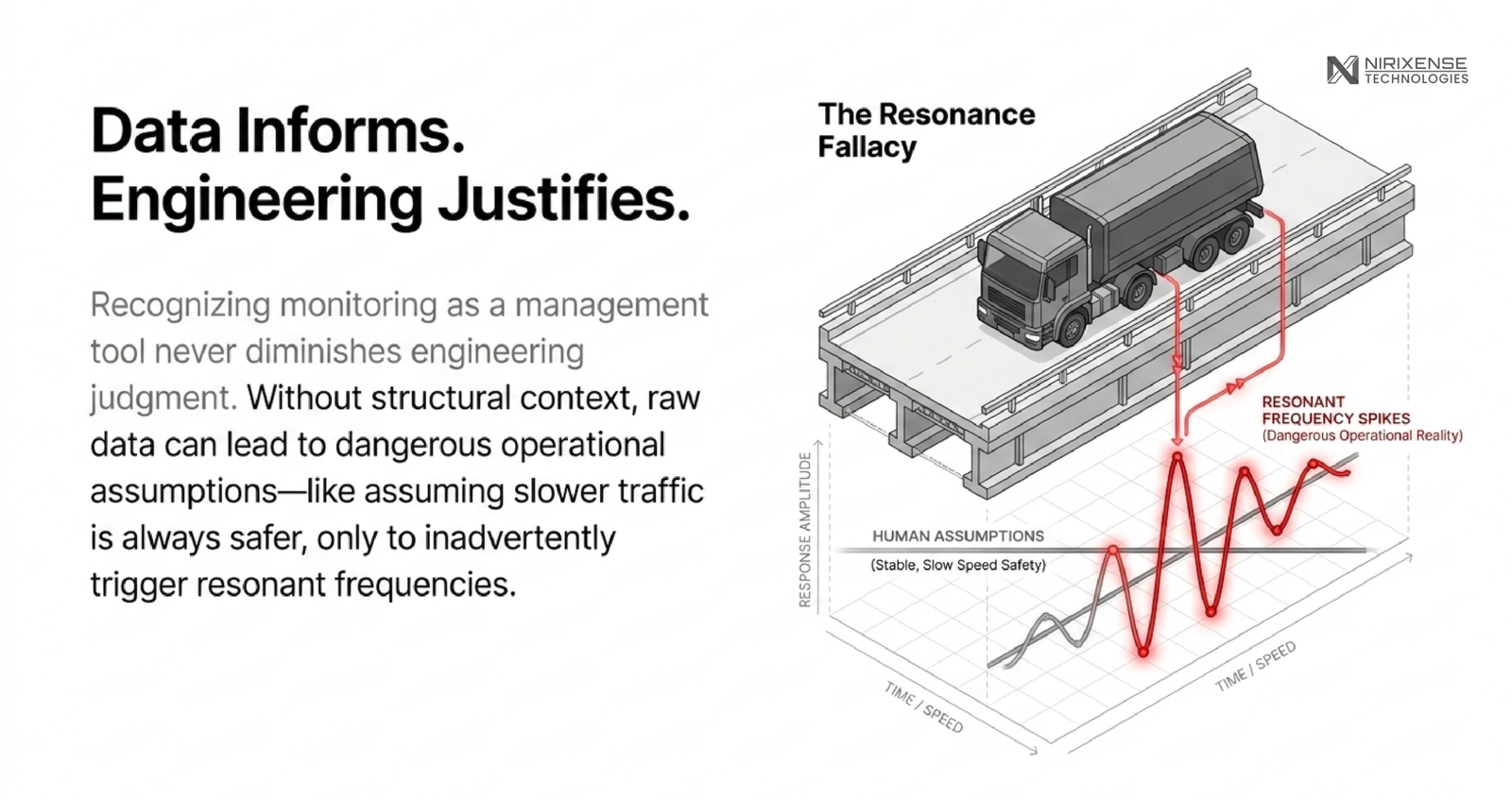
Yet that assumption was immediately challenged.
“Sometimes when you go slow, you will actually have resonating frequencies.”
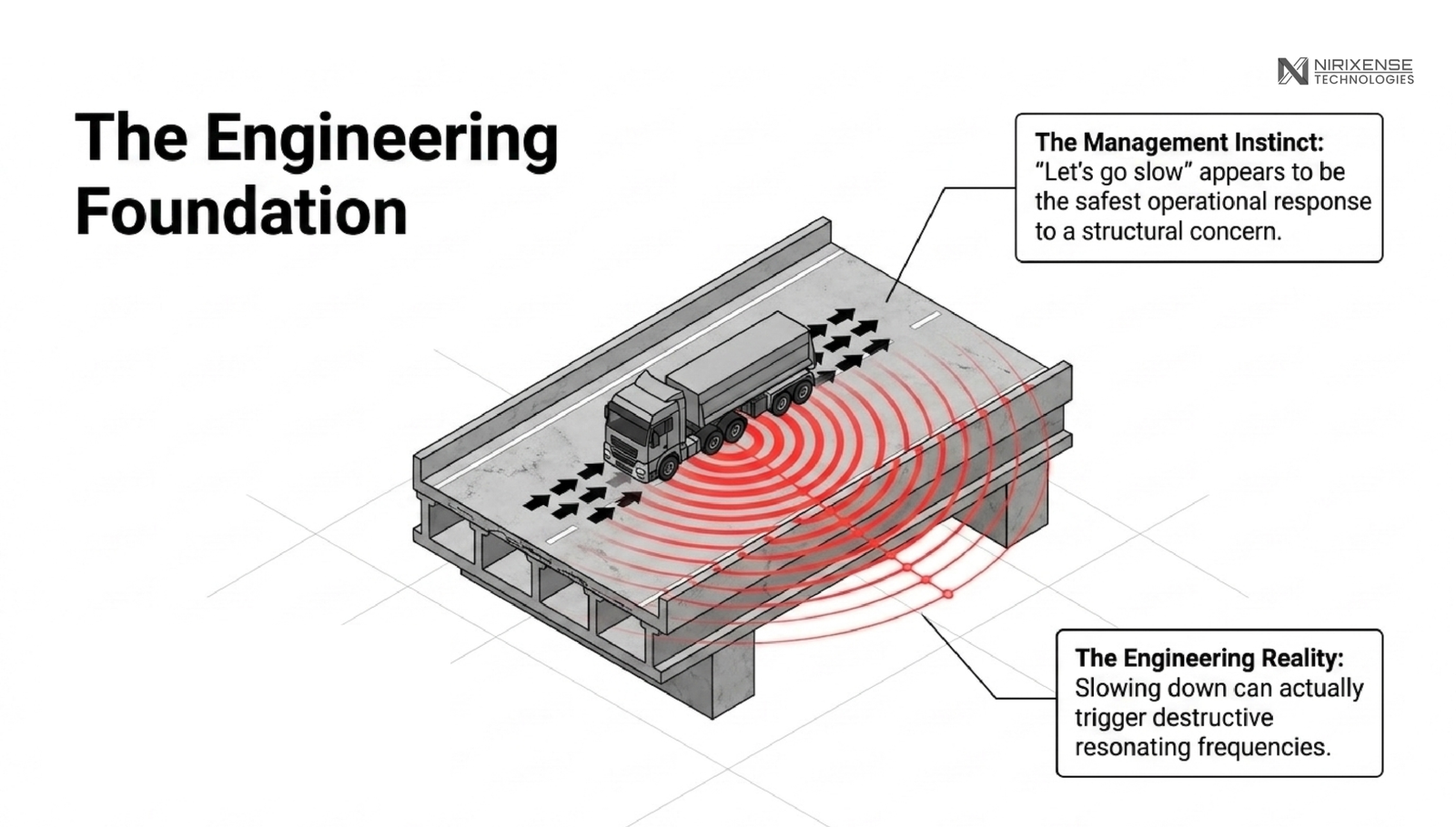
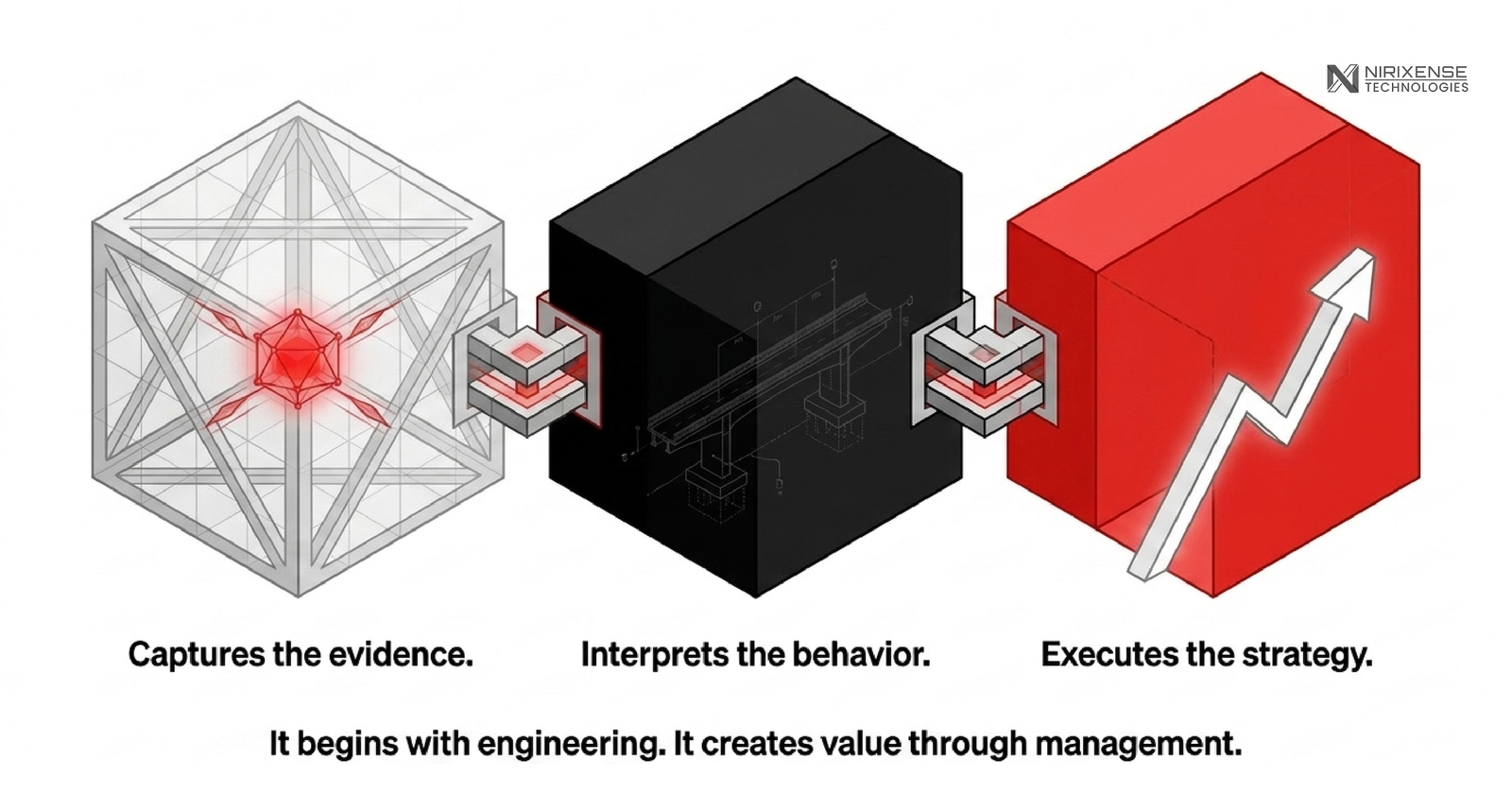
The exchange serves as a reminder that monitoring systems provide evidence, but not conclusions. Structural intelligence only becomes valuable when interpreted within the broader context of engineering behaviour, operational constraints and asset-specific conditions.
Technology informs the decision.
Engineering justifies it.
Perhaps SHM was never meant for just one team
The conversation ultimately revealed that framing SHM as either an engineering tool or a management tool may be too narrow.
It begins with engineering. It creates value through management.
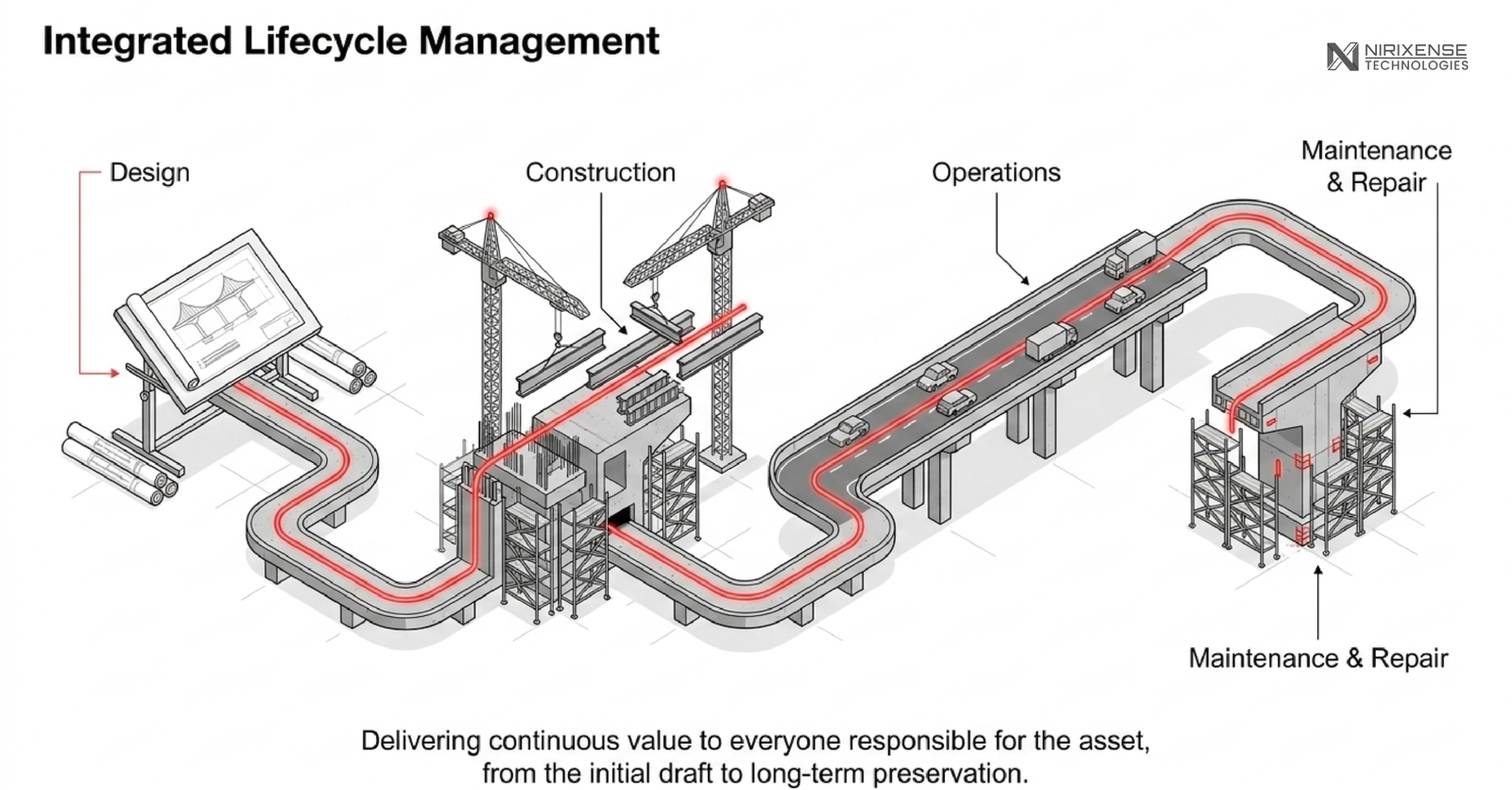
Its greatest impact lies in connecting structural understanding with maintenance planning, operational strategy, financial prioritisation and long-term asset stewardship.
Perhaps the real success of a monitoring system is not measured by how much data it collects, but by how many better decisions it enables across an organisation.
What we’re building at Nirixense
At Nirixense, we believe the future of Structural Health Monitoring lies in making structural intelligence accessible and actionable for every stakeholder involved in an asset’s lifecycle. Our focus is on developing integrated monitoring systems that support engineers with reliable measurements while empowering maintenance teams, project managers, infrastructure owners and public authorities with the insights needed to make timely, informed decisions.
Because the most valuable SHM system is not the one that produces the most data.
It is the one that helps the right people make the right decisions at the right time.
© 2026 Nirixense Technologies Pvt. Ltd. All rights reserved. email: connect@nirixense.com
About this series: Field Notes in Structural Intelligence is a thought leadership series by Nirixense Technologies, where we engage with experts across structural engineering and monitoring to understand how SHM actually works in practice and where it needs to evolve next.