
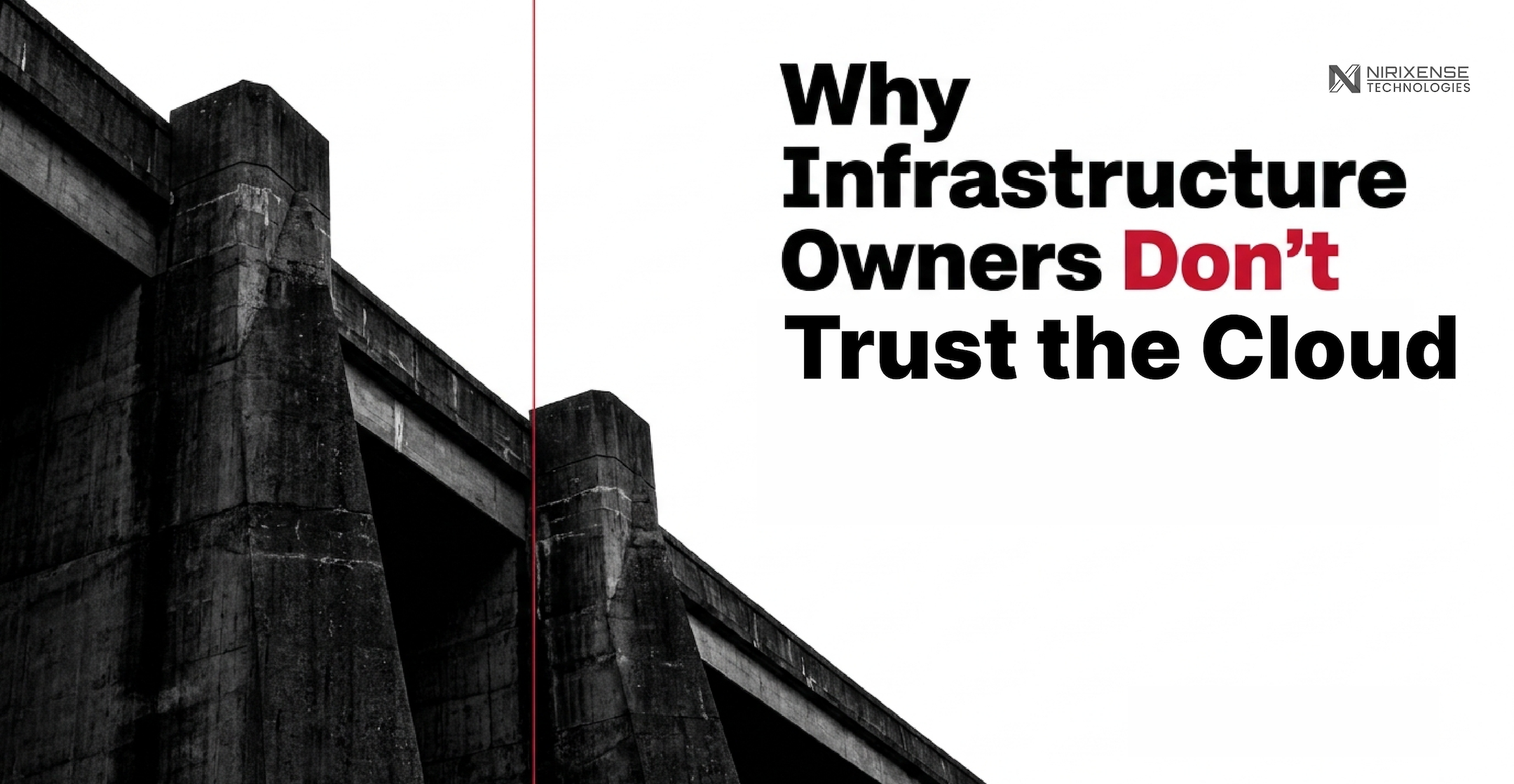
Why infrastructure owners don’t trust the cloud?
In conversation with Dr. Sharvil Alex Faroz
Technology Perspective
Divya Koppikar, Product and UI/UX Designer, Nirixense Technologies
Om Narayan Singh, Applications Engineer, Nirixense Technologies
(July 2026)
Dr. Sharvil Alex Faroz is the Founder of Infrastructure Risk Management (IRM) and a structural engineering expert with a Ph.D. from Indian Institute of Technology Bombay, focused on helping infrastructure owners make better lifecycle decisions.
He is recognized for his work in remaining life assessment, structural health monitoring (SHM), and asset aging management, advancing practical, risk-based approaches to infrastructure resilience and longevity.
Monitoring data is no longer just monitoring data
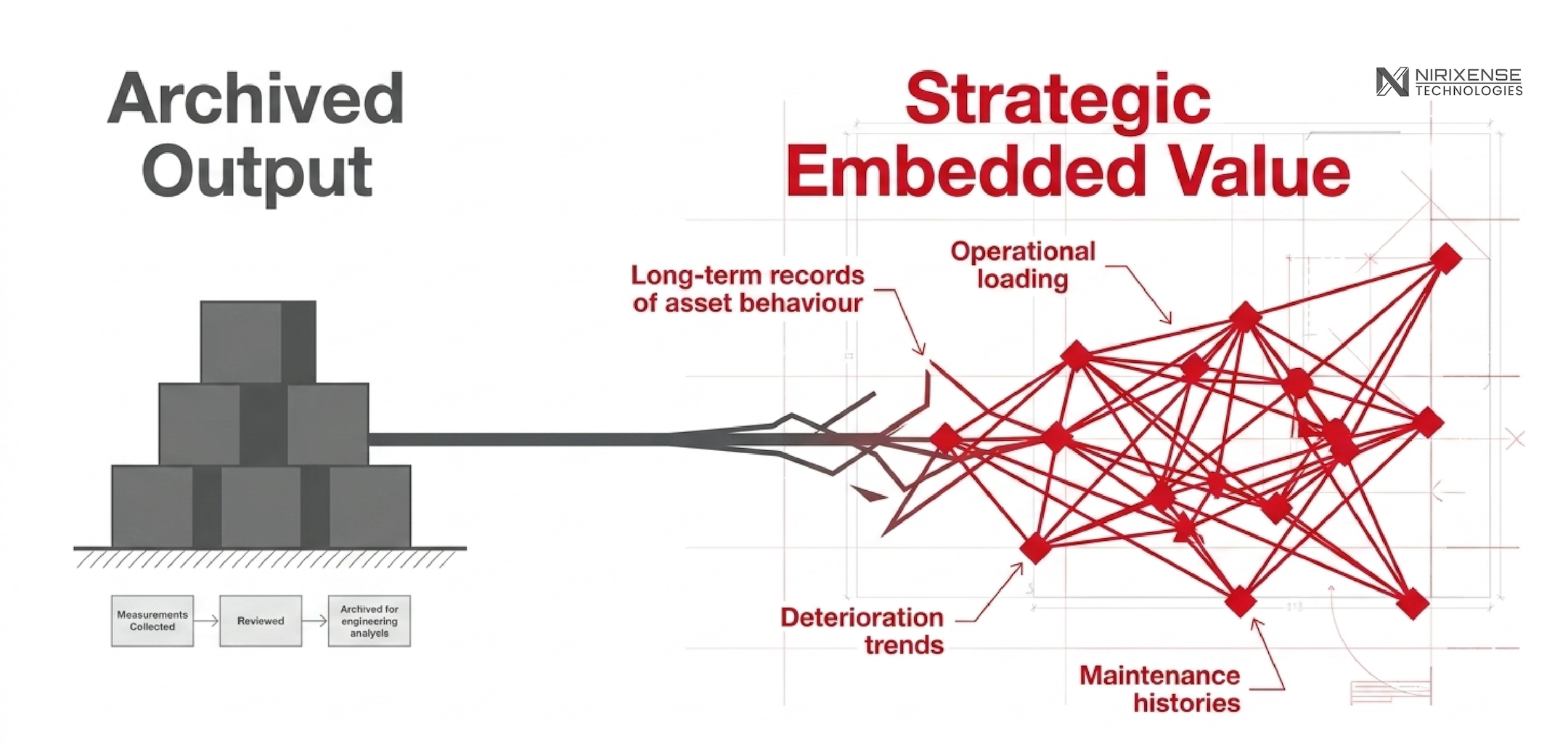
Historically, monitoring data was treated as a project output. Measurements were collected, reviewed, and archived for engineering analysis. Increasingly, however, continuous monitoring systems are generating long-term records of asset behaviour, operational loading, deterioration trends, and maintenance histories.
As monitoring systems become embedded within asset management workflows, the data itself begins to acquire strategic value.
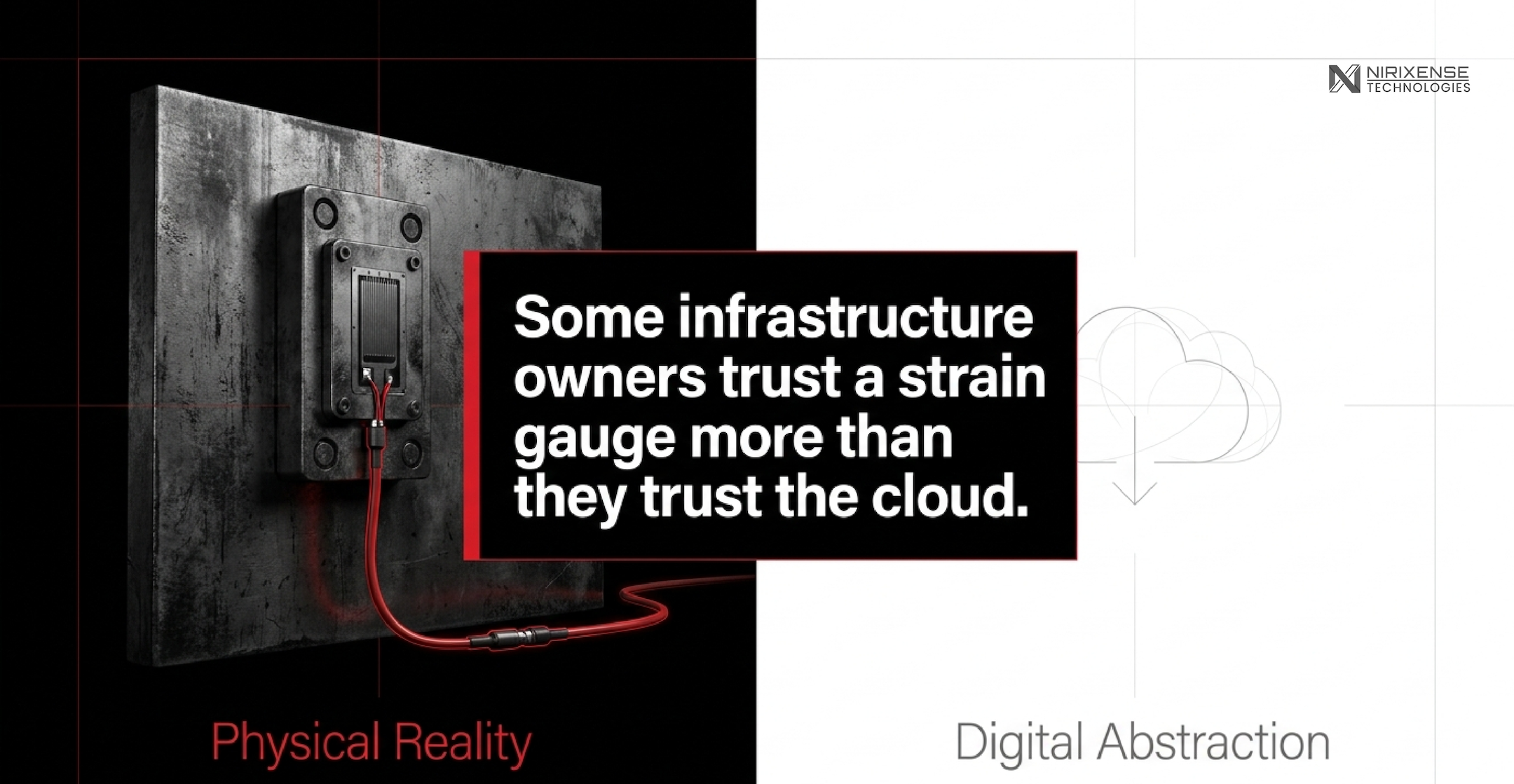
During the discussion, Dr. Faroz repeatedly returned to the issue of ownership and control. At one point, he noted:
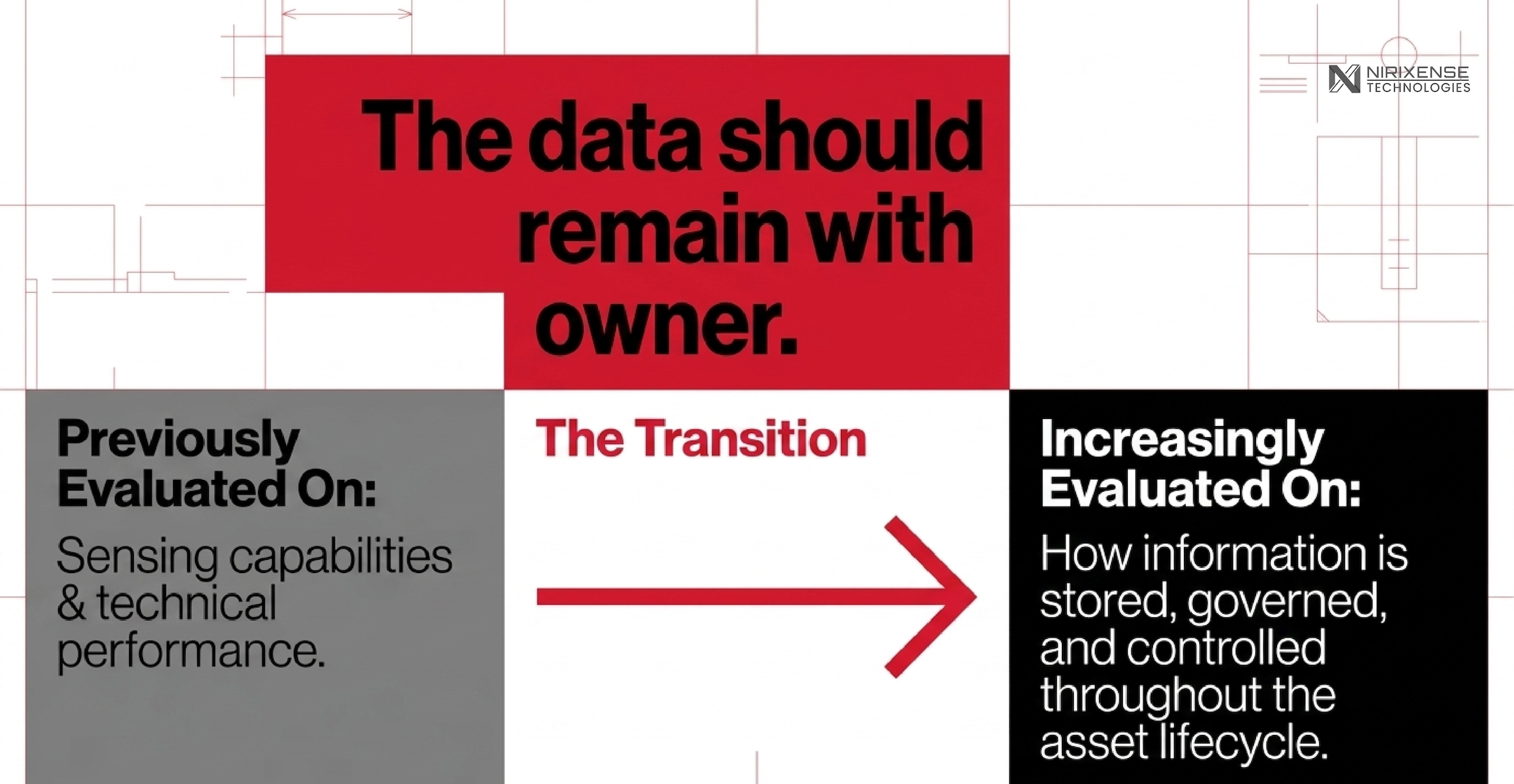
“The data should remain with the owner.”
The statement may appear straightforward, but it reflects a broader shift occurring across infrastructure sectors. Monitoring systems are no longer evaluated solely on their sensing capabilities. They are increasingly evaluated on how information is stored, governed, and controlled throughout the lifecycle of the asset.
Cloud adoption is not primarily a technology question
Cloud architectures solve several technical challenges. They simplify deployment, enable centralized monitoring, improve accessibility, and support large-scale analytics.
Yet infrastructure owners do not always evaluate technology through a purely technical lens.
As Dr. Faroz observed:
“Mandatory cloud-based data storage can reduce trust among infrastructure stakeholders.”
This is an important distinction. The concern is rarely that cloud platforms are incapable. The concern is that infrastructure assets operate within governance frameworks where ownership, custody, and accountability are often as important as technical performance.
For critical infrastructure operators, trust becomes a system requirement rather than a user preference.
Infrastructure does not operate under a single risk profile
One of the recurring themes during the discussion was that infrastructure assets cannot be treated uniformly.
A commercial building, a metro network, an industrial facility, and a strategic government asset may all require monitoring, but their requirements for data governance can differ significantly.
As Dr. Faroz pointed out:
“Different clients have different requirements.”
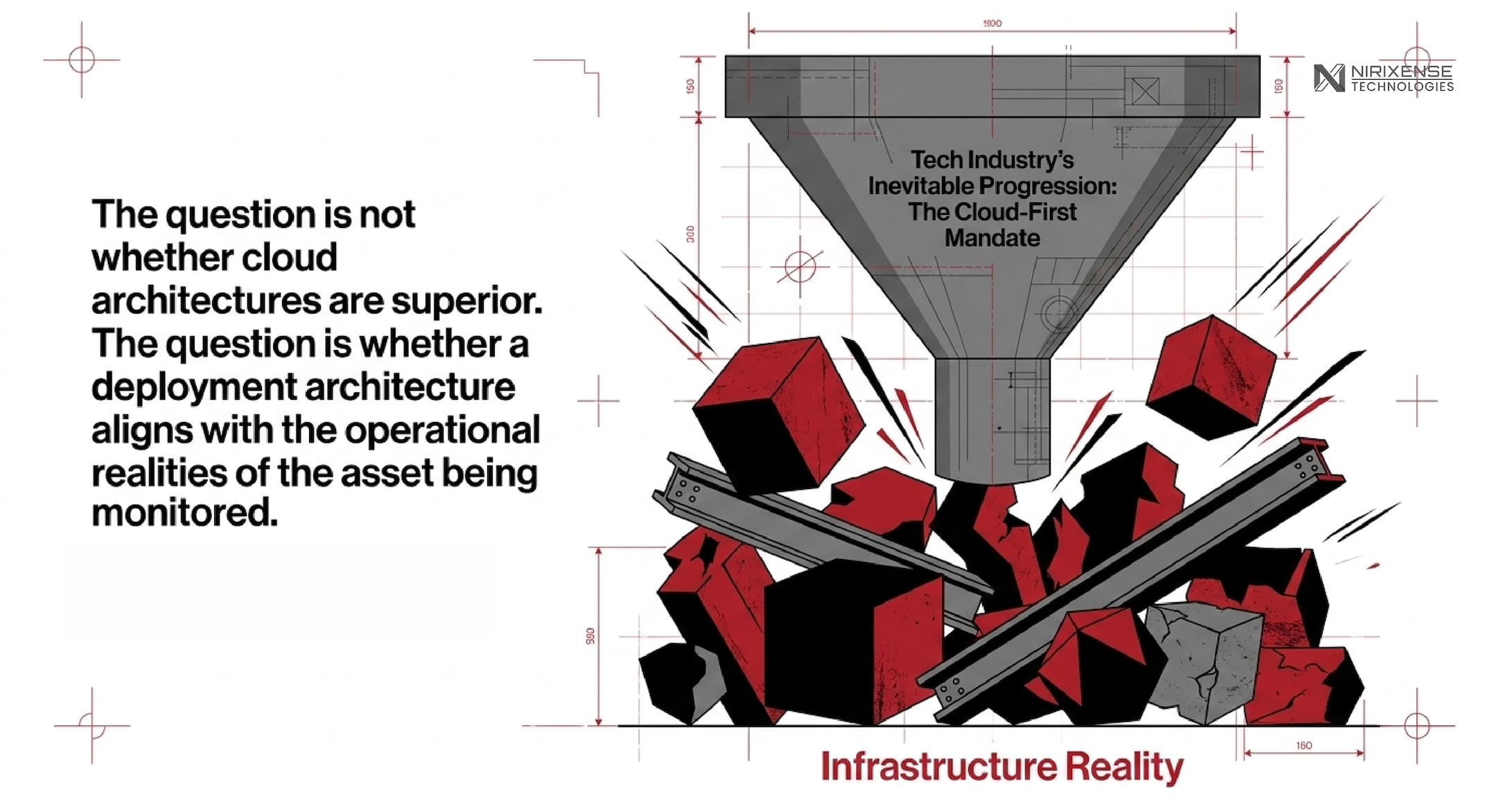
This observation is often overlooked when discussing cloud adoption. The question is not whether cloud architectures are superior. The question is whether a particular deployment architecture aligns with the operational realities of the asset being monitored.
In some cases, cloud-native systems may be entirely appropriate.
In others, owners may insist that data remain within their own servers, networks, or facilities.
The future may be hybrid rather than cloud-first
The technology industry often frames cloud adoption as an inevitable progression. Infrastructure systems tend to evolve differently.
Throughout the discussion, Dr. Faroz repeatedly emphasized flexibility rather than standardization.
“Some clients will want cloud. Some clients will want everything on their own server.”
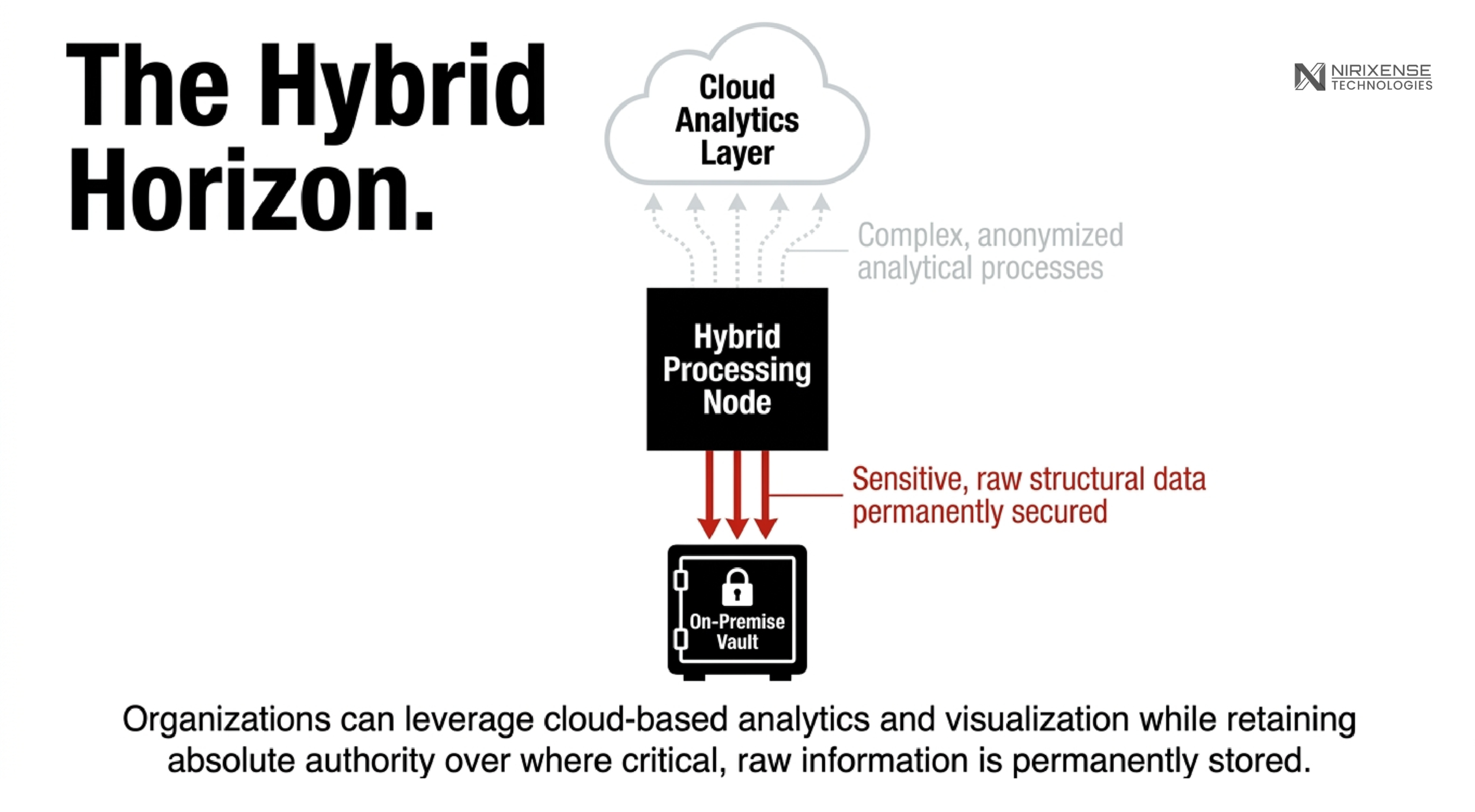
These observations point toward what may ultimately become the dominant architecture for critical infrastructure monitoring: hybrid systems capable of balancing accessibility with control.
Such architectures allow organizations to leverage cloud-based analytics and visualization while retaining authority over where critical information is stored and managed.
Trust is becoming an engineering parameter
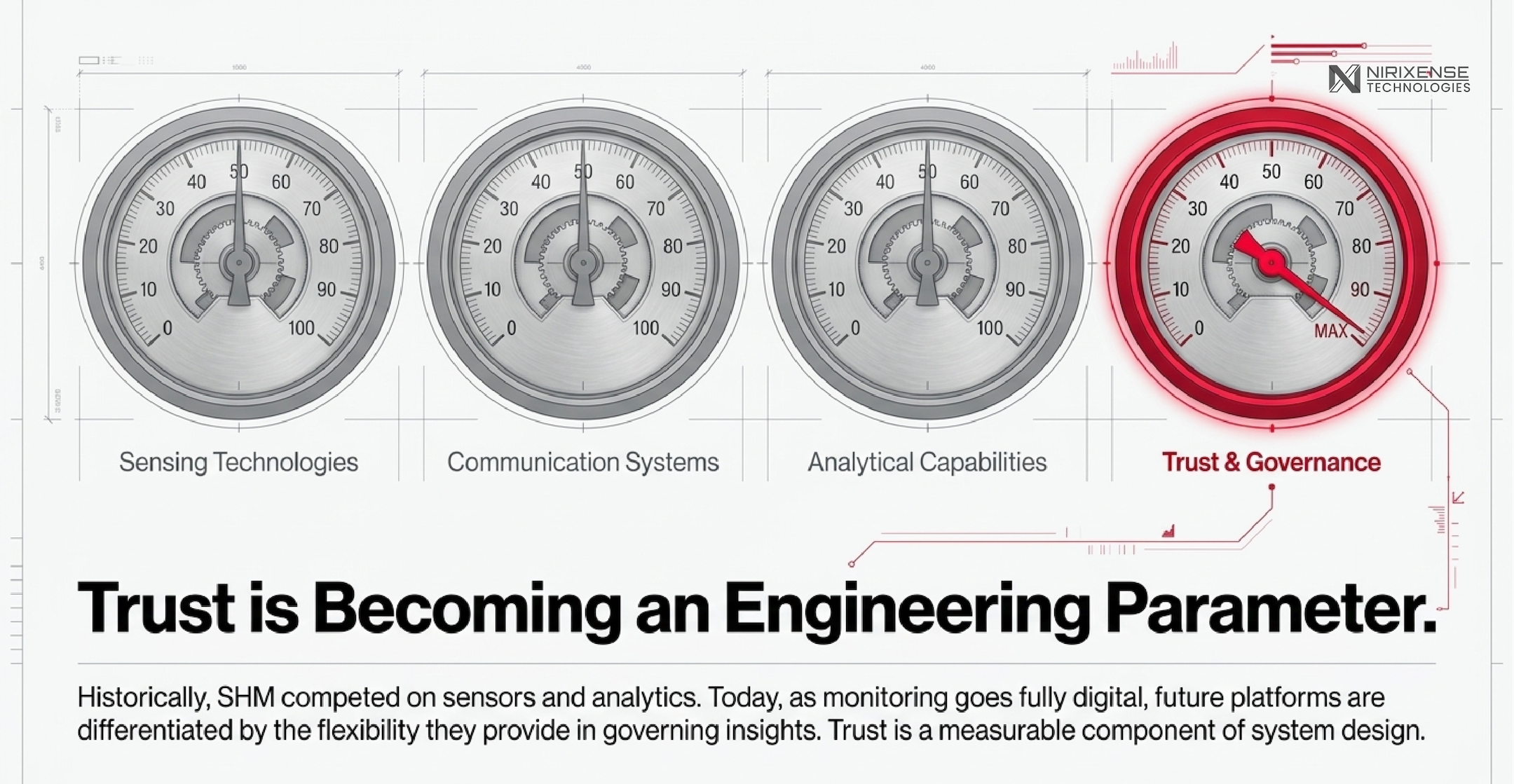
The SHM industry has traditionally competed on sensing technologies, communication systems, and analytical capabilities. Those differentiators remain important.
However, as monitoring becomes increasingly digital, trust itself may become a measurable component of system design.
Dr. Faroz’s concern was not that cloud technologies lack capability. Rather, it was that monitoring systems must align with how infrastructure owners perceive risk, responsibility, and control.
The implication is significant. Future SHM platforms may be differentiated not only by the quality of insights they generate, but by the flexibility they provide in governing those insights.
At Nirixense, this is increasingly how we view monitoring architecture. Cloud, on-premise, and hybrid deployments are not competing ideologies. They are engineering choices designed to address different operational environments.
The challenge is not determining where data should reside, but ensuring that infrastructure owners can trust the systems responsible for managing it.
© 2026 Nirixense Technologies Pvt. Ltd. All rights reserved. email: connect@nirixense.com
About this series: Field Notes in Structural Intelligence is a thought leadership series by Nirixense Technologies, where we engage with experts across structural engineering and monitoring to understand how SHM actually works in practice and where it needs to evolve next.