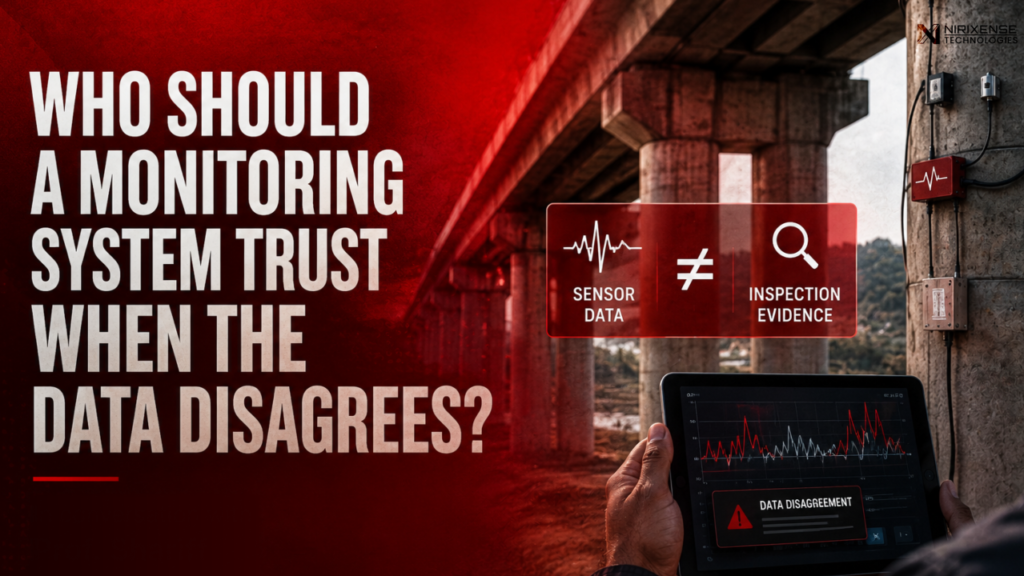
Who should a monitoring system trust when the data disagrees?
Not every engineering decision requires the same evidence. As Structural Health Monitoring moves beyond simply identifying changes toward supporting the decisions that follow, the real challenge is understanding observations in context. A sensor reading, inspection finding or model prediction does not have a fixed meaning in isolation; its significance depends on the decision being considered and the environmental, operational and historical conditions surrounding it. Continuing to monitor, investigating, inspecting, recommending maintenance or restricting operations each requires a different level and combination of evidence. This is why more data does not necessarily mean more understanding. A mature monitoring system should connect live and historical behaviour with asset history, related measurements, environmental and operational conditions, and previous decisions—while also recognising when the evidence is insufficient and escalation is the responsible next step. At Nirixense, we are exploring this shift from monitoring dashboards that show engineers what a structure is doing to decision-support systems that help them understand what that behaviour means in context and what may need to happen next. Ultimately, infrastructure does not need more data for its own sake; it needs better-connected evidence when decisions matter.
