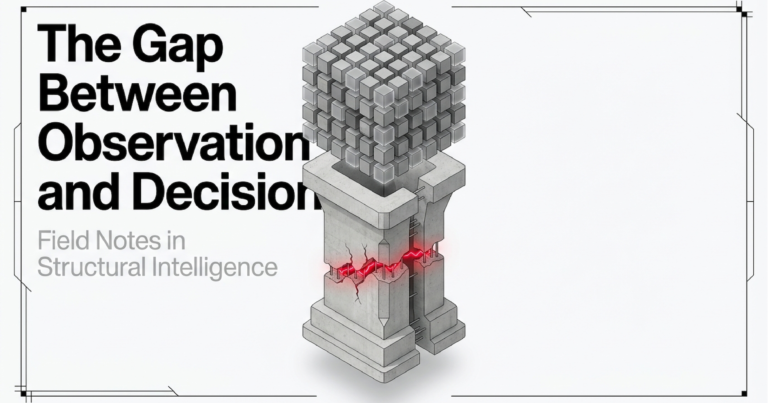
Infrastructure is monitored continuously. Decisions aren’t.
Structural Health Monitoring has made infrastructure increasingly observable, but the growing volume of data does not necessarily make engineering decisions easier. The real challenge lies in closing the gap between an observation and an informed decision: understanding whether an anomaly represents deterioration, environmental influence, operational change or a temporary deviation, and determining what evidence and context are needed to respond. As asset histories, inspections, maintenance records and engineering reasoning remain fragmented across systems and people, engineers often spend significant effort reconstructing context rather than interpreting condition. This creates an opportunity for automation that goes beyond generating alerts—connecting observations with historical evidence, previous decisions and established diagnostic pathways, while recognising when human judgement is required. The next evolution of SHM may therefore be less about monitoring more and more about structuring the reasoning between what infrastructure tells us and what engineers need to do next.
